

Audio By Carbonatix
Some Civil Society Groups (CSOs) are recommending changes to the Tax Exemption Bill currently before Parliament.
Among others, the groups are recommending limitations on the extent to which the presidency can claim tax exemptions.
In a statement the groups said “it is possible that omnibus exemptions to the President and the Presidency can easily be abused by third parties such as party supporters, friends and family.”
“It is, therefore, necessary that the Bill is more specific on the President and should provide that only one or specified officer(s) can apply for exemptions on behalf of the President or the Presidency. This requirement should equally apply to emergency and security operations which also needs serious checking and inspections,” the statement added.
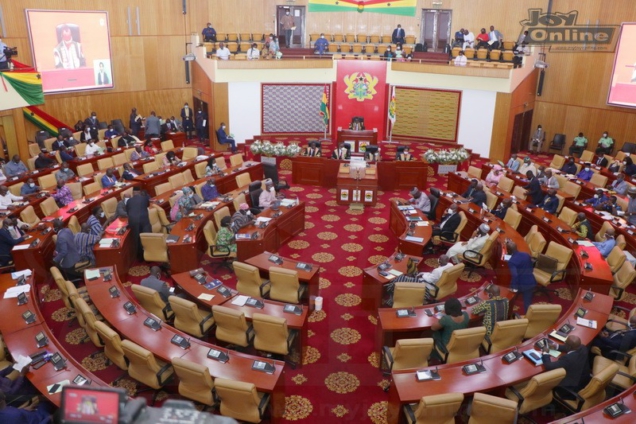
Government laid the Exemptions Bill 2021 in Parliament on 16th November 2021, and it has since been referred to Parliament’s Finance Committee.
The groups are suggesting that under Privileged Persons - Section 9 of the Bill, a new clause be introduced. The new clause should read; “Where an enactment provides for an exemption for the President, the exemption shall be for his personal use in his capacity as President. In pursuance to this section, the President shall appoint in writing a person or an individual by name, address and other relevant identification to undertake all his transactions in each fiscal year or after.”
The groups pushing for these amendments are the Tax Justice Coalition (TJC), Parliamentary Network Africa (PNAfrica), and the Ghana Anti-Corruption Coalition Ghana (GACC), working under the Legislative Advocacy on the Tax Exemptions’ Bill with support from Oxfam.
Ghana provides a number of tax exemptions and incentives to encourage private investment and reduce the tax burden on certain companies operating in the country.
These exemptions must necessarily be approved by parliament first after the companies apply to the Finance Ministry. Foreign companies have reportedly been the largest beneficiaries, but some local ones also do get it.
Statistics indicate that the state loses an amount equivalent to 12.5% of all taxes collected annually, to tax exemptions given to companies by the government and parliament.
The bill when approved is expected to harmonise the tax exemption and incentives regime in the country and help make it more efficient.
An earlier attempt to get it approved in 2020 failed after the life span of the previous parliament expired before approval processes were concluded.
The groups are urging heightened efforts to get it approved this time around but want to see some alterations in the original bill.
They observe that under Section 6 (2) - Responsibility of the Minister, and Section 10 (7) - Diplomats and diplomatic missions, the Bill proposes that “the Ministry shall issue guidelines on the modalities for the vetting and granting of exemptions.”
“We proposed: ‘The Ministry shall issue written guidelines published in the Ministry’s website on the modalities for the vetting and granting of exemptions.’”
The groups also propose amendments to Section 19 (4) - Programmes and projects funded by grants. The Bill proposes that “where the items produced in Ghana are not suitable for the execution of a contract, an application shall be made to the Minister for approval.”
“We propose that Not Suitable be defined in the Bill or in the ensuing Regulations,” they added.
Latest Stories
-
EPCG Moderator urges leaders to serve with courage and humility in Easter message
27 minutes -
The Cobra at the gate: When good intentions overrun the system
32 minutes -
Easter service disrupted in Nyanyano as suspected land guards storm church event
38 minutes -
Price surge exposing NDC gov’ts dishonesty -Titus Glover
42 minutes -
Afigya Kwabre North MP urges Finance and Energy Ministers to submit energy sector report
44 minutes -
Deliver quality or face sanctions — GETFund administrator cautions contractors
1 hour -
Kwahu Easter festivities trigger condom shortages; Health teams boost awareness
2 hours -
Victims of a legend: The women Daddy Lumba left behind
2 hours -
Mahama vows to prioritise roads, social amenities in Savannah region
2 hours -
Mahama sets up 18-member panel to advance Africa-led global health reforms
2 hours -
Ghana Medical Trust Fund Administrator urges hope and compassion in Easter message
2 hours -
Traders, Freight forwarders push back against planned cargo tracking policy
2 hours -
BoG Governor highlights tough trade-offs in monetary policy decisions
2 hours -
Trade Ministry intervenes to stop sachet water price increase, talks set for Wednesday
2 hours -
Onion supply to Ghana threatened as trucks held up in transit dispute
2 hours