

Audio By Carbonatix
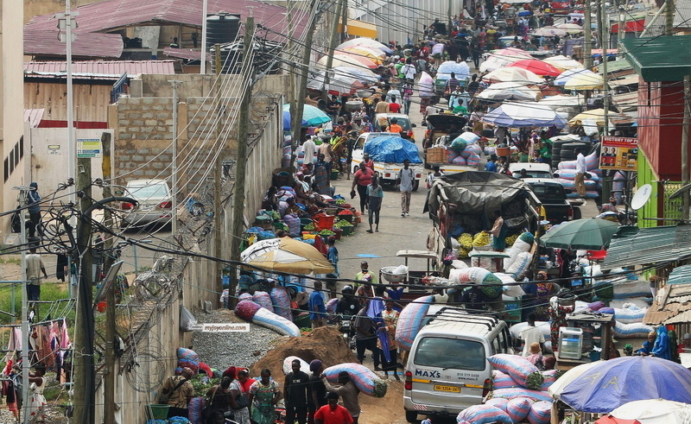
A sprawling open-air pepper market operating illegally along a busy stretch behind Accra Technical University (ATU) in Tudu is exposing students, traders, and commuters to serious respiratory, eye, and food-borne health risks.
Health authorities have raised red flags, warning that the unregulated trading, processing, and handling of pepper have turned the public walkway into a toxic environment, posing a threat to public health and requiring urgent government intervention.
Beyond visible clouds of pepper dust and choking fumes, air-quality data have reinforced the alarm. Health authorities say sensors mounted within the Tudu enclave consistently record high pollution levels linked to the unregulated activity.

Speaking to MyJoyOnline, the Director of Metro Public Health at the Accra Metropolitan Assembly (AMA), Ing. Florence Kuukyi, expressed concern.
“We have one of our air sensors mounted around Tudu, and because of that activity going on, we always have high levels of reading,” she disclosed, noting that the enclave is a major transit zone with international traffic.
She described the site as a major setback to air-quality control efforts in the city.
"This is not comforting,” she said.
“As an assembly that is working so much on air quality, that place is a burden. It is a burden on the environment, a burden on public health, and something that must not be allowed to continue the way it is.”
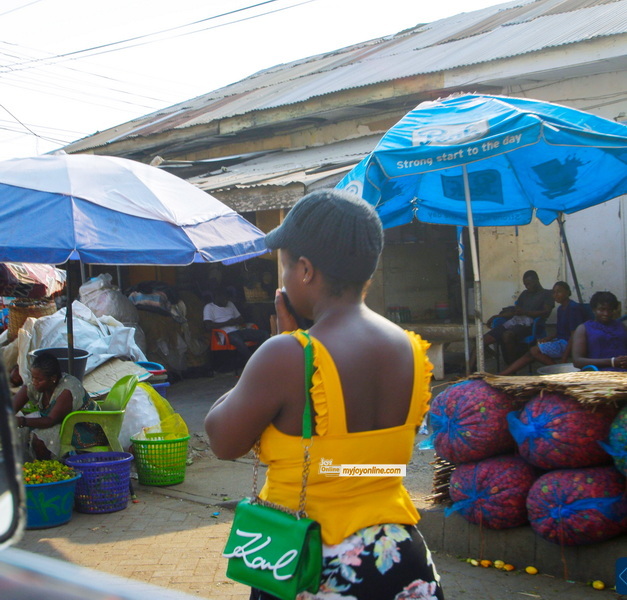
Ing. Kuukyi warned that the manner in which pepper is handled exposes the public to risks beyond discomfort.
Continuous release of organic dust, spores, and particulate matter into a crowded pedestrian space places vulnerable groups, including students and traders, at heightened risk of respiratory illness and eye injuries.
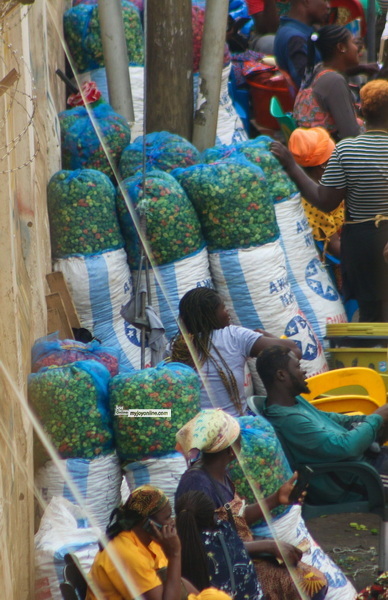
From dawn, sacks of dried pepper are ripped open along the narrow lane behind ATU.
Pepper is poured onto bare ground, sorted, and packaged in the open, sending fine dust particles into the air that drift into nearby shops, hostels, and lecture halls. What should be a simple pedestrian route has become a daily exposure point for hundreds of people.
“I pass through the pepper-selling area almost every school day,” said Hubaida, a student at ATU. “Most times when I pass there, I experience irritation from the pepper dust. I’m often coughing, sneezing, having watery eyes, and finding difficulty in breathing because of the strong smell.”
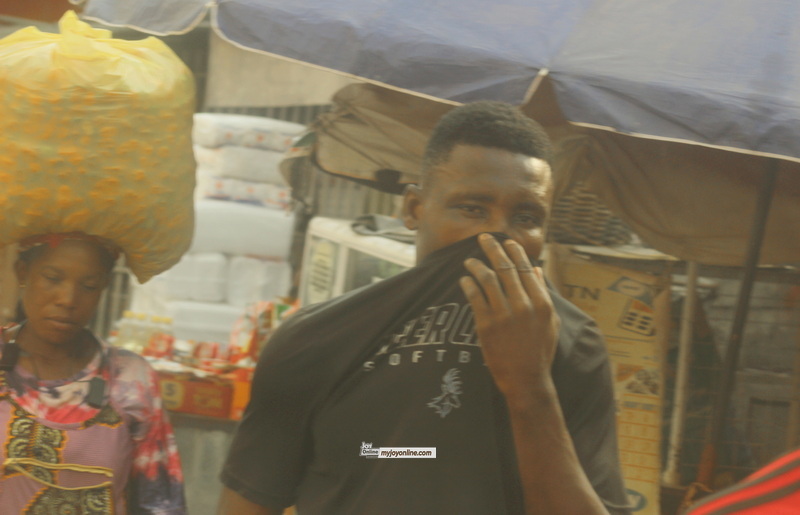
She recounted how quickly exposure can escalate.
"There was a time I passed through the area while pepper was being poured, and the dust was very intense. I started coughing continuously, my eyes became watery, and I had to stop for a while to recover before I could continue walking."
Health officials say such symptoms are not incidental. Medical studies published in the American Journal of Respiratory and Critical Care Medicine identify capsaicin, the compound responsible for pepper’s heat, as a powerful respiratory irritant.
Repeated inhalation can trigger airway inflammation, chronic coughing, and bronchial hyper-responsiveness, particularly in people with asthma or underlying lung conditions.
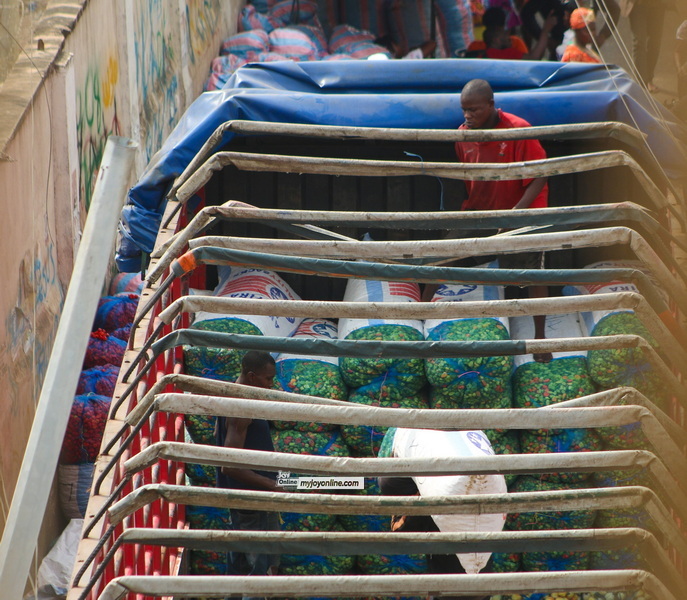
Peter, an ATU degree student, described a frightening encounter: “That’s my usual route because it’s shorter to the station. One time, the wind carried the dust particles and pepper into my eyes. I thought I was going blind. I couldn’t see for two days. Yes, I’m not lying.”
He added that the effects extend beyond personal discomfort.
“When the wind blows everything together and comes to your class, oh my God… even the lecturer has to stop teaching for some time.” He also raised safety concerns about the shared space. “You don’t know whether it’s a road for cars, for human beings to sell, or for human beings to walk.”
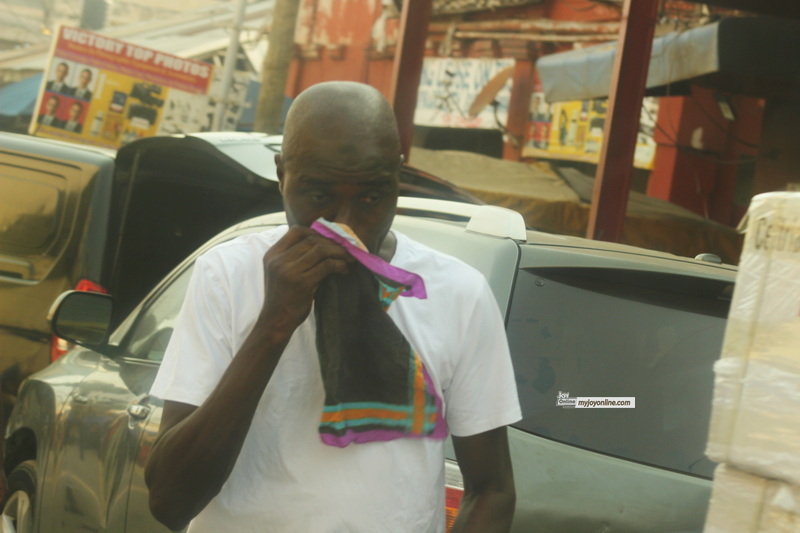
For shop owners trapped along the lane, the impact is environmental and deeply personal. Victory Top Photos, who operates a photo and gadget shop near the pepper sellers, described the last few years as unbearable.
“There’s no day you won’t cough or sneeze; you must carry inhalers every day because we’re always catching a cold,” he said. “Sometimes it’s even worse when the pepper enters your eyes; you wash several times, but your eyes still hurt badly. We’re really suffering.”
He traced the traders’ presence to a cycle of failed relocations.
“These people were by the roadside, and when they were sacked by the Assembly… a certain man came to promise to give them a new location to continue their trade. After he made it a hostel, he moved the pepper sellers there… they were sacked from that place also, and now they have settled along the path in front of ATU’s back gate wall and have remained there.”
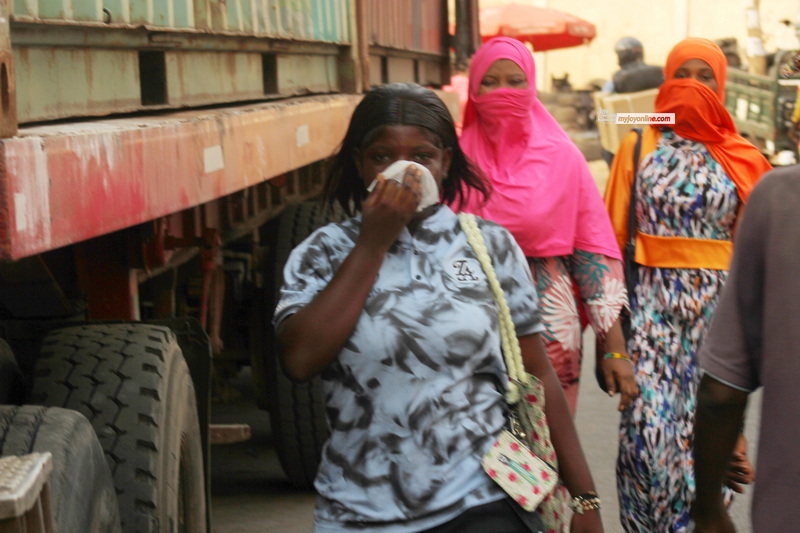
Despite repeated complaints, enforcement has stalled.
"We have complained several times but to no avail… We even took them to Adjabeng… we paid money to them to move them, but the sellers went to pay more, and that was it; they never moved them,” he said.
"These municipal assembly members are always getting money from the traders, so they’re not ready to sack them.”
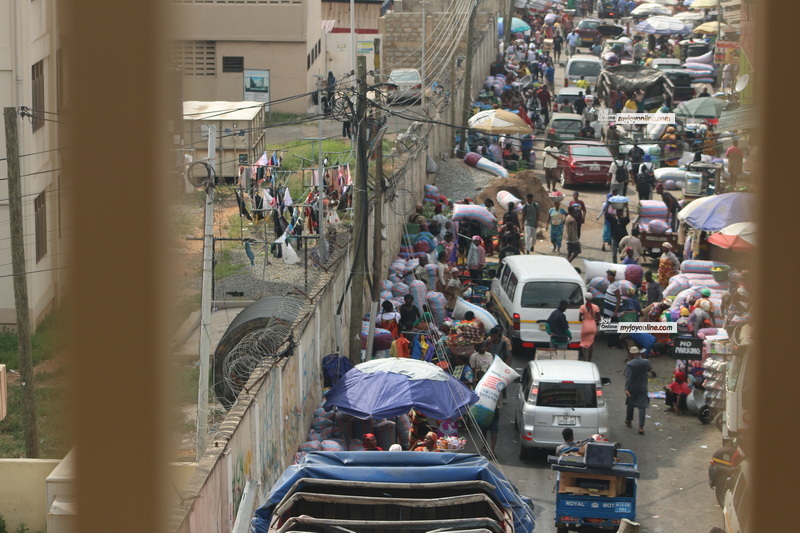
Across the lane, Jamal, a provisions seller opposite the pepper sellers, described an environment sliding into filth. “You see the water passing in front of my shop; it’s from the rotten pepper,” he said.
“When they close, they don’t sweep; they leave the rotten ones on the bare ground like that. These people don’t care about our health. We always leave here sick.”
ATU authorities have reportedly constituted a committee to engage relevant agencies and mitigate the situation, including measures to reduce health risks to students and staff.
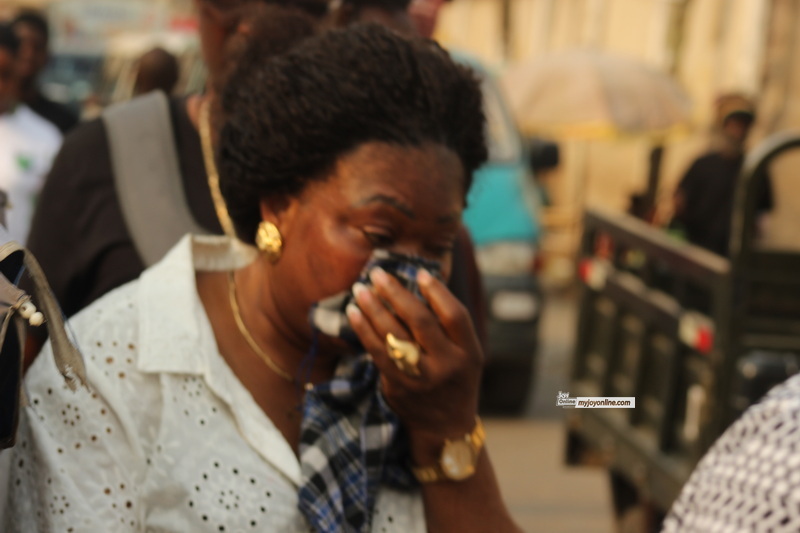
Ironically, the very produce choking the air is widely celebrated for its health benefits.
Pepper (Capsicum) is rich in vitamin C, vitamin A, B6, folate, and potassium. However, in Tudu, unsafe handling has transformed a nutritious food into a toxic exposure.
“When you are selling pepper in the open, it has a health implication,” Director Kuukyi said.
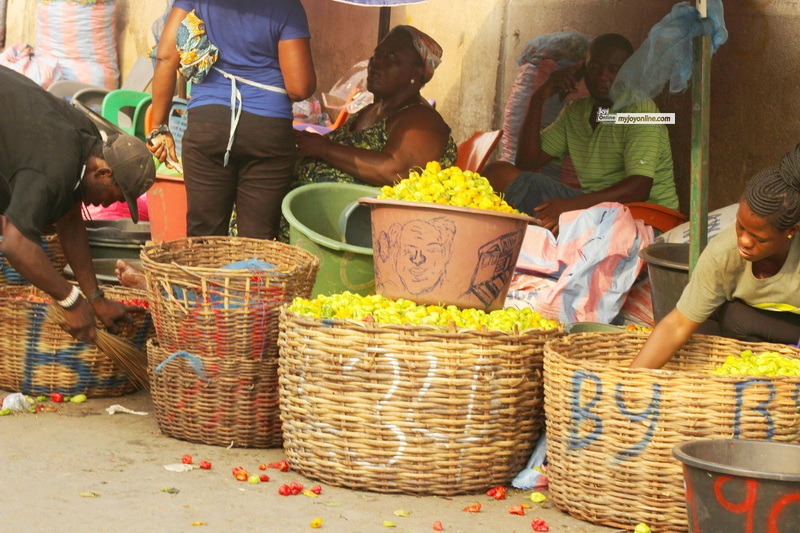
"We have something called aflatoxin contamination because pepper can easily get rotten. And when it starts, we see fungi growing in them… Flies go to perch on human excreta and come to perch on the pepper… they leave what we call salmonella."
"If you don’t have wholesome food products, you end up preparing food that is not wholesome. And when you consume unwholesome food, we all know what happens. Food safety is everyone’s business… About 89% of city dwellers patronise street food. If food products are sold in an unhygienic environment, it has an impact on health.”
She explained that jurisdictional confusion has compounded the problem.
"That place is not for AMA; it’s for Korley Klottey,” she said, referencing the municipal split of 2018. She stressed that interim measures include hygiene education, medical screening, hand-washing enforcement, and encouraging mask use.
Longer-term plans involve relocating traders into structured markets, including future 24-hour economy markets modelled on Makola, Agbogbloshie, and CMB.
Latest Stories
-
Padel for Parkinson’s cycling event promotes awareness at University of Ghana
36 seconds -
GPL 2025/26:Samuel Tetteh brace fires Nations FC past Basake Holy Stars
9 minutes -
Ghana’s oil trade position close to net neutral in near term – Fitch
31 minutes -
IMANI Africa President urges greater awareness and support for Parkinson’s Disease patients
42 minutes -
T-bills: Government records 29% undersubscription; interest rates continue to surge
43 minutes -
Perceptions of Judicial partisanship ‘unfortunate’ – Justice Adjei-Frimpong urges greater public engagement to build trust
47 minutes -
Ghana to honour Christina Hammock Koch for historic Artemis II mission
2 hours -
Supreme Court appointments require more than 15 years’ experience – Justice Adjei-Frimpong
2 hours -
Fire destroys 3-bedroom house at Bogyawe
2 hours -
Why the Supreme Court is a “policy court” – Justice Richard Adjei-Frimpong breaks it down
2 hours -
Playback: The Law discussed Supreme Court @150
4 hours -
MTN Momo staff walk to promote wellness and fitness
4 hours -
Assafuah: Sedina Attionu’s return from Nevada will test government’s commitment to accountability
4 hours -
How GRA’s Modified Taxation Scheme is boosting revenue compliance & SMEs competitiveness
4 hours -
Stonebwoy Can Do It: A call to unite behind 2026 BHIM Fest
5 hours