

Audio By Carbonatix
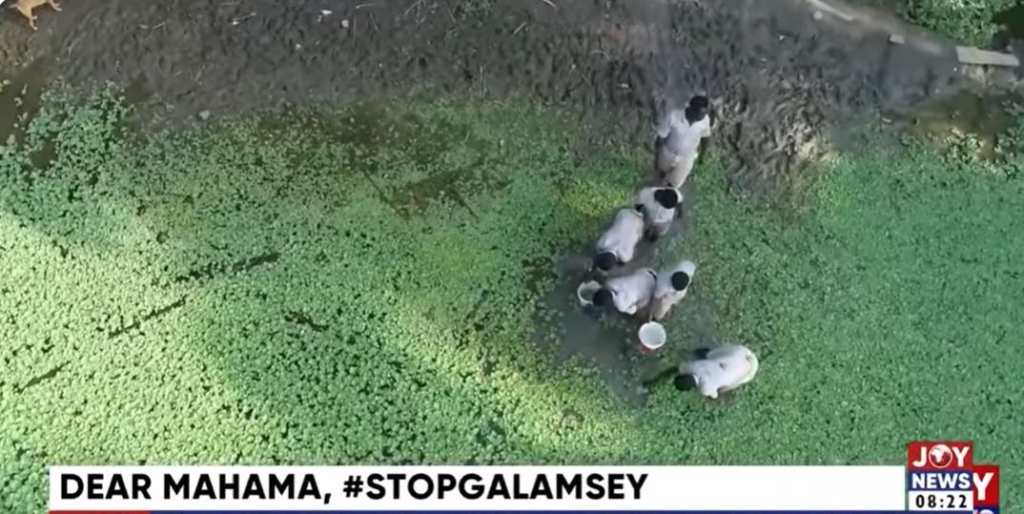
A grim reality is unfolding in Kwesitwikrom, a small farming community in Ghana’s Central Region. Teenage girls are being forced to choose between using foul, muddy pond water during menstruation or skipping school altogether.
This distressing revelation features in the first episode of JoyNews’ Dear Mahama Series, which exposes the far-reaching social and economic toll of illegal mining, popularly known as galamsey, across Ghana.
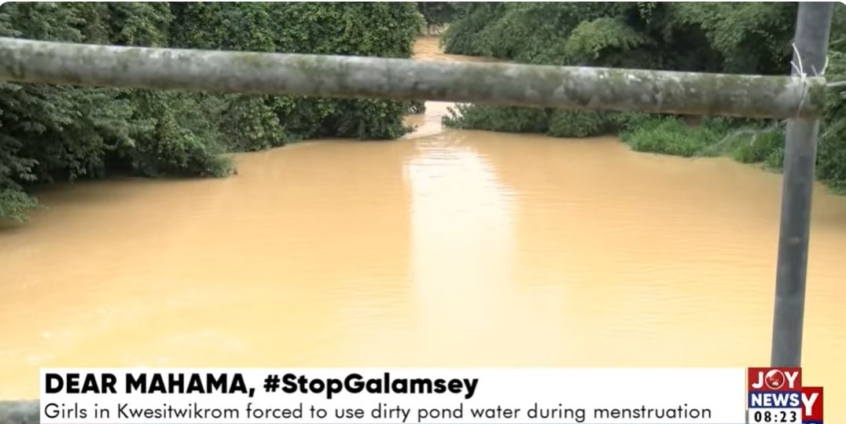
For two months now, residents of Kwesitwikrom in the Agona East District have been living without access to clean water. The Kwanyaku Water Treatment Plant, which serves several communities, was shut down after raw water from the Ayensu River became too polluted to treat, thanks to illegal mining upstream.
For girls like Ewurajoa, a Form 3 pupil at Kwesitwikrom Basic School, menstruation has become a period of fear and frustration.
“There’s a water crisis, and fetching from the pond is difficult, especially when we have to use it for cooking, washing, or bathing,” she told JoyNews.
“I’m a girl, and using this water when I’m menstruating is very difficult, but I have no choice. Sometimes I don’t even have time to boil it because we use firewood. I just use it quickly so I can get to school on time.”
Ghana has made strides in girls' education. Enrollment has risen more. Girls are staying in school, and conversations around menstrual hygiene have grown louder. But in Kwesitwikrom, a water crisis fueled by illegal mining threatens to erode those gains.
For months now, taps have run dry following the shutdown of the Kwanyaku headworks, unable to treat raw water from the heavily polluted Ayensu River. The absence of clean water strips young girls of their dignity and privacy inside the classroom. Menstruation is silent, and its weight is heavy.
“Our menstrual health is declining because of illegal mining,” another student lamented.
“We need clean water to wash ourselves properly. Without that, infections become common, and some girls stop coming to school.”
For many, this crisis isn’t just about water; it’s about dignity, health, and the future of young girls whose education is being quietly eroded by the consequences of galamsey.
“I’m preparing for my final exams, so I try to be punctual,” Ewurajoa added softly. “But it’s hard to concentrate in class when you feel unclean.”
Even teachers at the school are alarmed by the situation. Robert Yankey, the science teacher, fears the long-term health consequences for his students.
“Assuming there’s no water, and a girl is on her menses, how will she even clean herself without access to potable water? Do you want that girl to use contaminated water to wash her private parts? It means she’ll be prone to infections. This is unacceptable,” he lamented.
The community’s chief, Nana Kwesi Twi IV, has also expressed deep concern about the daily toll the water crisis is taking on his people, especially the children.
He called for urgent government intervention.
Meanwhile, the girls are making a passionate appeal to the authorities. “We are pleading with the government to help us by stopping illegal mining. We just want to go to school without being stressed about water.”
Latest Stories
-
Kwaku Azar writes: A-G vs OSP
9 minutes -
Mfantsipim–Adisadel rivalry built excellence, not division – Sam Jonah
33 minutes -
Vice President launches Mfantsipim’s 150 years of shaping Ghana’s greatest mind
50 minutes -
I assure Otumfuo, Mahama will join him to commission KNUST Teaching Hospital by end of this year – Haruna Iddrisu
2 hours -
Gov’t to roll out free special education for persons with disabilities from July 1 – Education Minister
2 hours -
“We used it to test our officiating officials’ readiness” – Bawah Fuseini after CAA Athletics event
2 hours -
Volleyball emerges as Ghana’s fastest rising sport
2 hours -
National Sports Fund needs strong leadership from the top – Administrator David Wuaku
3 hours -
JoySports Exclusive: Steve McLaren in talks with GFA after expressing interest in Black Stars job
3 hours -
Fire guts auto parts warehouse at Bubuashie, one fire officer injured
3 hours -
I owe my victory to coach Ofori Asare – Allotey after winning WBA Africa Gold Super Flyweight belt
3 hours -
Church of Pentecost supports over 2,000 BECE candidates in Obuasi with career guidance seminar
5 hours -
Brandon Asante and Coventry all but promoted to Premier League despite Sheffield Wednesday draw
5 hours -
GPL 2025/26: Late Kwartemaa strike downs Hearts in Tema
5 hours -
Ghana Faces Sierra Leone Moment as Prosecutorial Powers come under strain
5 hours