

Audio By Carbonatix
Denmark has officially endorsed Morocco's Autonomy Plan for Western Sahara, marking the Nordic country as the 18th European nation to support the proposal.
This backing highlights the Autonomy Plan as the most serious and credible solution to the nearly five-decade-long Sahrawi conflict, which began after Spain’s withdrawal as a colonial power.
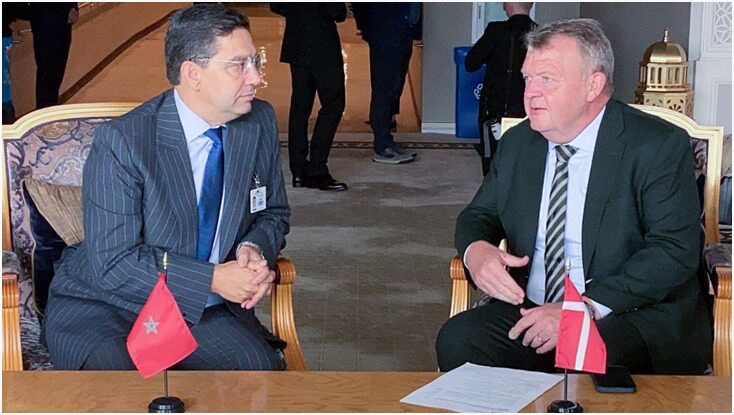
The Moroccan Ministry of Foreign Affairs confirmed Denmark's stance following a meeting between Moroccan Foreign Minister Nasser Bourita and his Danish counterpart Lars Løkke Rasmussen on the sidelines of the 79th Session of the UN General Assembly in New York.
Denmark's endorsement represents another diplomatic win for Morocco as it seeks broader international support, especially in Northern Europe.
Morocco has consistently sought global backing for its territorial integrity, claiming Western Sahara as part of its southern provinces.
The Autonomy Plan, first presented to the UN Security Council in 2007, outlines a framework for broad autonomy under Moroccan sovereignty while adhering to UN resolutions.
The proposal grants the Sahrawi region significant self-governance, with Morocco retaining control over defence and national policy.
International recognition of Morocco's proposal has been steadily growing, with over 100 countries, including the United States, France, Germany, Israel, the UAE, and Spain, supporting it as the most realistic pathway to resolving the conflict.
On the opposing side, the Polisario Front, supported by Algeria, continues to push for a referendum on Sahrawi independence, though this option has encountered numerous challenges, including the establishment of an electoral roll.
Algeria’s unwavering support for the Polisario Front remains a major point of contention between the North African neighbours, leading to the severance of diplomatic ties in August 2021. Algeria’s stance continues to challenge Morocco's sovereignty claims over Western Sahara, intensifying tensions in the region.
Denmark's support follows that of Slovenia in June and signals a growing European consensus around Morocco’s proposal.
Last August, Denmark also expressed initial support for the Autonomy Plan, which it now formalizes as the most viable resolution for the Sahrawi conflict.
Morocco, in turn, continues its plans to develop Western Sahara, drawing interest from the international community, which views the initiative as a balanced solution for all parties involved, including Algeria.
Moroccan Prime Minister Aziz Akhannouch, alongside Foreign Minister Bourita, emphasized Morocco's position at the UN, reinforcing that the rising international support sends a clear message: the time has come to move forward with a political solution rooted in Morocco's framework, through roundtable discussions and Security Council resolutions.
Latest Stories
-
Mahama endorses ADB at Kwahu Business Summit
50 minutes -
Every gram will be tracked – Gold Board unveils traceability push to deal with illegally-mined gold
56 minutes -
Analysis: Why the Bank of Ghana sold half its gold reserves
1 hour -
Buy wrong gold, face prosecution – Gold Board CEO cracks down on rogue dealers
1 hour -
Africa pushes integrated health agenda ahead of One Health Summit in Lyon
2 hours -
We own the strategy, its not head office decision – GCB MD positions bank as engine of Ghana’s economy
2 hours -
No more waiting for head office – GCB boss pushes Ghana-first banking
2 hours -
Mahama lauds Julius Debrah for shaping Kwahu Business Forum
2 hours -
Why actors beg in difficulty – Patience Ozokwor on Nollywood financial struggles
3 hours -
Any man who apologises to woman deserves to suffer – Brymo
3 hours -
Nigerian artistes no longer put effort into making music – Omah Lay claims
3 hours -
‘I’m now skeptical about going into politics’ – Davido
3 hours -
Nigeria’s Seplat Energy resumes operations as oil workers halt strike action
3 hours -
Nigeria launches manhunt after abductions by bandits in northwest Zamfara
4 hours -
Kenya fuel executives resign as state probes supply chain irregularities
4 hours