

Audio By Carbonatix
A tit-for-tat deportation row between Ghana and Israel has cast a sudden chill over a relationship spanning more than six decades. Ghana's swift reciprocal action, following the alleged “ill-treatment and unjustified deportation” of its citizens by Israeli authorities, signals a new firmness in Accra's foreign policy approach to protecting its nationals abroad. While both sides have agreed to pursue an amicable resolution, the episode has exposed diplomatic fault lines that require careful handling.
Reciprocal Action Sends Clear Message
The immediate trigger was the deportation of three Ghanaian nationals from Israel’s Ben Gurion International Airport on December 7, 2025. The incident also saw four members of a Ghanaian parliamentary delegation detained for over five hours. The deported Ghanaians included individuals travelling to attend an international cybersecurity conference and one on a pilgrimage. Ghana's response—the expulsion of three Israelis who had just arrived in Accra—was an act of direct reciprocity, intended to underscore a demand for mutual respect.
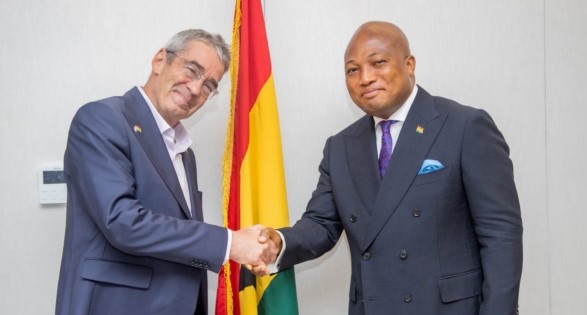
Ghana’s Minister for Foreign Affairs, Samuel Okudzeto Ablakwa, a member of the governing National Democratic Congress (NDC), was unequivocal. “The Government of Ghana has been compelled to activate appropriate reciprocal action by deporting three Israelis who arrived in Ghana earlier today, following the ill-treatment and unwarranted deportation of three Ghanaians,” he stated.
He later confirmed in a public statement: “We made it clear that Ghana will respond decisively to any unjustified treatment of our citizens.” This firm stance has resonated with many Ghanaians, for whom the dignity of the passport is paramount. A Ghanaian citizen in Accra, speaking anonymously, noted, “It is good that the government is showing that we are not a weak country. They need to respect us, just as we respect their people here.”
The Ministry of Foreign Affairs, in announcing the decision, also confirmed the summons of the Chargé d’Affaires ad interim at the Embassy of the State of Israel, in the absence of an ambassador. The Ministry described the actions of Israeli authorities as “inhumane and traumatic,” condemning them as “extremely provocative, unacceptable and inconsistent with our friendly historical relations.”
Israel Urges Quiet Diplomacy
In Jerusalem, the response has been more guarded. An Israeli official, speaking to MyJoyOnline, insisted the matter was merely a “consular problem” and denied that any apology had been issued. The official stressed that such issues are typically resolved “quietly between two friendly and mature states,” suggesting Israel’s preference for discreet diplomatic engagement rather than public exchanges.
The dispute highlights a growing friction point around immigration. Israeli authorities had reportedly linked the deportations to alleged non-cooperation from the Ghanaian Embassy in Tel Aviv—a claim Ghana’s Ministry of Foreign Affairs described as “totally untenable.” Israel’s position contrasts with Minister Ablakwa’s assertion that Israeli authorities had apologised and called for de-escalation, stating: “The Israeli authorities, through the attaché, have now apologised for the action they carried out and have called for de-escalation.”
Call for Strategic Restraint
The episode has prompted calls for restraint from Ghana’s main opposition party, the New Patriotic Party (NPP). The Ranking Member on Parliament’s Foreign Affairs Committee, Samuel Abu Jinapor, urged a more strategic and less public approach.
“Any effort by the Government of Ghana to protect the interests and dignity of Ghanaians abroad should be welcomed,” he said, but cautioned that “it is important for the Minister for Foreign Affairs to take the path of quiet, calm and strategic diplomacy in dealing with these matters.”
Mr Jinapor described the conflicting accounts as concerning and said clarity was needed to preserve Ghana’s diplomatic credibility. He added that Ghana’s foreign policy response must be guided by sound judgement, prudence and measured engagement through appropriate diplomatic channels.
The divergent views on managing the crisis—public firmness versus quiet negotiation—reflect the delicate balance inherent in foreign policy. While Minister Ablakwa believes a public show of strength is necessary to protect citizens, Mr Jinapor emphasises the need to preserve Ghana’s long-standing diplomatic reputation.
The Path Forward for Bilateral Ties
Ghana and Israel share a history of cooperation dating back to 1958, shortly after Ghana’s independence. Diplomatic ties were re-established in 1994 after a period of suspension, and the relationship has since deepened in areas such as trade, technology, agriculture and security.
The current dispute, however, comes amid existing differences, including Ghana’s recent critical stance on Israeli military operations in Gaza and its consistent pro-Palestinian voting pattern at the United Nations.
Ghana’s diplomatic move serves as a firm affirmation that close bilateral relations must be grounded in reciprocal dignity and respect. The Ministry of Foreign Affairs reiterated this position, stating: “Ghana deeply values our relations with all friendly countries and expects our citizens to be treated with dignity and respect in much the same way as other governments expect Ghana to treat their nationals.”
Following the reciprocal actions, attention has now shifted fully to diplomatic engagement. Both countries face the task of translating their public commitment to an “amicable resolution” into concrete outcomes. For Ghana, the Government’s message remains clear: “The Government of Ghana will continue to safeguard the dignity of its nationals, as well as that of other nationals.”
The challenge will be to maintain this principled stance while ensuring that the long-term, mutually beneficial relationship with Israel remains intact. Observers across Africa and beyond will be watching closely to see whether strategic diplomacy can successfully de-escalate this sudden and testing moment in an otherwise enduring partnership.
Latest Stories
-
The WTO is debating trade: The world runs on investment
10 minutes -
Minority questions gov’t purchase of fuel-powered buses, pushes for electric alternative
12 minutes -
GFA Executive Council to decide on new Black Stars coach ahead of 2026 World Cup
13 minutes -
One injured as fire destroys 14-bedroom house at Kwame Danso
21 minutes -
GACL struggling despite recording profit, levy needed for expansion – Agalga
24 minutes -
Kwahu Business Forum: Ghana Sports Fund calls for stronger corporate backing for sports dev’t
33 minutes -
Polling is no longer measuring opinion, it’s manufacturing it – Opong-Fosu
1 hour -
Penplusbytes’ statement on police action against deepfake and misinformation activities in Ghana
1 hour -
QNET, EOCO partnership showcased at UN global fraud summit as model for fighting organised crime
1 hour -
Mussa Dankwah is like a ‘lotto doctor’ – Miracles Aboagye
1 hour -
Investors target Ho Airport for training and maintenance hub — GACL Chair
1 hour -
NDC’s ‘grand deception’ on anti-LGBTQ+ bill exposed – Ntim Fordjour
1 hour -
Speak out against Mahama government’s LGBTQI+ u-turn – Ntim Fordjour to clergy
1 hour -
Opong-Fosu raises alarm over decline of national values
1 hour -
Ghanaians worse off despite improved macroeconomic indicators — Miracles Aboagye
1 hour