

Audio By Carbonatix
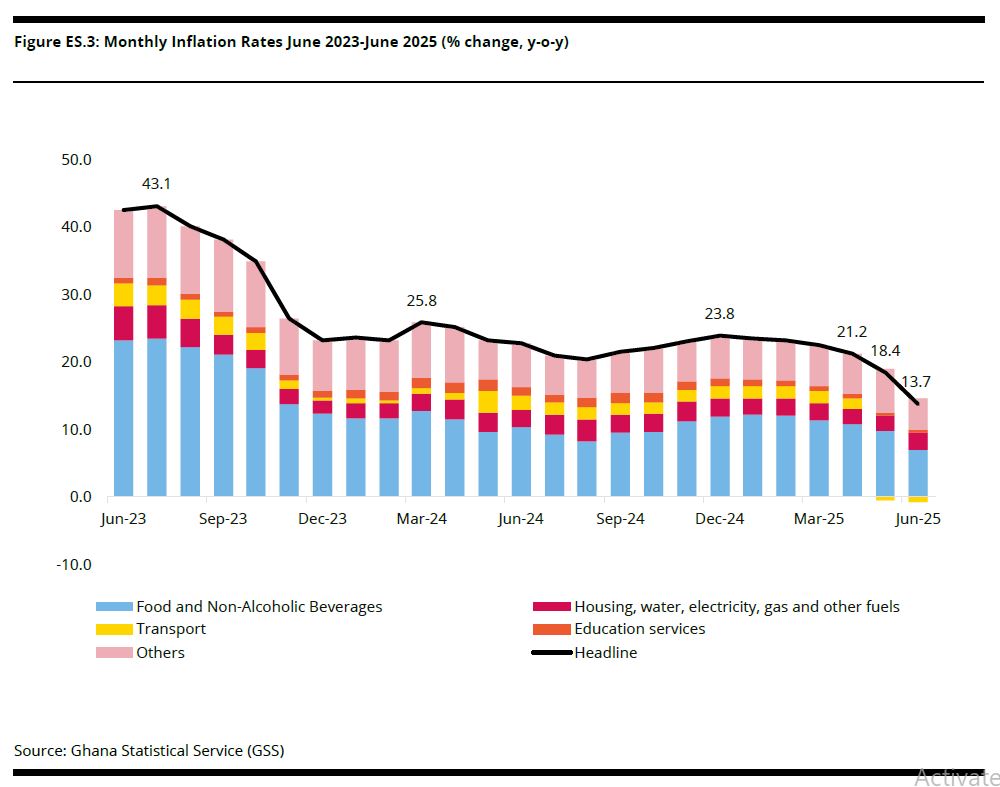
Ghana has successfully resumed its disinflationary path in 2025, with a significant decline in headline inflation driven by a tight monetary policy, a stronger currency, and improved macroeconomic conditions.
According to the World Bank Group's 9th Economic Update on Ghana, this trend marks a positive shift after the disinflationary process stalled in 2024.
The report notes that headline inflation has seen a continuous decline since December 2024, reaching a notable 13.7 percent in June 2025.
This six-month-long reduction reflects a broad-based easing of price pressures across core, food, and non-food categories.
"The decline was influenced by a tighter monetary policy rate of 28 percent, improved macroeconomic conditions, and a significant rebound of the currency," the report states.
- slot pulsa
- situs slot 5000
- slot deposit 5000
- royalhoki77
- https://poolsafetygroup.com.au/what-we-do/
- https://patorama.com.au/helicopter-photography/
- https://reactmaintenancegroup.com.au/electrical-maintenance/
- https://www.100plumbing.com.au/work-with-us/
- slot maxwin
- https://finishingblade.ca/Banner/
- https://tubulousaustralia.com.au/gallery/
A key factor in this success has been the remarkable performance of the Ghanaian cedi, which appreciated against all major currencies in the year to June 2025.
This has marked a dramatic turnaround from its struggles in previous years.
The cedi’s appreciation was supported by a combination of a tight monetary policy stance, ongoing fiscal consolidation, and interventions by the Bank of Ghana (BoG) in the foreign exchange (FX) market, according to the report.
The World Bank also acknowledges the crucial role of the BoG's interventions in managing liquidity and supporting the currency.
However, it offers a word of caution, stating that these interventions "should be managed carefully to avoid distortions in the currency market and allow for a more flexible exchange rate regime."
This advice underscores the need for a balance between maintaining stability and ensuring market efficiency.
The strong disinflationary trend and cedi's rebound are seen as positive indicators that Ghana's stabilization and recovery reforms are taking hold.
This is giving the Mahama administration the confidence to pursue its ambitious reform agenda, aimed at restoring growth and achieving long-term fiscal sustainability.
Latest Stories
-
Ghana not immediately threatened by fuel shortages – Energy Ministry
1 second -
Ghana records eight deaths, over 1,000 mpox cases since May 2025 – Health Minister
11 seconds -
X probes offensive Grok chatbot posts as AI safety concerns intensify
2 minutes -
Planet One announces TVET projects worth $327m in three West African countries
9 minutes -
UN Chief condemns attack on Ghanaian peacekeepers in Lebanon, demands accountability
15 minutes -
US-Israeli air campaign hits hundreds of military targets in new wave of Iran strikes
20 minutes -
Ghana must lead Africa in criminalising environmental destruction – Annoh-Dompreh
21 minutes -
US-Israeli war against Iran enters new phase with rise of hardline successor Mojtaba Khamenei
26 minutes -
Kofi Adu Domfeh honoured with Excellence in Climate Journalism and Advocacy Award
27 minutes -
WPL 2025/26: Hasaacas, Ampem Darkoa Ladies close in on another final
29 minutes -
Bole MP donates GHS200,000 to support teacher training college establishment
44 minutes -
Danyame Old Town residents face eviction on a land occupied for 200 years
47 minutes -
60% of our water bodies are polluted – Minority Chief Whip pushes Ecocide Law
47 minutes -
Gov’t distributes seized ‘galamsey’ water pumps to farmers to boost irrigation – Dumelo
54 minutes -
MC Abeiku Sarkcess ignites Sarkodie’s Rapperholic UK with high-energy command
59 minutes