

Audio By Carbonatix
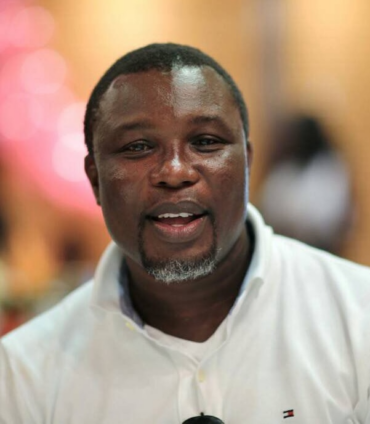
The President of the Federation of Ghanaian Exporters (FAGE), Davies Korboe, is urging Ghana to adopt a “push-pull” farming system to transform the country’s agricultural sector. He argues that a coordinated approach between large-scale farmers and smaller producers could significantly boost production and exports.
Speaking on JoyNews on March 9 during a discussion on “What Must Change” in Ghana’s agricultural sector, Mr Korboe explained that the model, which links major commercial farmers with smaller outgrowers, would help improve quality, raise yields, and ensure farmers produce for ready markets.
He stressed that while government support is important, producers and exporters must also play a stronger role in restructuring the sector.
“I think for me, as a country, we have to be intentional about what we do as far as agriculture is concerned. Inasmuch as the government is playing its role, we, the producers and exporters, should also do our part,” he said.
Mr Korboe described the push-pull system as one in which a major “nucleus farmer” anchors production by providing incentives, technical support, and market access to smaller farmers, known as outgrowers. Under this arrangement, the nucleus farmer secures the market, while outgrowers produce to meet demand, ensuring better coordination across the value chain.
“When I talk about the push-pull system, you have the nucleus farmer and the smaller farmers, the outgrowers, where you deploy incentives to the nucleus farmer and make sure they take care of the outgrowers to produce to feed the market,” he noted.
He added that the system also improves monitoring of production standards, certification, and overall quality — essential requirements for export markets.
Mr Korboe cited Brazil as an example, where cooperative-style agricultural systems, supported by government policies, have helped large players in the agri-food sector thrive.
Beyond production systems, he criticised Ghana’s current approach to irrigation, describing it as too fragmented to support large-scale agricultural growth.
“Irrigation cannot just be a borehole-style system. It should be a comprehensive irrigation system where you bring water to the doorsteps of producers so everybody benefits,” he said.
He further questioned why Ghana continues to import basic food commodities despite having climatic conditions similar to neighbouring countries.
“If you go to the north, the climate is as perfect as the same Burkina Faso climate. The same White Volta and the tributaries are in the same corridor. So what is the difference?”
Mr Korboe highlighted the ongoing dependence on neighbouring countries for key vegetables:
“Sixty-nine years, and we are still travelling to Burkina Faso and Niger to bring tomatoes and onions, whereas we have the same temperature and the same climate.”
He called for stronger investment in irrigation infrastructure, better market systems, and structured farmer support programmes to enable year-round farming and strengthen Ghana’s agricultural export potential.
Latest Stories
-
Imagination Africa, Mentors Chess Academy to host second African Genius Chess Championship at Ghud Park
47 minutes -
Nana B passport claims a diversionary tactic — Abu Jinapor
2 hours -
Pope Leo diagnosed with cancer as doctors remove lobe of lung, Vatican says
2 hours -
Legal Aid Commission takes free legal services to Techiman main lorry terminal
2 hours -
Nana B denies seeking passport favour, accuses Ablakwa of failing to account for GH¢16.4m
2 hours -
Young girls demand climate action, stronger protection against child marriage
2 hours -
Ex-gang boss sentenced to 40 years for orchestrating Tupac Shakur’s murder
2 hours -
From near-deferral to three awards: UMaT graduate’s academic journey
2 hours -
Atta Akyea denies seeking presidential pardon for Wontumi in galamsey case
3 hours -
Photos: Mahama commissions 85-bed Police Hospital ward, donates two ambulances
3 hours -
GTEC directs Ghana’s public universities to reopen by October 16 and begin lectures on October 19
3 hours -
Star Oil donates GH¢1million towards construction of new CID facility
3 hours -
Court hands Adjetey Sowah, two others lifetime bans after Amputee Football legal dispute
3 hours -
NDC appoints Julius Kwame Anthony as a Deputy Communications Director
3 hours -
Ghana repatriates 120 Nigerians rescued from suspected cybercrime centres
3 hours