

Audio By Carbonatix
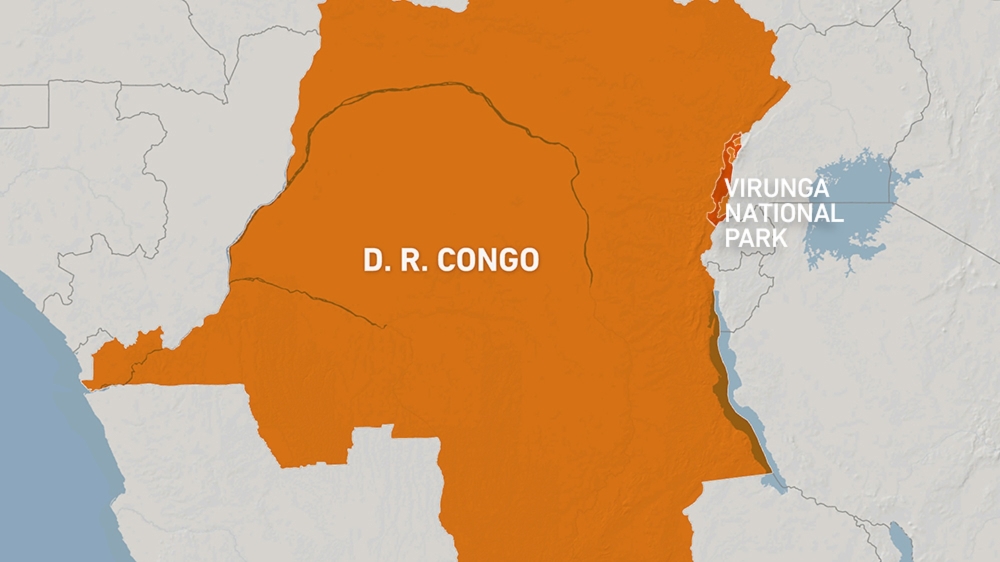
Several people, including rangers, have been killed in an attack in Virunga National Park in the eastern Democratic Republic of the Congo (DRC).
In a statement on Friday, park authorities said a major assault by armed groups on Rumangabo village "resulted in substantial loss of life" including rangers, other employees and civilians.
Cosma Wilungula, director of the Congo Institute for Nature Conservation (ICCN), was quoted as saying by Reuters News Agency that 16 people, including 12 rangers, were killed in the attack, with many others seriously wounded.
A security source cited by AFP news agency put the death toll at 13 rangers and five civilians.
"The guards were not the target and died while assisting the civilian vehicle that had been caught under fire from the attackers," the Virunga National Park, a UNESCO World Heritage Site and a popular tourist attraction, said in the statement.
Expressing sadness over the attack, one of the deadliest to hit the park, the statement described it as a "devastating day for Virunga National Park and the surrounding communities".
There was no immediate claim of responsibility, but Wilungula said some 60 fighters from the Democratic Forces for the Liberation of Rwanda (FDLR) ambushed a convoy of civilians that was being protected by the rangers.
Commenting on the wider context of the attack, Phil Clark, of the School of Oriental and African Studies in London, told Al Jazeera: "FDLR is a Hutu-dominated rebel group. The reason it is fighting the Congolese army at the moment is because the Congolese government is in the process of renewing relations with the Rwandan government. And that is a Tutsi-dominated government."
He added: "Rwanda wants Congo to deal with the FDLR, which they see as a Hutu threat across the border - killing Tutsi civilians inside Congo. The FDLR also has a history of going across the border into Rwanda."
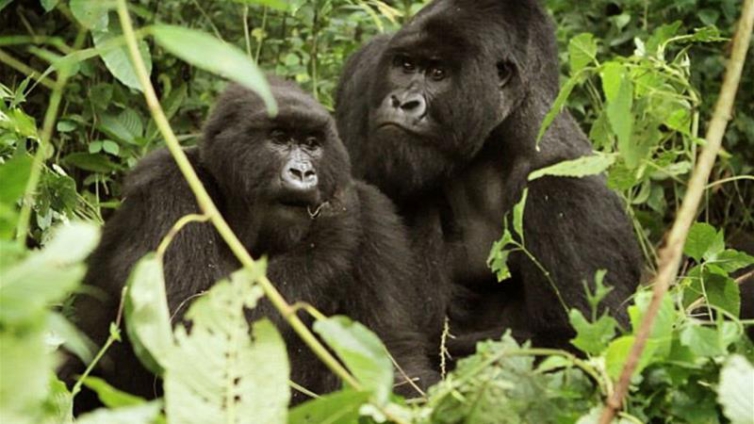
Virunga National Park is spread more than 7,800 square kilometres (3,011 square miles) over the borders of the DRC, Rwanda and Uganda. The park is home to a world-famous population of mountain gorillas but has been hit by rising instability and violence.
Inaugurated in 1925, the park has witnessed repeated attacks by rebel groups, militias and poachers.
Visits to the park have been suspended since March 19 for at least 30 days as part of the DRC's efforts to halt the spread of the new coronavirus.
The park banned visitors between May 2018 and the start of last year after two British tourists were kidnapped there. They were later released but a ranger was killed during the abduction.
Latest Stories
-
Ghana Health Service responds to dead fish incident at Tema Port
10 minutes -
David Vondee lauds Mahama for emergency Cabinet meeting and key resolutions
17 minutes -
Universities should focus on churning out impactful graduates rather than merely adding new programmes — UEW VC
19 minutes -
Publican AI system is speeding up trade, not slowing it — GRA Boss
23 minutes -
Government to construct a FIFA category 2 stadium in the Volta Region – James Gunu
32 minutes -
CAF to introduce reforms to fix AFCON final controversies – Patrice Motsepe
33 minutes -
EOCO defends probe into Kwamigah-Atokple
35 minutes -
Fuel tanker accident at Breku Forest spills thousands of litres of diesel
41 minutes -
IEAG backs Publican AI system after concerns addressed
44 minutes -
No new taxes or charges- GRA boss assures importers over rollout of Publican AI system
44 minutes -
Egypt goalkeeper banned for striking referee
45 minutes -
Police restore calm following clashes between Asisiriwa and Brodekwano
46 minutes -
Education sector job seekers must submit certificates for verification – GTEC
48 minutes -
Volta Lake accident highlights lax safety regulations — Savannah Regional Minister
48 minutes -
UEW Vice-Chancellor calls for rethink of Ghana’s education system at 2026 Public Lecture
54 minutes