

Audio By Carbonatix
“Africa’s mineral wealth must no longer be a paradox of abundance without prosperity,” Director of the United Nations University Institute for Natural Resources in Africa (UNU-INRA), Prof. Fatima Denton, has said, following the release of a new report on critical minerals and development on the continent.
The report, titled “Africa Redefining Critical Minerals for a Shared Future: South-South Solidarity in Action,” was released on Thursday, February 12, 2025, and calls for stronger cooperation among countries in Africa, Latin America, and Asia to turn mineral resources into drivers of industrialisation, energy security, and technological advancement.
Speaking on the findings, Prof. Denton stressed that Africa’s minerals are not only vital for the global energy transition but also for the continent’s own development.
“Africa’s minerals are critical not only for the world’s decarbonisation agenda but for Africa’s own industrialisation, energy security, and technological advancement,” she said.
Turning resources into development
The report argues that Africa’s vast mineral wealth has not translated into broad-based economic growth because the continent remains largely at the periphery of global value chains.
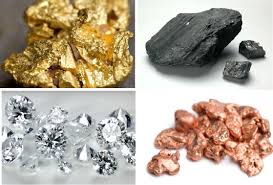
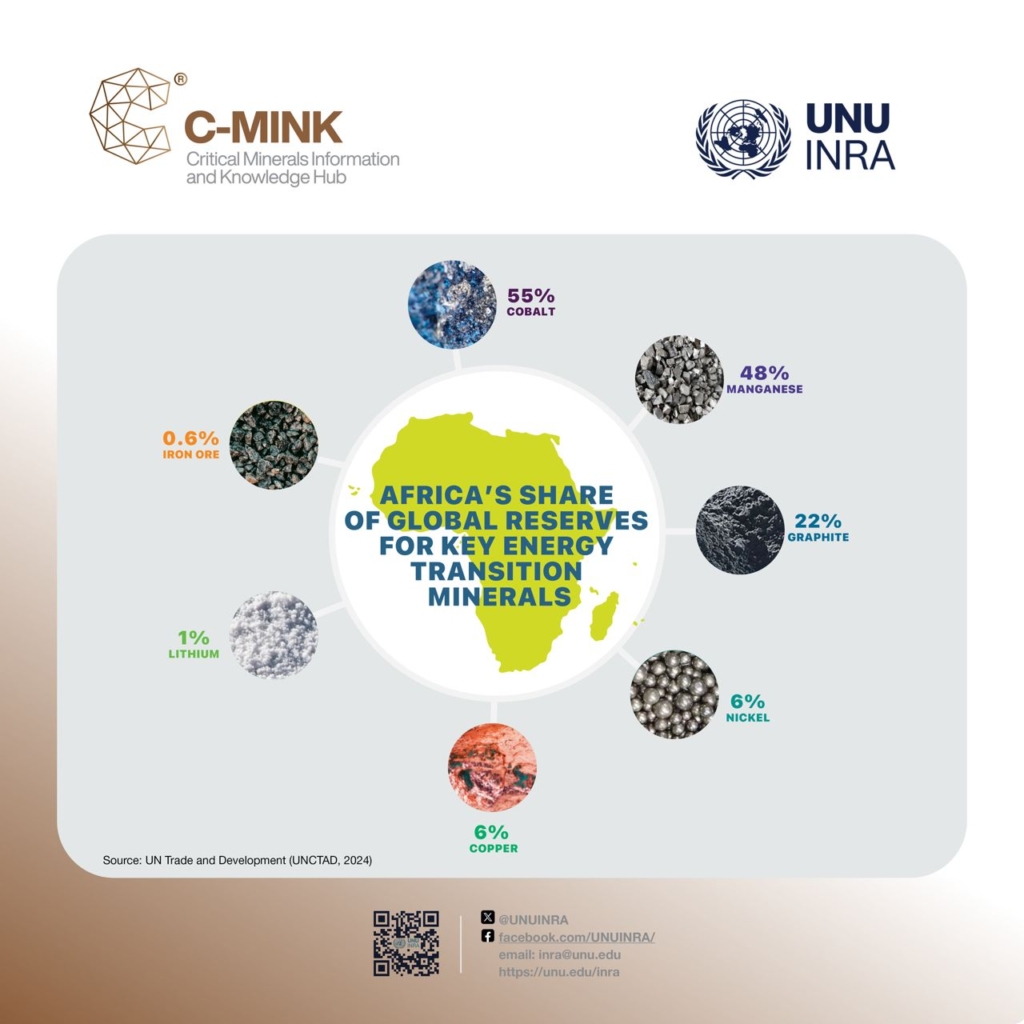
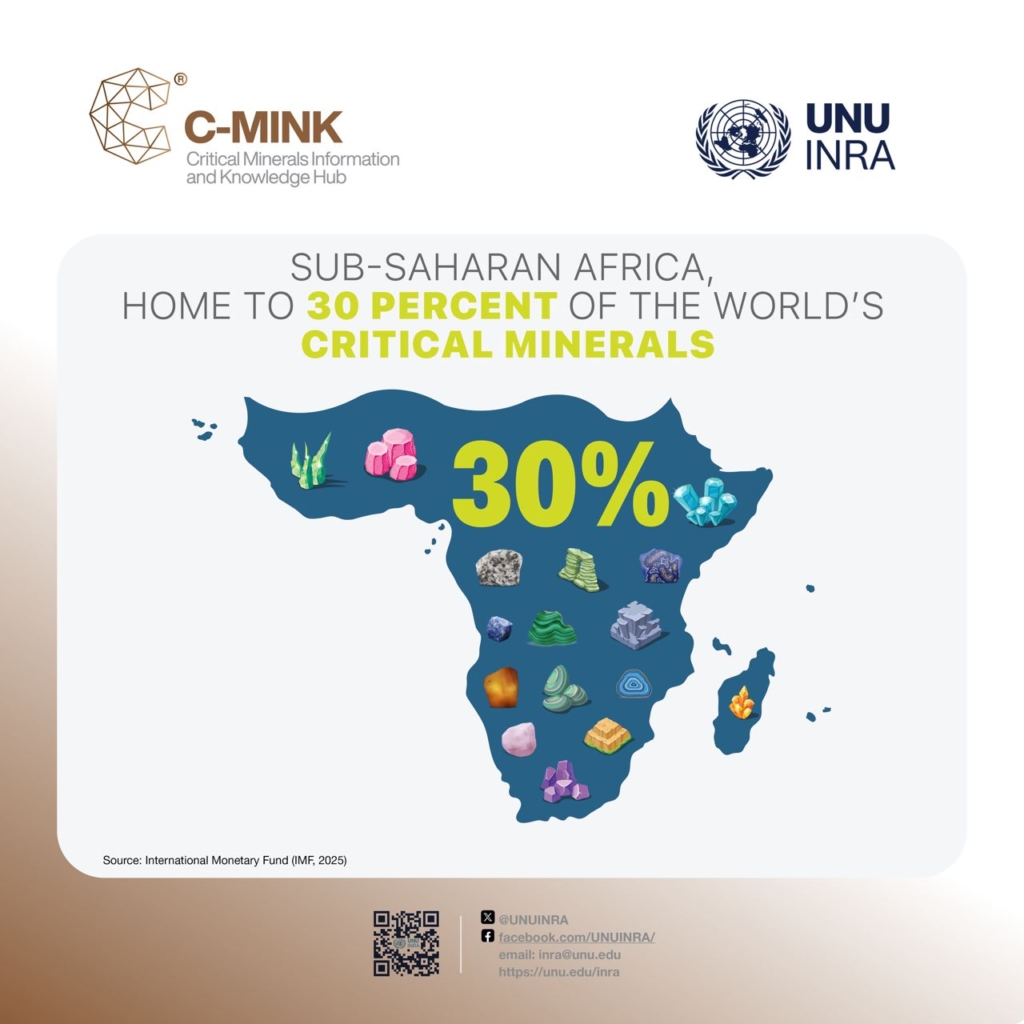
According to the study, Africa holds nearly one-third of the world’s critical mineral reserves, including cobalt, lithium, manganese, and copper — key resources for renewable energy, electric vehicles, and digital infrastructure.
However, most of these resources are exported in raw form, limiting job creation, technology transfer, and value addition.
To address this, the report urges African countries to embed minerals into domestic production systems and invest in local processing, manufacturing, and innovation.
It estimates that global revenues from copper, nickel, cobalt, and lithium could reach $16 trillion by 2050, with Sub-Saharan Africa capable of capturing more than 10 per cent of that value if the right policies are put in place.
Focus on South-South cooperation
A central theme of the report is the importance of South-South collaboration among countries in Africa, Latin America, and Asia.
It calls for shared knowledge, joint technological development, and collective investment to build what it describes as a new form of multilateralism rooted in cooperation among developing economies.
The report notes that by pooling experiences and expertise, countries in the Global South can co-design solutions that strengthen green value chains and reshape the decarbonisation agenda.
It also advocates for African expertise to be paired with partners in Asia and Latin America to promote shared prosperity in the critical minerals sector.
C-MINK and mineral governance
The report forms part of UNU-INRA’s Critical Minerals Information and Knowledge Hub (C-MINK) initiative, which aims to position Africa at the centre of global mineral governance.
C-MINK serves as a platform that brings together policymakers, researchers, and investors to translate research into practical strategies for sustainable mineral development.
According to UNU-INRA, the initiative seeks to ensure that mineral ownership translates into real control, effective governance, and value creation for African countries.
Relevance for Ghana and the region
For Ghana and other mineral-producing countries in the region, the report’s findings come at a time of growing interest in lithium, bauxite, and other strategic minerals.
Government efforts to expand local processing and attract investment into value addition have been ongoing, but challenges remain in infrastructure, financing, and regulation.
Latest Stories
-
Five new telephony cell sites to be activated in October 2026 – Sam George
2 minutes -
Amin Adam raises sovereign-bank nexus concerns as banks hold GH¢190bn in government debt
7 minutes -
Government to increase Free SHS feeding allowance in 2027 Budget – Haruna Iddrisu
12 minutes -
Nadowli-Kaleo NCCE engages women’s groups on rule of law, corruption fight
13 minutes -
Mahama visits factories in Afienya/Tema
18 minutes -
TraffiTech-GH pilot reduces road crash injuries, fatalities
23 minutes -
IMF Chief identifies 2 major threats posed by AI to global economy
28 minutes -
Go back to the hand washing days – Ghanaians told
33 minutes -
GoldBod commits GH¢35m to reclaim galamsey-damaged Tano Nimri Forest Reserve
38 minutes -
Afenyo-Markin reflects on loneliness of public service, says survival is largely spiritual
45 minutes -
Achimota Court designated to handle petroleum diversion cases – NPA CEO
53 minutes -
Bekwai court jails mine worker 14 years for defiling 8-year-old girl
58 minutes -
CHASS conference calls for collective action to tackle indiscipline in schools
1 hour -
Oil edges down as investors weigh possible US sanctions on ‘shadow fleet’
1 hour -
Netflix names former Disney executive Peter Rice as new content chief as Bajaria departs
1 hour