

Audio By Carbonatix
Persistent weaknesses in the implementation of audit recommendations and the management of public funds continue to drive audit infractions across Africa, despite improvements in audit reporting standards, experts have said.
Mr Samuel Nii Odartey Lamptey, Deputy Auditor-General for Commercial Audit, said operational challenges within audit institutions are affecting the timeliness and coverage of audits, with implications for accountability.
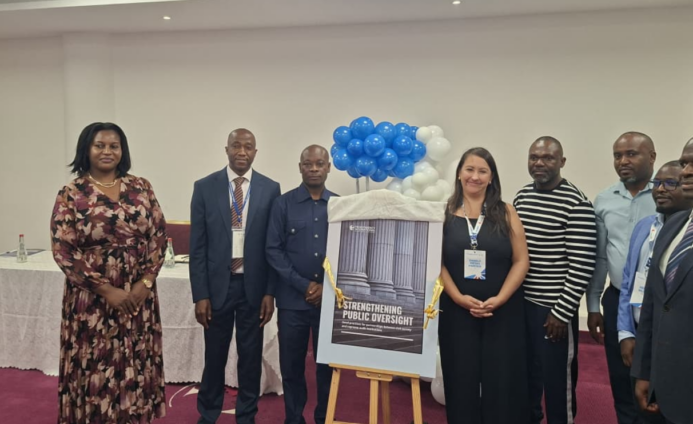
The concerns were raised at the launch of a research report by Transparency International Ghana in Accra, where stakeholders highlighted gaps in accountability systems and called for stronger collaboration to address financial irregularities.
The event formed part of the 2026 Africa Regional Meeting of Transparency International, which brought together participants from across the continent to advance anti-corruption efforts and strengthen public financial management systems.
“In some instances, we are unable to execute audits within the expected timelines, and this sometimes leads to outsourcing. These delays affect how much of our work gets completed within schedule,” Mr Lamptey said.
Mr Lamptey explained that increasing workload pressures mean audit institutions are sometimes unable to cover all sectors comprehensively, which can allow irregularities to go undetected or unaddressed for extended periods.
On public engagement, Mr Lamptey emphasised the need to make audit findings more accessible, noting that overly technical reports often limit citizen understanding and participation in governance.
“One of the things that we have to do is to bring down our audit reports into meaningful segments for the larger public,” he stated.
Mr Lamptey further called for deeper collaboration between Supreme Audit Institutions and civil society organisations, stressing that partnerships would strengthen oversight and improve accountability outcomes.
“We are calling for larger collaboration and networking to ensure that we do not undertake accountability alone but work with civil society institutions to protect the public interest,” he added.
Also speaking at the event, Mr George Phiri, Senior Manager at the INTOSAI Development Initiative, said the major challenge across African countries lies in the weak enforcement of audit recommendations rather than the absence of credible audit reports.
“An audit report is just an audit report, but what matters most is how that report is implemented. That is where we see significant gaps across countries.” Mr Phiri said.
Mr Phiri noted that audit reports on the continent consistently point to weaknesses in financial accountability, particularly in how public funds are utilised.
“In many of these reports, the key issue is the accountability of funds — how allocations made by parliament are used. Often, the utilisation is weak, and that can give rise to corruption,” he explained.
Mr Phiri added that although audit institutions in many African countries produce high-quality reports, their effectiveness is influenced by broader governance systems.
“It depends on the country context and the level of democracy, but implementation remains a common challenge,” he said.
The research report launched at the event highlights the importance of structured collaboration between audit institutions and civil society organisations.
According to the findings, a co-creation approach where both actors jointly design and implement accountability initiatives can improve the relevance and impact of audit processes.
Mr Phiri stressed that without a clear and structured approach, accountability efforts risk becoming ad hoc and less effective in addressing systemic issues.
He said unresolved audit infractions, including weak financial controls, delayed audits, and poor enforcement mechanisms, continue to affect public service delivery and increase the risk of corruption across the continent.
Mr Phiri emphasised that strengthening implementation frameworks, improving transparency, and promoting citizen participation would be critical to ensuring that audit findings translate into tangible governance reforms.
Latest Stories
-
Government procures over 2,000 transformers as Ghana’s electricity access hits 89.13% – Energy Minister
13 minutes -
UTAG-UG threatens strike on October 19 over unpaid allowance
21 minutes -
Let The Constitution direct Chieftaincy to deliver “All Development Is Local”
2 hours -
John Jinapor outlines renewable energy, nuclear power priorities for 2027
2 hours -
Ghana explores centre of excellence for hearing, communication and cochlear implant care
3 hours -
Schizophrenia-related disorders lead mental health cases recorded in Ghana
3 hours -
Dutch authorities enlist Ghana in hunt for fugitive drug lord Bolle Jos
4 hours -
Ghana housing finance conference adopts communiqué to improve affordable housing access
8 hours -
Special Initiatives Minister urges Wa Technical Institute to enrol more girls as EU-backed solar training lab opens
9 hours -
In the matter of my first year at the Bar
9 hours -
ActionAid Ghana calls for an end to child marriage, greater investment in girls’ rights
9 hours -
Newsfile to tackle World Cup visa scandal, beach demolitions, education strikes, BRICS bid
9 hours -
UK-Ghana Trade & Investment Summit: Trade Resource Centre to help businesses maximise UK-Ghana trade opportunities
9 hours -
Embassy of Denmark celebrates World Maritime Day
10 hours -
Linking LEAP to productive inclusion could cut extreme poverty by 2030 – UNICEF
11 hours