

Audio By Carbonatix
Agricultural ministers from the member states of the EU have reached an agreement on reforming the Common Agricultural Policy. The deal, several years in the making, will place a bigger focus on environmental protection.
The EU member states announced on Wednesday morning in Luxembourg that they had come to an agreement over reforms to the Common Agricultural Policy (CAP).
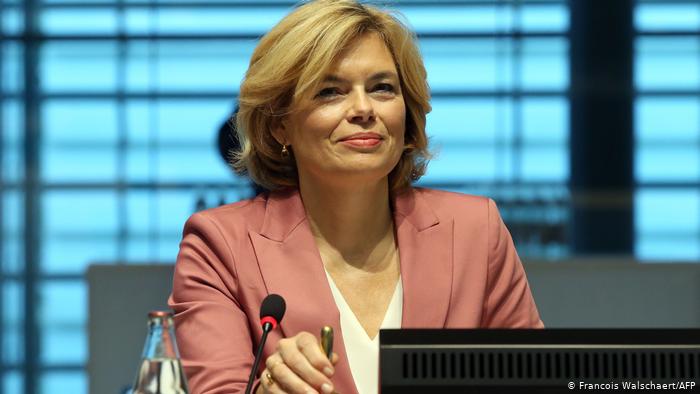
The talks lasted almost two days before agricultural ministers from the EU member states were able to reach an agreement following a proposal by the German agricultural minister, Julia Klöckner.
The CAP allocates billions of euros and as such constitutes the biggest share of the EU's budget. Many farmers are dependent on money from Brussels in order to stay in business.
A long time in the works
"After a long and hard struggle, we've reached a milestone," Klöckner said in a live press conference following the finalization of the agreement.
She welcomed the new agreement on environmental protections while also ensuring that people in the EU would still be able to "put food on the table."
The German politician celebrated the deal with an announcement on Twitter, saying "we made it. A milestone for a reorientation of EU agriculture, with green architecture at its core.
For Germany, this means €1 billion of our budget will be used for ecological rules/biomeasures, while at the same time maintaining a balance with income and food security."
The EU Commissioner for Agriculture and Fisheries Janusz Wojciechowski also announced the agreement on Twitter and thanked the "German Presidency for its efforts to take forward the work of the former Presidencies and for tabling compromise proposals."
Under the new proposal, member states will have a greater level of freedom over how they achieve the agreed upon goals regarding the conservation of nature, environmental protection and ensuring food quality.
States will have to send their policy plans to be approved by the EU Commission. States must also offer further "eco-measures" which go beyond the obligatory environmental protections — any farmer who follows these voluntary rules will be given extra funds.
The new reform will come into effect in 2023 and includes a two-year "learning period."
Latest Stories
-
IMANI demands review of SIGA directive steering SOEs toward SIC placements
2 minutes -
Climate change and pollution threaten livelihoods of White Volta fishermen
10 minutes -
First Atlantic Bank targets regional growth and digital expansion in 2026 outlook
13 minutes -
Bond market: Turnover surges 559.42% to GH¢2.49bn
17 minutes -
Dagomba line residents begin rebuilding after Easter Monday inferno
17 minutes -
ECG substation upgrade exercise: parts of Accra to experience power outages
21 minutes -
IMANI petitions Mahama over alleged procurement breaches in state insurance placements
26 minutes -
First Atlantic Bank posts strong 2025 results as profit surges 30.5%
29 minutes -
Maguire signs contract extension with Man United
31 minutes -
The WTO is debating trade: The world runs on investment
58 minutes -
Minority questions gov’t purchase of fuel-powered buses, pushes for electric alternative
1 hour -
GFA Executive Council to decide on new Black Stars coach ahead of 2026 World Cup
1 hour -
One injured as fire destroys 14-bedroom house at Kwame Danso
1 hour -
GACL struggling despite recording profit, levy needed for expansion – Agalga
1 hour -
Kwahu Business Forum: Ghana Sports Fund calls for stronger corporate backing for sports dev’t
1 hour