

Audio By Carbonatix
Agricultural ministers from the member states of the EU have reached an agreement on reforming the Common Agricultural Policy. The deal, several years in the making, will place a bigger focus on environmental protection.
The EU member states announced on Wednesday morning in Luxembourg that they had come to an agreement over reforms to the Common Agricultural Policy (CAP).
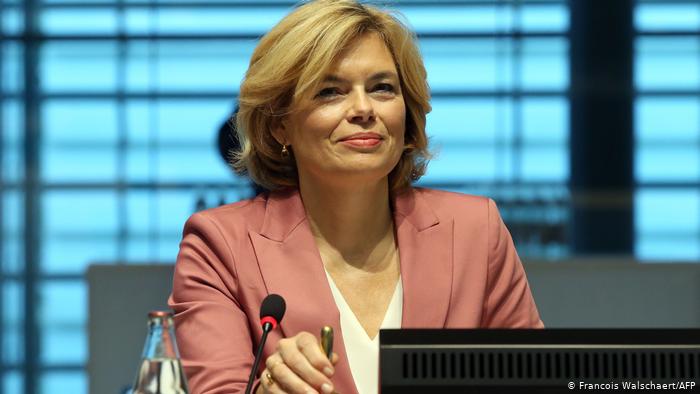
The talks lasted almost two days before agricultural ministers from the EU member states were able to reach an agreement following a proposal by the German agricultural minister, Julia Klöckner.
The CAP allocates billions of euros and as such constitutes the biggest share of the EU's budget. Many farmers are dependent on money from Brussels in order to stay in business.
A long time in the works
"After a long and hard struggle, we've reached a milestone," Klöckner said in a live press conference following the finalization of the agreement.
She welcomed the new agreement on environmental protections while also ensuring that people in the EU would still be able to "put food on the table."
The German politician celebrated the deal with an announcement on Twitter, saying "we made it. A milestone for a reorientation of EU agriculture, with green architecture at its core.
For Germany, this means €1 billion of our budget will be used for ecological rules/biomeasures, while at the same time maintaining a balance with income and food security."
The EU Commissioner for Agriculture and Fisheries Janusz Wojciechowski also announced the agreement on Twitter and thanked the "German Presidency for its efforts to take forward the work of the former Presidencies and for tabling compromise proposals."
Under the new proposal, member states will have a greater level of freedom over how they achieve the agreed upon goals regarding the conservation of nature, environmental protection and ensuring food quality.
States will have to send their policy plans to be approved by the EU Commission. States must also offer further "eco-measures" which go beyond the obligatory environmental protections — any farmer who follows these voluntary rules will be given extra funds.
The new reform will come into effect in 2023 and includes a two-year "learning period."
Latest Stories
-
FTBLRLIFE targets Ghana in expansion of global grassroots football network
5 minutes -
Former ‘American Idol’ contestant sentenced to life without parole for wife’s murder
1 hour -
Education Ministry commends Ghanaian teachers on World Teachers’ Day 2026
2 hours -
NPP can reconcile with aggrieved members who want to return – Nana Akomea
2 hours -
Tamale Child Deaths: Vehicle owner arrested as IGP deploys homicide team
2 hours -
From ShattaFest to MoMo Fest: Entertainment takes centre stage in youth engagement
2 hours -
Nigerian military aircraft crashes, killing 32
2 hours -
MTN encourages Ghanaians to use MoMo for saving, investing and financial planning
2 hours -
Absa Bank Ghana names Stephen Ato Frimpong as Board Chair
3 hours -
Pickford ‘almost caused crash’ with careless driving
3 hours -
Author and former politician Jeffrey Archer dies aged 86
3 hours -
No education reform can succeed without teachers – Education Ministry
3 hours -
Gauff condemns racist abuse after China Open win
3 hours -
Medvedev disqualified for hitting spectator with ball
3 hours -
Oliseh scores twice in late comeback win for France
3 hours