

Audio By Carbonatix
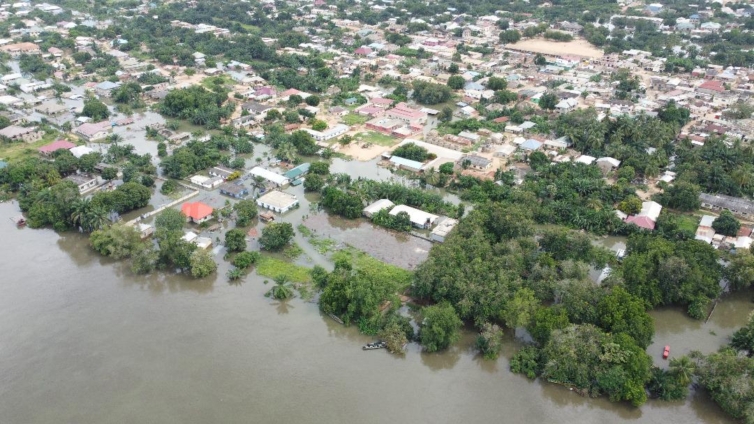
The recent controlled spillage from the Akosombo Dam has not only highlighted the immediate need for rescue and relief operations but also the importance of understanding the enduring public health ramifications of such events.
As the waters recede, the full extent of the damage becomes apparent, extending far beyond the initial destruction and into the very fabric of community health.
This calamity has exacted a heavy toll on the local populace, stripping away properties and leaving a trail of disruption in its wake. In expressing our solidarity with the victims, we recognize the necessity of shifting focus to the subsequent health issues that such a disaster invariably introduces.
The potential for outbreaks of waterborne and foodborne illnesses, compounded by the risk of psychological distress, transforms this from a mere environmental debacle into a complex public health emergency.
The need for accurate information is critical; quantifying the disaster's impact through data on displacement, illness, and mental health disturbances is indispensable. Such statistics are the bedrock upon which we can build effective and responsive public health strategies.
As we parse through this data, the enhanced risk of infectious diseases in the disrupted ecosystem becomes evident.
Addressing this risk requires a robust combination of disease surveillance, preventative measures, and health education efforts that are accessible to all affected individuals.
In parallel to disease prevention, the mental health fallout from the spillage demands immediate and sensitive intervention.
Offering psychological support and counseling services is a lifeline for those grappling with the trauma, with particular attention needed for the most vulnerable populations like children and adolescents, who are susceptible to long-term developmental disruptions.
The situation is particularly dire for children who have not only lost their homes but potentially their futures as well. The psychological impact on young minds, coupled with specific challenges faced by young girls, such as access to menstrual hygiene products, calls for urgent attention to protect and nurture these young lives.
Moreover, individuals with pre-existing health conditions find themselves in perilous situations, as the floodwaters may have swept away their lifelines of medication and routine care.
Securing healthcare facilities and ensuring they are equipped to handle the surge in demand is a matter of life or death for those with chronic conditions.
Recognising the multifaceted challenges, it is incumbent upon public health experts and governmental bodies to conduct a thorough post-spillage evaluation. This is not only to address the current crisis but also to lay the groundwork for future incident preparedness.
Informing residents about planned spillages in advance can significantly curtail both the human and economic toll of such events.
The thread of community resilience weaves through the entire fabric of disaster response and recovery. By engaging with affected communities in resilience-building initiatives, we pave the way for not just a return to normalcy but to a state of improved preparedness against future calamities.
In conclusion, the controlled spillage at the Akosombo Dam serves as a stack reminder of the latent dangers inherent in such infrastructure. It's a call to action for long-term commitments to public health and disaster readiness. As we band together to address the immediate aftermath, we must also look ahead, ensuring that the strategies we implement are not mere stopgaps but steps towards a resilient and prepared society.
About the authors; Michael Sarfo is a Part-time lecturer and Researcher at the University of Huddersfield, UK.
Godness Biney is a Global Health Expert and Researcher at the University of Massachusetts Amherst, USA.
Latest Stories
-
Israel-bound flight diverted after fight between pilots
4 minutes -
EchoWave earns praise for sound quality at 10th Women in Worship
13 minutes -
Crackdown on South Africa’s unsafe streets ordered by president to keep women safe
25 minutes -
Banks are responding to improved monetary policy conditions – John Awuah
44 minutes -
Judges’ conference forces further adjournment of Salomey Baffoe case to Oct. 5
56 minutes -
Chorkor community joins AC4NCA clean-up to tackle marine and coastal pollution
1 hour -
GRA assures Tullow of collaboration to settle $393m tax liability without disrupting its petroleum operations
1 hour -
South Korea demands apology from Pyongyang for landmine blasts that injured three
1 hour -
Carlos Queiroz not the sort of coach Black Stars need – Nii Lante Vanderpuye
2 hours -
AFCON 2027Q: ‘Our Black Stars team is gone’ – Former Sports Minister
2 hours -
Prof. Prempeh calls for public review of draft constitutional reform bills
3 hours -
AFCON 2027Q: ‘I have never seen a poor performance from Black Stars like against Gambia’ – Nii Lante Vanderpuye
3 hours -
Bawumia backs insurance sector reforms after engagement with IBAG
3 hours -
Nigeria set to launch National Digital Address System 9 years after Ghana showed the way
3 hours -
Policy rate decision takes time to reflect in lower lending rates – BoG
3 hours