


Audio By Carbonatix
An expert panel of policymakers, academics, private sector leaders, and civil society organizations has called for urgent reforms to Ghana’s Public-Private Partnership (PPP) regulatory framework in order to accelerate infrastructure delivery and attract greater private sector investment.
The call was made at the 2nd PPP Expert Panel Roundtable, held at the British Council in Accra under the theme “Revamping PPP Delivery in Ghana: Policy, Reform, and Acceleration.”
The event was organised by Innovation Inc. (UK) in collaboration with Project Excellence and Innovation Ghana, Anglia Ruskin University (UK), and CUTS West Africa.
Reform and Stronger Frameworks
Opening the session, Dr. Joseph K. Ofori-Kuragu, PPP expert from Anglia Ruskin University and President of Innovation Inc., stressed the urgent need to review and strengthen Ghana’s PPP ecosystem.
He argued that robust policies, institutional frameworks, and streamlined processes are critical to ensure more projects reach financial close, thereby boosting investor confidence and participation in Ghana’s infrastructure agenda.
Chairing the discussions, Dr. Frederick Addo-Abedi, former Deputy CEO of the Ghana Highways Authority, emphasized bold and strategic reforms. He highlighted the need to empower government agencies with greater autonomy to execute PPPs effectively and called for political leaders to deepen their understanding of PPPs as a long-term tool for development rather than short-term financing alternatives.
Lessons from History and Future Directions
Delivering the keynote address, Dr. David Ofosu-Dorte, Senior Partner at AB & David Africa, drew lessons from historical PPP projects such as the Suez Canal and Ghana’s Akosombo Dam.
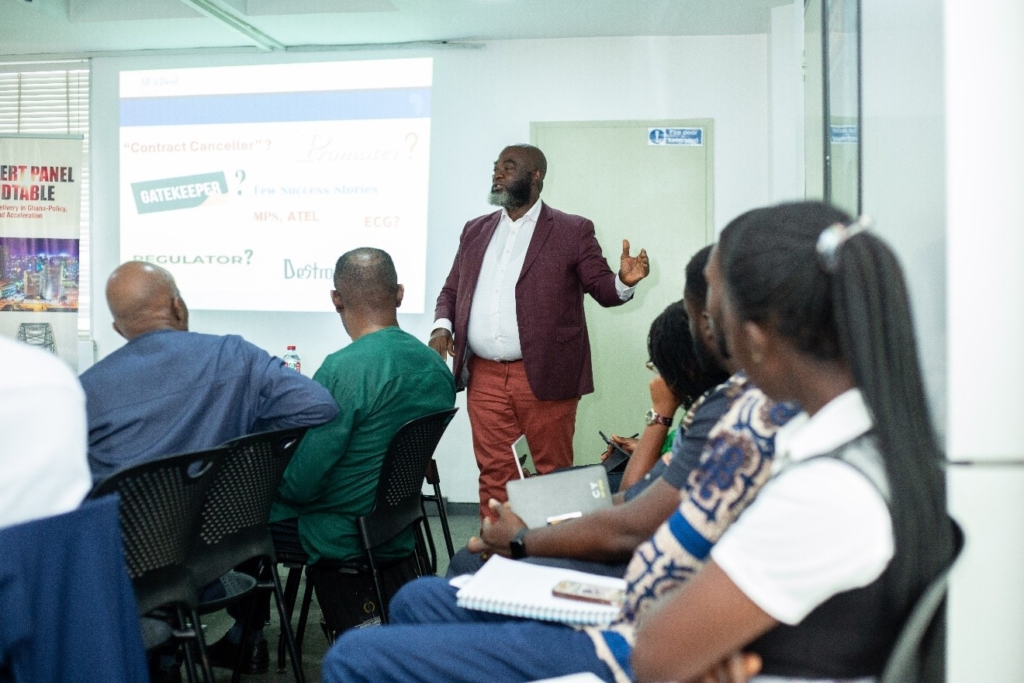
He emphasised that PPPs should not be viewed as substitutes for public borrowing but as effective vehicles to mobilize private capital responsibly.
He also underscored four foundational pillars for successful PPPs: a strong institutional framework, effective financing mechanisms, a robust legal system, and clearly defined political will.
Dr. Ofosu-Dorte further stressed the importance of climate resilience and innovative financing instruments, such as Sovereign Wealth Funds, to strengthen Ghana’s PPP environment.
Government Commitment and Challenges
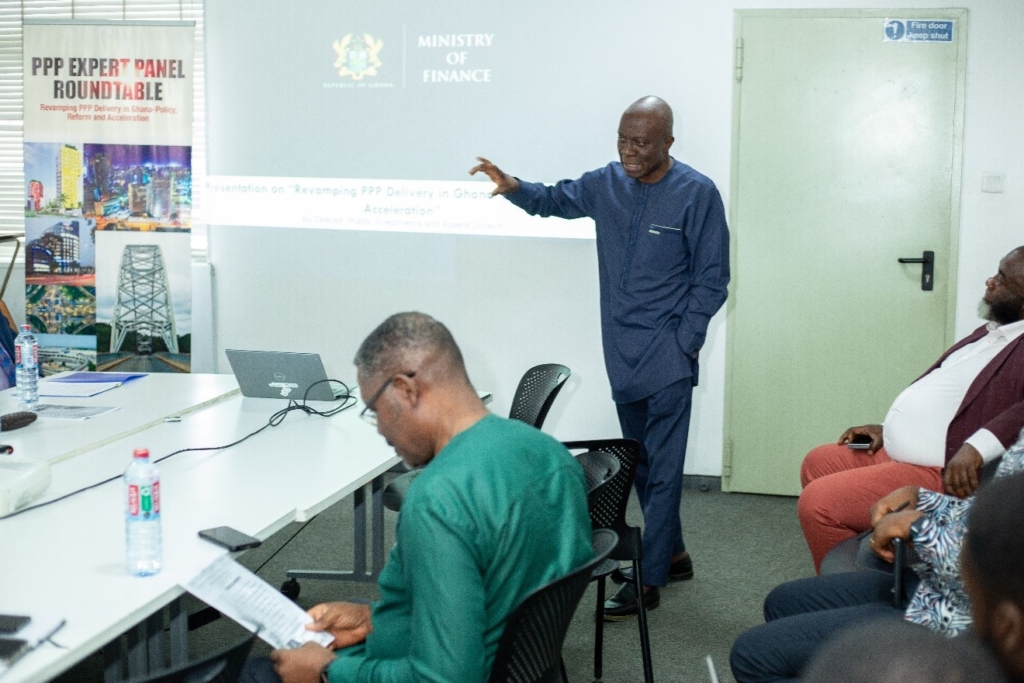
Representing the Ministry of Finance, Anthony Dzadra, Director of the Public Investment and Assets Division (PIAD), noted that Ghana has made progress with PPP legislation, including the introduction of new PPP Regulations in Parliament. These are expected to operationalize the PPP Act by clarifying processes related to unsolicited proposals, small-scale projects, and the integration of climate resilience in planning.
He, however, acknowledged persistent challenges such as limited institutional coordination, insufficient understanding of the regulatory environment, and the absence of standardized guidelines.
He called for harmonisation of sector-specific laws with the national PPP framework, coupled with targeted capacity-building and transparent financing mechanisms.
Ensuring Action Beyond Dialogue
Appiah Kusi Adomako, West Africa Director of CUTS International, urged stakeholders to ensure that the roundtable does not remain a talk-shop.
He proposed convening a national dialogue on PPPs involving government leaders, policymakers, and private sector actors to establish concrete steps that would entrench PPPs as a dominant model for infrastructure delivery in Ghana.
Building Momentum for Change
At the conclusion of discussions, participants agreed on the need to decentralize decision-making, enhance institutional capacity, improve project preparation, and strengthen transparency and policy consistency. These reforms, they argued, are essential for rebuilding investor confidence and positioning Ghana as a regional leader in sustainable infrastructure delivery through PPPs.
The roundtable marked a milestone in Ghana’s PPP agenda, reinforcing the importance of collaboration between the public and private sectors. With reform, commitment, and accountability, Ghana can establish a resilient PPP framework that delivers long-term value to its citizens and serves as a model for the region.
Latest Stories
-
Police officer found dead in suspected suicide at Akweteyman
19 minutes -
McDan-GACL dispute could undermine investor confidence – GaDangme Coalition
54 minutes -
Ex-Health Minister Agyemang Manu faces charges in the coming weeks over questionable COVID-19 deals – Ofosu Kwakye reveals
1 hour -
Ahafo ranks high in national health performance review; records significant gains in maternal and child health
3 hours -
Metro Mass Transit fights back against ‘brazen’ private takeover of Opera Square terminal
3 hours -
Trump calls for allies to help secure Strait of Hormuz as Iran vows to step up retaliation
4 hours -
US Embassy in Baghdad, Iraq attacked with missile that hits helipad
5 hours -
CSA reports rise in cyber incidents as over 23,000 enquiries recorded
6 hours -
Local dishes remain favourite at buffets and events
7 hours -
F1 cancels Bahrain, Saudi Arabia races due to Iran war
7 hours -
Three more Iran football team members change minds over asylum
8 hours -
WAEC Awards: PRESEC-Legon student grabs best business student prize
8 hours -
Bills Micro-Credit suspends officers over altercation with customer, hands them over to police
10 hours -
Court jails foreign national 5 years after GH¢1.9m & US$191k fake currency conviction
10 hours -
E.P. College of Education raises alarm over infrastructure deficit
10 hours