

Audio By Carbonatix
Renowned lawyer and Senior Partner at AB and David, Dr. David Ofosu-Dorte has attributed the country's high transport fare regime to the control of transport associations such as the Ghana Private Road Transport Union(GPRTU), Progressive Transport Owners' Association (PROTOA) and more.
According to him, the setting of transport fares in Ghana is not determined by the forces of demand and supply, rather by a 'cartel' of transport associations.
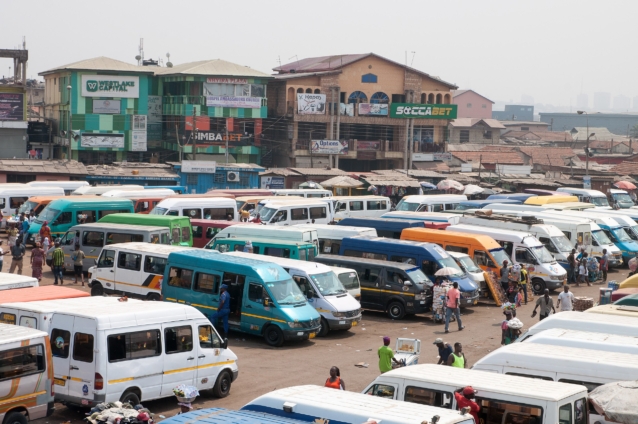
The cartel, he pointed out have hijacked lorry station terminals, popularly called “trotro stations” and arbitrarily determining prices for commuters.
Speaking on the Joy Business Economic Forum themed "Ghana at Risk: The Economic Fallout of a Distant Conflicts", Dr. Ofosu-Dorte explained that the control of transport terminals by the associations have contributed to their persistent influence in setting high prices.
"The truth is, transportation fares are not determined by market forces. What we have is a cartel, deciding how much to charge, and whenever there's a fuel price increase, they correlate it to fare increases, often unjustifiable," .
He criticized government's decision to hand over the control of transport terminals to private transport associations, arguing that the move has led to a lack of regulation in the industry.
Dr. Ofosu-Dorte further called for a change, to allow district, municipal and metropolitan assemblies to take control of lorry terminals.
"If you give the control of transport terminals to transport associations, you fail to control the country's transport system, including transport fares," he warned.
He argued that the consequences of the cartel-controlled system are far-reaching.
He expressed concerns that passengers are always left at the losing end with no choice but to pay the fares set by the cartel.
He disclosed that the modus operandi is being replicated in the transportation of foodstuffs causing food inflation to rise.
"Before, one trotro could do about six trips between Accra and Tema, but now they're doing only about two," Ofosu-Dorte reveals. "This reduction in frequency is a clear indication that the cartel is controlling the industry, and it's not just limited to transportation – they're also influencing food prices."
Dr. Ofosu-Dorte's assertions raise important questions about the need for regulation in Ghana's transportation industry.
Latest Stories
-
Ghana seeks long-term mining investments that benefit local communities – Armah-Kofi Buah
7 minutes -
Ghana’s Ambassador to China, Kojo Bonsu, presents credentials to Nepalese President
20 minutes -
Fairtrade Africa’s Cocoa Hubs Project strengthens rural service centres in cocoa-growing communities
25 minutes -
SEC cautions investors against fraudulent investment schemes
27 minutes -
Land Ministry urges rCOMSDEP operators to reserve earnings for land reclamation
30 minutes -
Commercial drivers give authorities one week to clear traders from lorry terminals, bus stops
34 minutes -
Nana B denies claims that Kojo Bamba was his driver and bodyguard
1 hour -
Engage Now Africa to construct a 10-unit classroom block for struggling Navrongo Vocational Training Centre
1 hour -
One digital financial breach could expose linked accounts to fraud – Financial Crimes Manager
1 hour -
Ghana Russia Centre signs ICT cooperation agreement with Moscow University
1 hour -
The powerhouses of the village: Honouring Ghana’s rural women on International Rural Women’s Day
1 hour -
Vincent Assafuah petitions CHRAJ to investigate alleged irregularities in 2026 World Cup visa arrangements
1 hour -
12-year-old boy found dead in muddy pit at Opeikuma
1 hour -
GHS begins Yellow Fever vaccination campaign in three Upper West districts
1 hour -
Organised Labour pushes for higher 2027 base pay despite slowing inflation
1 hour