

Audio By Carbonatix
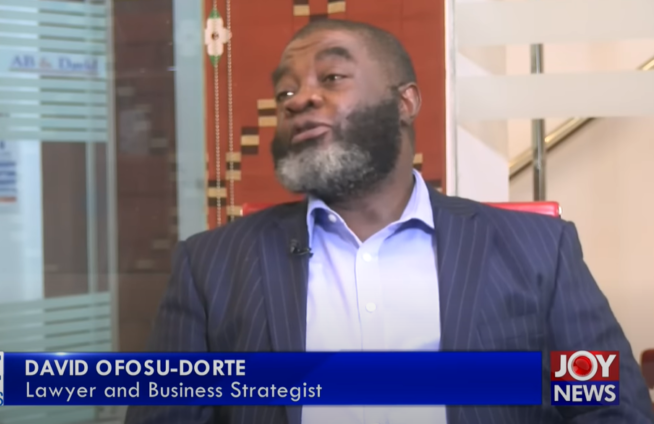
David Ofosu-Dorte, Senior Partner at AB & David Africa, has issued a cautionary statement to President John Dramani Mahama and his National Democratic Congress (NDC) administration, warning that the government’s biggest threat is not its critics, but its own potential for complacency.
Speaking at the Crystal Ball Africa 2026 programme at the Labadi Beach Hotel on January 22, the veteran analyst and legal strategist argued that the Mahama administration must resist the urge to rest on its early first-year laurels.
Under the theme "The Africa Opportunity - Time to take advantage," Mr. Ofosu-Dorte noted that the psychological response to success is as critical as the response to failure.
Mr. Ofosu-Dorte suggested that while failure can either paralyze or ignite a "starting again" spirit, success often carries the hidden danger of dulling a government’s competitive edge and urgency.
“When you fail it can either make you essentially despondent or bore you to start again. When you succeed too, it can either spare you or make you complacent. So either way it is not the event—your success or your failure. It's your response to that,” he explained.
Reflecting on the NDC’s return to power, he urged the president and his cabinet to maintain the momentum of their "Reset" agenda.
“I think the biggest risk [to John Mahama] is whether the government becomes complacent or not. I think they [NDC government] should ride on their success to go to the next step,” he added.
The warning comes as the Mahama administration enters its second year with a portfolio of significant early achievements.
Since being sworn in on January 7, 2025, the government has moved aggressively to fulfill its ‘Social Contract’ with the Ghanaian people.
Beyond domestic policy, Mr. Ofosu-Dorte’s comments highlight Mahama’s attempt to position Ghana as a leader in global health and governance reform.
The "Accra Reset" initiative, launched at the 80th UN General Assembly, seeks to reimagine a global health order that empowers nations toward self-determination.
Key Achievements in the 2025 "Reset" Year:
- Fiscal Discipline: Inheriting inflation at 23.8%, the government successfully brought it down to 6.3% by November 2025.
- Debt Transformation: Public debt dropped from 61.8% of GDP to 45.0% in just 10 months, marking one of the sharpest reductions in the nation’s history.
- The "Big Push": Launched a $10 billion accelerated infrastructure plan, which includes massive road projects in the Western North Region and the 30-year Ghana Infrastructure Plan (GIP).
- Social Interventions: Implementation of the "No-Academic-Fee" policy for first-year tertiary students and the launch of MahamaCares to provide healthcare for vulnerable groups.
- Tax Reliefs: Abolition of the "nuisance" COVID-19 Levy, E-Levy, and Betting Tax to ease the cost of doing business.
Latest Stories
-
Ghana seeks long-term mining investments that benefit local communities – Armah-Kofi Buah
4 minutes -
Ghana’s Ambassador to China, Kojo Bonsu, presents credentials to Nepalese President
16 minutes -
Fairtrade Africa’s Cocoa Hubs Project strengthens rural service centres in cocoa-growing communities
22 minutes -
SEC cautions investors against fraudulent investment schemes
23 minutes -
Land Ministry urges rCOMSDEP operators to reserve earnings for land reclamation
26 minutes -
Commercial drivers give authorities one week to clear traders from lorry terminals, bus stops
31 minutes -
Nana B denies claims that Kojo Bamba was his driver and bodyguard
59 minutes -
Engage Now Africa to construct a 10-unit classroom block for struggling Navrongo Vocational Training Centre
1 hour -
One digital financial breach could expose linked accounts to fraud – Financial Crimes Manager
1 hour -
Ghana Russia Centre signs ICT cooperation agreement with Moscow University
1 hour -
The powerhouses of the village: Honouring Ghana’s rural women on International Rural Women’s Day
1 hour -
Vincent Assafuah petitions CHRAJ to investigate alleged irregularities in 2026 World Cup visa arrangements
1 hour -
12-year-old boy found dead in muddy pit at Opeikuma
1 hour -
GHS begins Yellow Fever vaccination campaign in three Upper West districts
1 hour -
Organised Labour pushes for higher 2027 base pay despite slowing inflation
1 hour