

Audio By Carbonatix
The Cash Waterfall Mechanism was implemented in April 2020 as part of the Energy Sector Recovery Programme (ESRP) to ensure fairness and transparency in distributing energy revenues among electricity distribution companies.
Its goal was to equitably distribute monthly revenue collections by ECG based on beneficiaries' invoices and their share of the PURC tariff. This initiative was essential for the government's efforts to reduce the energy sector deficit and prevent future shortfalls.
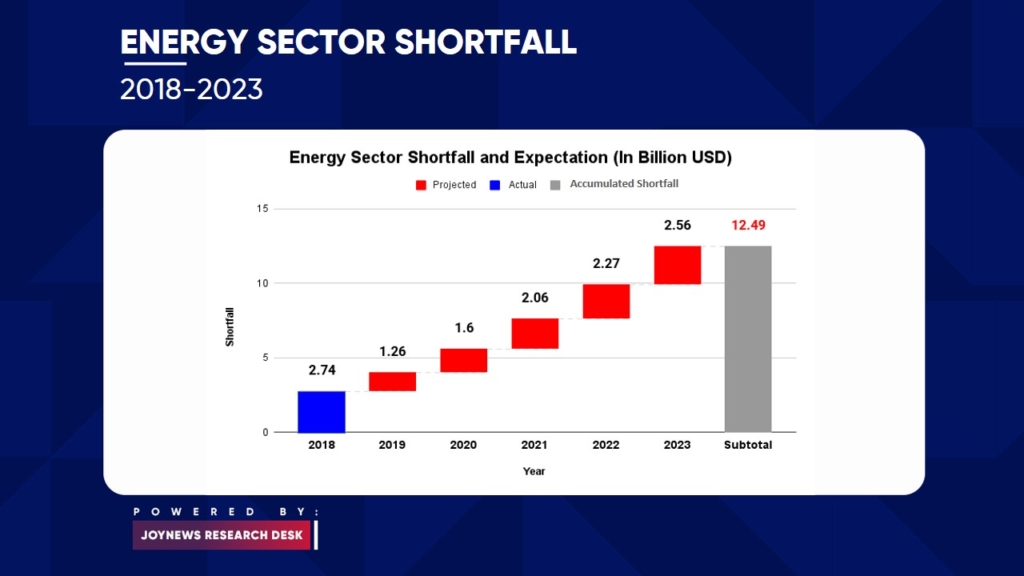
Before implementing this mechanism, a financial analysis conducted by the Ministry of Energy (MoEn) with support from the Power Africa Transactions and Reforms Program (PATRP) highlighted a significant "revenue shortfall" within the power sector, projected to exceed USD 12.5 billion by 2023.
The ESRP identified several key factors contributing to this shortfall, including excess power generation and gas supply, unpaid electricity bills from some MDAs, technical and commercial losses, inadequate electricity tariffs, delays in applying the Automatic Adjustment Formula (AAF), and delays in completing gas infrastructure projects.
In June 2023, the President, Nana Akufo-Addo, and Vice President Mahamadu Bawumia directed revisions to the Cash Waterfall Mechanism (CWM) under the Energy Sector Recovery Programme due to ECG's challenges in adhering to existing guidelines. The directive aimed to enforce CWM guidelines and enhance its effectiveness. As part of this, the PURC was tasked with appointing independent auditors for quarterly audits of ECG and NEDCo collections and disbursements to validate declared collections and ensure CWM compliance.
ECG was instructed to use CWM as the sole payment mechanism for customer revenues and operate a single holding account for collections. Quarterly audits of ECG's collections and disbursements were also mandated. PURC would validate revenue collections and payments according to CWM guidelines and reconcile quarterly with MoF and the CWM team to identify any payment shortfalls to be covered by the Finance Ministry.
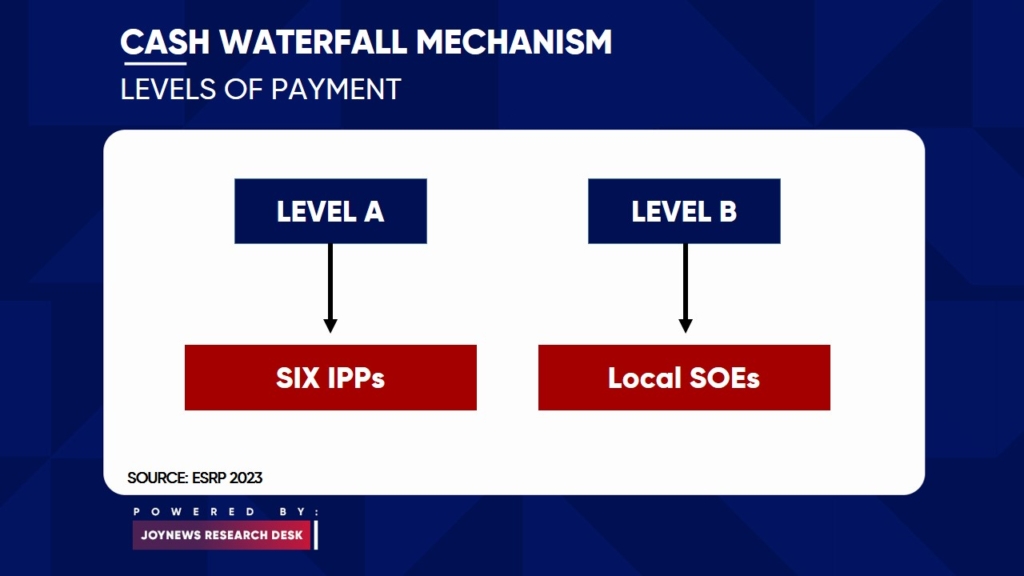
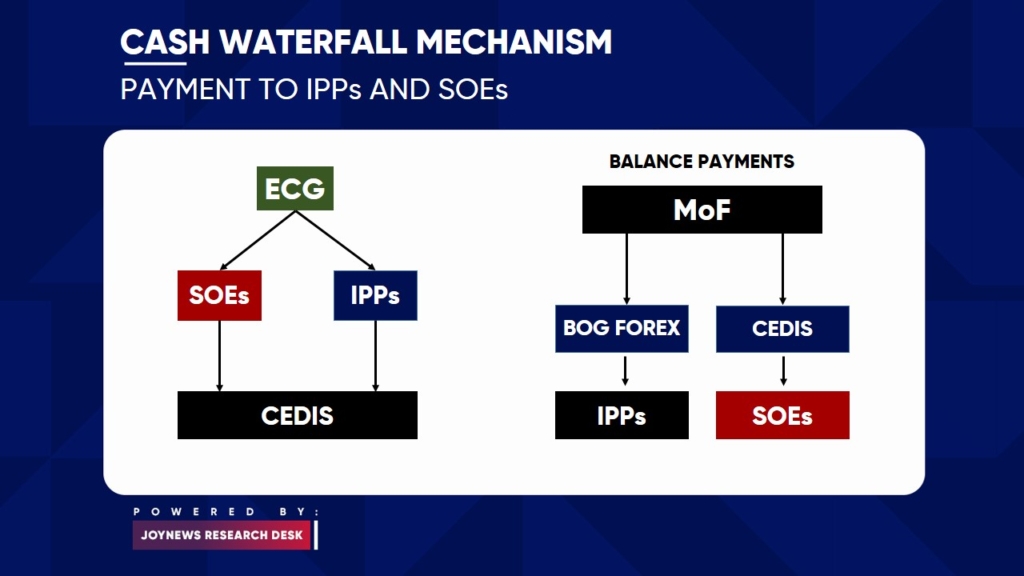
The Government restructured the CWM into two payment levels – Level A for six IPPs and Level B for local SOEs and other generators. Under ECG's renegotiation with IPPs, a monthly payment of US$43 million to six IPPs was agreed upon, with the remaining ECG collections distributed to SOEs and other generators using the CWM formula.
The CWM payments were to be made by ECG from the single holding account established for this purpose. ECG collections will be audited to show payments being made under CWM (monthly, etc.) and the balance to be catered for by MoF, which is expected to be the balance after the ECG/CWM payment of the flat rates on IPP invoices.
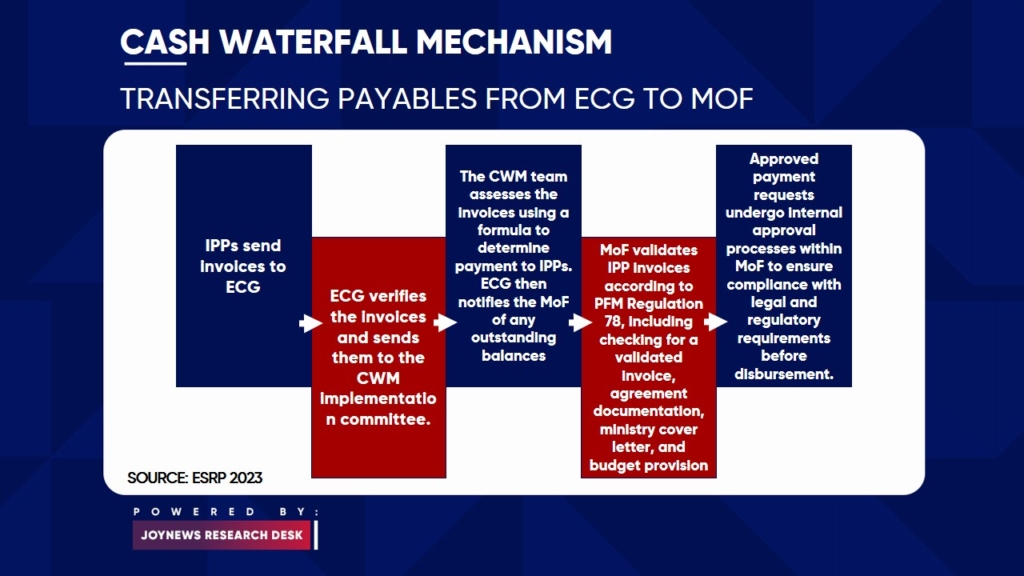
Process of transferring payables from ECG to MoF
- IPPs send invoices to ECG.
- ECG verifies the invoices and sends them to the CWM implementation committee.
- The CWM team assesses the invoices using a formula to determine payment to IPPs. ECG then notifies the Ministry of Finance (MoF) of any outstanding balances.
- MoF validates IPP invoices according to PFM Regulation 78, including checking for a validated invoice, agreement documentation, ministry cover letter, and budget provision.
- Approved payment requests undergo internal approval processes within MoF to ensure compliance with legal and regulatory requirements before disbursement.
Arrangement of Payment to IPPs and SOEs
The Electricity Company of Ghana pays Independent Power Producers (IPPs) and State-Owned Enterprises (SOEs) in Ghanaian cedis. When there is a shortfall to be covered by the Ministry of Finance, the Bank of Ghana steps in to provide foreign currency for paying the IPP bills. This helps avoid delays in payments. State-owned enterprises also get their balances settled in Ghanaian cedis.
Latest Stories
-
UK will seek closer ties with EU in light of Iran war, Starmer says
2 minutes -
Maxzy’s debut EP ‘Hunter’s Tale’ chronicles pain, loyalty and survival
2 minutes -
Volta Region Presiding Members backs Council of State member in EOCO dispute
15 minutes -
Explosions at Burundi ammunition depot kill civilians, witnesses say
17 minutes -
Trump to give primetime address on Iran war as questions swirl over his next move
19 minutes -
Palantir UK boss says it’s up to militaries to decide how AI targeting is used in war
26 minutes -
UNDERWORLD gains international momentum as Ghanaian Thriller breaks into global streaming platforms
45 minutes -
World’s highest burden – Minority caucus warns mining taxes driving capital flight
45 minutes -
Mass robotaxi malfunction halts traffic in Chinese city
51 minutes -
Russian military plane crash kills 29 in occupied Crimea
51 minutes -
Vivo Energy Ghana and KNUST sign MoU to advance Next Generation of Energy Innovators
1 hour -
Decisions first, consultation later – Minority caucus slams gov’t over policy blindspots
1 hour -
PAC summons Okoe-Boye over GH¢20m hospital project that never took off
1 hour -
BECE candidates to select SHS after results are released – Education Minister
1 hour -
Ghana advocates deeper trade, investment ties at OACPS Summit
2 hours