

Audio By Carbonatix
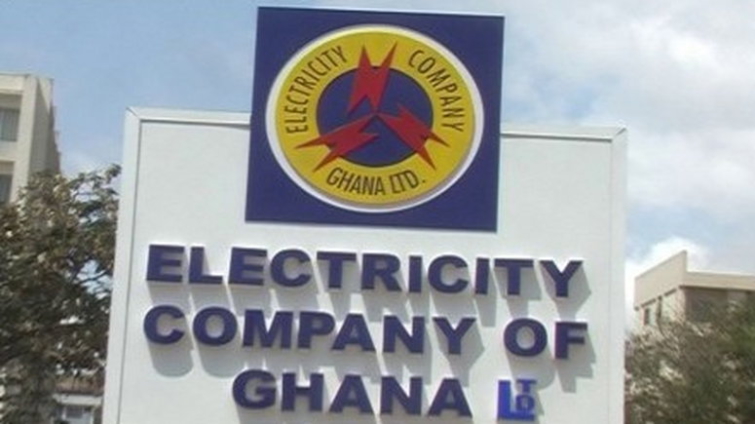
A former board member of the Public Utilities and Regulatory Commission (PURC), Dr Nii Darko Asante, has placed the blame for the failure of the Cash Waterfall Mechanism (CWM) squarely on the Electricity Company of Ghana (ECG).
On Joy News’ PM Express on October 21, he expressed frustration over ECG’s role in undermining the financial distribution framework designed to ensure fairness in Ghana’s energy sector.
“What you’re observing was expected to happen from day one when the Cash Waterfall was set up. It’s not a surprise that matters got worse over time,” Dr. Asante said.
He stated that ECG had long been a problematic player in the sector.
He explained that historically, the company has prioritised its own revenue needs, often at the expense of other critical sector players like GridCo and other generation companies.
“ECG has short-changed the sector in terms of revenue for years. They collect from consumers, take what they want, and then decide who gets what’s left. If they’re supposed to collect 100 cedis, and their costs are 20 cedis but they only collect 40, they still keep the full 20 cedis,” Dr. Asante explained.
“This leaves the rest of the sector with only 20 cedis to share instead of the 80 cedis that should have been available.”
According to Dr. Asante, the Cash Waterfall Mechanism (CWM) was intended to correct these imbalances by ensuring that whatever ECG collected was fairly distributed according to predefined ratios.
“The CWM brought visibility to how the insufficient funds were being shared,” he stated.
However, this transparency has not prevented the sector from struggling due to ECG’s consistent failure to collect sufficient revenue.
Dr Asante also highlighted how ECG’s reported revenue often does not reflect actual cash received.
“Anyone who has done basic accounting will recognise that what is reported in the financial statements does not always reflect cash collected.
"The CWM was looking purely at actual revenue accrued — cash received into ECG accounts, not just what was billed or claimed to be collected.”
Joining Dr. Asante on the show, Dr. Steve Manteaw, Co-chair of the Ghana Extractive Industry Transparency Initiative (GHEITI), voiced his concerns about ECG excluding a significant portion of its revenue from the CWM.
“It surprises me that despite the substantial jump in revenue, about 50% of the funds generated are kept outside the CWM,” he told the host, Evans Mensah.
Dr Manteaw stated that excluding such a large percentage of ECG’s revenue could severely damage the credibility of the Cash Waterfall Mechanism.
“This exclusion creates serious credibility issues for the energy sector’s financial recovery, especially since the CWM was designed to ensure fair distribution of funds among sector players.”
He further stressed that ECG’s actions could undermine efforts to stabilise the sector’s finances.
“If about half of their revenue is kept out of the mechanism, it makes it difficult for any real progress to be made in addressing the financial challenges of the energy sector,” Dr Manteaw added.
Dr Asante acknowledged that ECG’s complaints about the funds being insufficient for their operations were valid but added that the situation was no different for other players in the energy sector.
“You’ll hear ECG complaining that it’s not enough for them to run their distribution — and that’s true. But what about GridCo? What about the generation companies? Nobody has enough money to run the system,” he stressed.
Both experts concluded that while the Cash Waterfall Mechanism was a step in the right direction, its effectiveness has been undermined by ECG’s actions and the continued exclusion of significant revenue streams from the system.
They called for urgent reforms to ensure fair distribution and accountability across the energy sector.
Latest Stories
-
Obuasi SHTS case: Eduwatch calls for sex offenders’ register and mandatory background checks for teachers
2 minutes -
GloMeF CEO urges intensified public education on new road traffic regulations
13 minutes -
‘Any tax on ChatGPT is an attack on education and innovation’- Akim Swedru, MP
17 minutes -
Obuasi SHTS sexual abuse scandal exposes systemic failure in child protection – Moving Masculinity
17 minutes -
Hubtel CEO calls for national data-sharing framework to boost AI development
20 minutes -
Twelve Golden Rules of real estate development in Ghana, Africa
24 minutes -
Five new telephony cell sites in Ashanti Region to be activated in October 2026 – Sam George
25 minutes -
Mahama cuts sod for Afienya Industrial Park, targets 120 enterprises
30 minutes -
Rush for fuel from accident tankers is stealing, punishable by law – NPA boss, Edudzi Tamakloe
35 minutes -
GhIG pushes for legislation to regulate geoscientists’ activities
41 minutes -
Mfantsipim @150: Ace Anan Ankomah leads project to preserve school’s musical heritage
45 minutes -
Gov’t launches rCOMSDEP in Ahanta West, Mpohor Fiase to promote responsible community mining
47 minutes -
AI is forcing professionals to rethink how they deliver value – Hubtel CEO
50 minutes -
Daily Insight for CEOs: Strengthening the CEO’s Leadership Legacy
51 minutes -
Jimmy Aglah’s ‘When the River Testified’ approved by NaCCA as Supplementary Reader
59 minutes