

Audio By Carbonatix
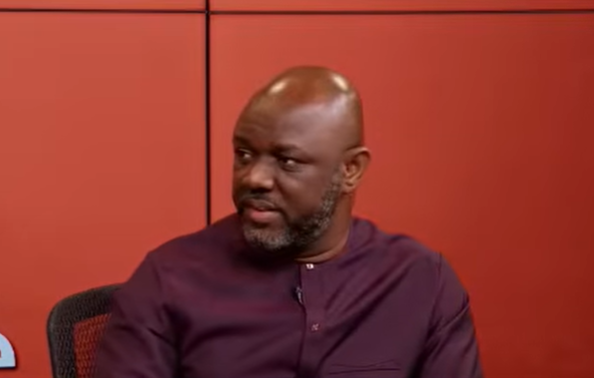
Executive Director of the Africa Centre for Energy Policy (ACEP), Ben Boakye, says increasing government investment in the Electricity Company of Ghana (ECG) has not yielded the desired results, with the company’s losses continuing to worsen.
According to him, ECG’s losses have risen from about 21 per cent to nearly 30 per cent despite more than $700 million being invested in projects during the period under review.
Speaking on JoyNews’ Newsfile on Saturday, September 12, Mr Boakye said the situation represented a major drain on the national budget and required urgent reforms in the management of the power distributor.
“The more government puts in money, the more losses and waste we generate from ECG,” he said.
Mr Boakye said ECG was making losses in excess of GH¢20 billion annually, with the burden ultimately being absorbed by the State.
He argued that the scale of resources being committed to the energy sector was far greater than the amounts being spent on other critical areas, including education.
He said while the government spends about GH¢3 billion to GH¢3.5 billion annually on secondary education, the financial losses associated with ECG were significantly higher.
“Over 20 billion a year. We must take responsibility. The public pays for it,” he said.
Mr Boakye recalled that the proposed concession arrangement involving Power Distribution Services (PDS) was intended to bring private-sector investment and management expertise into ECG to improve revenue collection, reduce losses and return the company to profitability.
He said the arrangement was expected to attract about $500 million in private investment over two years.
However, he said ECG’s own accounts showed that more than $700 million had been invested in ongoing projects during the period, yet losses increased rather than declined.
“What was the outcome? The losses that were around 21% that we were hoping to reduce by a percentage point every year with the private sector had rather increased to almost 30%,” he lamented.
Mr Boakye said the experience demonstrated the need to focus on efficiency and effective management rather than ownership alone.
He argued that the debate over whether ECG should remain entirely state-owned or involve private-sector participation should instead centre on finding a structure capable of addressing the company’s persistent operational and financial challenges.
Mr Boakye also raised concerns about how ECG’s revenue has previously been accounted for, arguing that the company’s reported figures did not always reflect the full amount collected.
He said ECG’s own accounts showed monthly revenue of about $1.5 billion in 2024, questioning why lower figures had been used in some official discussions.
He said recent measures to ensure that ECG’s revenue flows into the established cash-flow mechanism had improved transparency and helped address payments to independent power producers (IPPs).
However, he maintained that major challenges remained.
According to Mr Boakye, the Ministry of Finance is currently absorbing about $80 million in gas costs every month, in addition to other financial commitments in the power sector.
He said such expenditure highlighted the need for fundamental reforms to prevent the energy sector from continuing to place a heavy burden on the national budget.
Mr Boakye maintained that the PDS model, despite the controversy surrounding its implementation, remained in his view the quickest approach to addressing ECG’s challenges.
He said the failure of the arrangement was not necessarily because of private-sector participation but because of problems surrounding the process, including political interference.
He recalled that after PDS took over, there were improvements in revenue collection and the attitude of ECG staff, even before significant private investment had been made.
“Just management,” he said, arguing that stronger management practices could significantly improve the company’s performance.
Mr Boakye said the country could no longer afford to continue with a system in which billions of cedis were committed to ECG without corresponding improvements in efficiency and losses.
He stressed that the priority should be to develop a sustainable structure capable of reducing losses, improving revenue collection and protecting the national budget.
Latest Stories
-
Parliament questions continued detention of Baffour Awuah by EOCO, demands due process
9 minutes -
Baffour Awuah did not report to EOCO voluntarily; an arrest warrant forced him – Theophilius Dzimega
18 minutes -
Baffour Awuah case risks looking like a display of state power – Sulemana Braimah
25 minutes -
Campaign posters, billboards take over Kumasi as NPP goes to polls
34 minutes -
‘I’ve been told I’m also involved’ – John Darko says he’ll cooperate with EOCO if invited over Baffour Awuah case
45 minutes -
Follow the evidence, not assumptions, in Baffour Awuah case – Victoria Bright
60 minutes -
48-hour detention rule is not an automatic entitlement for EOCO – Victoria Bright
1 hour -
Baffour Awuah’s arrest is a political witch-hunt – Kofi Bentil
1 hour -
MT Asharami Ghana arrives in Tema as government pushes stronger LPG infrastructure
2 hours -
Weweso JHS wins 5th edition of Otumfuo Reading Competition 2026
2 hours -
‘Criminal law can’t turn every poor commercial judgment involving state entity into an offence’ – Victoria Bright
2 hours -
Baffour Awuah has shown willingness to cooperate, qualifies for self-recognisance bail – Kofi Bentil
2 hours -
NPP elections: Here are the 46 candidates seeking votes of 7,163 delegates
2 hours -
EOCO is only carrying out its mandate, not violating Baffour Awuah’s rights – Dzimegah
2 hours -
Heavy security at Baba Yara Stadium as NPP elects national officers today
2 hours