

Audio By Carbonatix
Stakeholders in the Agriculture value chain have commended the Food and Drugs Authority for developing guidelines for the industry on how they are to label food, feed and ingredients that are genetically modified.
They believe that the introduction of the guidelines was timely and a fundamental right of the consumer to know what their foods contain and also make public critical information about the manufacturing date, expiration date and nutritional value.
The stakeholders said GMO foods are as healthy and safe to eat as their non-GMO counterparts, adding that some GMO plants have been modified to improve their nutritional value such as GMO soybeans which have less fats.
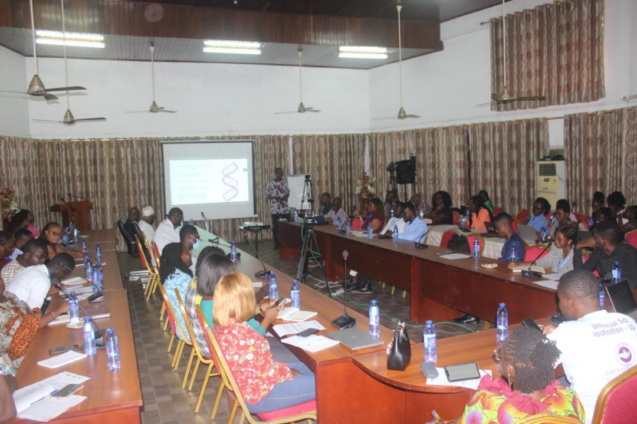
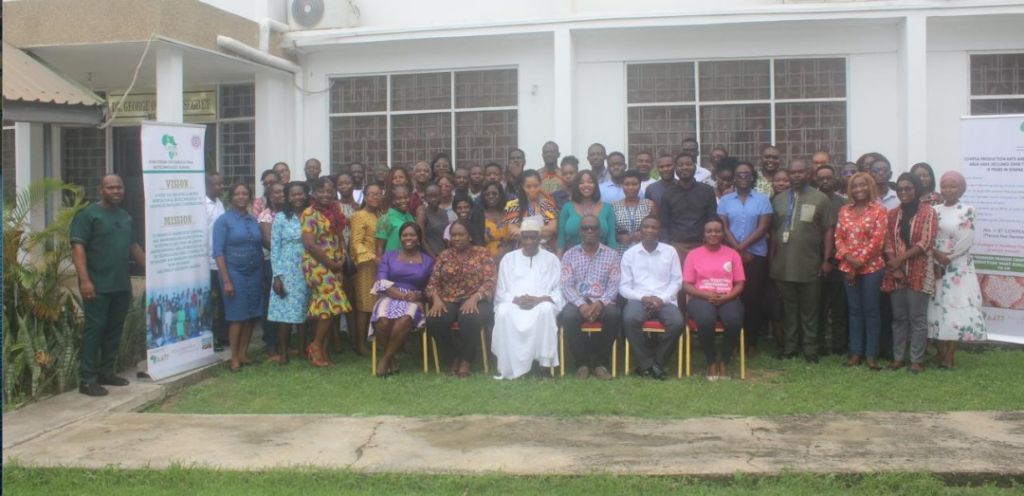
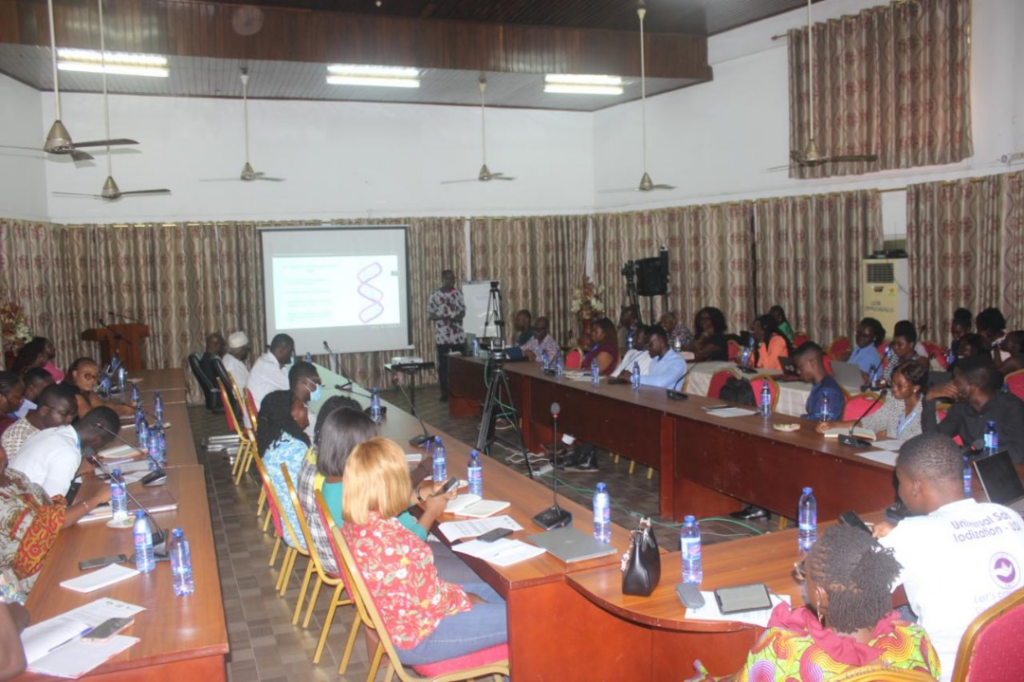
The workshop was organized by OFAB Ghana, Program for Biosafety Systems in partnership with the Food and Drugs Authority which formed part of the process to educate consumers on developed guidelines for labelling Genetically Modified food and feed in Ghana.
The workshop brought together both state and non-state actors working within the agriculture value chain in Ghana.
Context
In Ghana, scientists from the Savanna Agricultural Research Institute (SARI) of the Council for Scientific and Industrial Research (CSIR) have employed biotechnology to develop two crops namely nitrogen- and water-use-efficient (NEWEST) rice and the genetically modified cowpea, also known as the pod borer-resistant PBR cowpea.
Neither of these crops is commercialized yet, though they have gone through various stages of evaluation and field trials.
Speaking at the workshop, Dr Daniel Osei Fosu, a research scientist with the Biotechnology and Nuclear Agricultural Institute (BNARI) of the Ghana Atomic Energy Commission (GAEC), explained the concept of GMOs in simple terms.
He said that GMO development is a process that relies on age-old knowledge strengthened by new knowledge.
“Better understanding of DNA the genetic information carrier in living things has led to the discovery that scientists can use the knowledge to help solve problems associated with some organisms.
“Let me reiterate that regulation is not meant to stop products but act as a sieve and proper regulation ensures the effective harnessing of any technology” he added.
A plant breeder and entomologist at the Savanna Agricultural Research Institute of the Council for Scientific and Industrial Research (CSIR-SARI) and Principal Investigator for the Pod Borer Resistance (PBR) Cowpea, Dr Jerry Nboyine says the newly developed genetically modified cowpea has the potential to alleviate poverty among Ghanaian farmers and ensure food security across the farming communities.
“We aimed to protect cowpeas from Maruca damage thereby increasing yields this was achieved and our multi-locational field trials conducted show that PBR Cowpea will be a game changer for farmers” he added.
Assurance
Deputy Chief Executive Officer in charge of the Food Division for the Food and Drugs Authority, Roderick Daddey-Adjei said the FDA was committed to ensuring the developed guidelines would function effectively.
“Labelling forms an essential part of food regulation and provides information for consumers and allows them to make an informed choice, however, informed choices require awareness creation among the general public and that is why the FDA is here.
“It is important that researchers and regulators intensify public education efforts in Agricultural Biotechnology and Biosafety across the country.
“Any person or company who fails to comply with any of the requirements of these guidelines commits an offence and shall be liable to a fine in accordance with Part Seven, Section 110 (1) of the Public Health Act, 2012 (Act 851)” he said.
Appreciation
Chief Regulatory Officer for the Food and Drugs Authority, Nana Akua Yeaboah used the occasion to thank OFAB, PBS, CSIR and stakeholders and also explained that the FDA exist to ensure the safety, quality and efficacy of human and veterinary drugs, food, biological products, cosmetics, medical devices, household chemical substances and clinical trials, and the control of tobacco products through the enforcement of relevant standards to protect public health.
“The culture of the FDA is defined by these behavioural traits, and is tangible throughout the organisation” she added.
Senior Research Scientist at the Council for Scientific and Industrial Research (CSIR) – Science and Technology Policy Research Institute (STEPRI) and OFAB Ghana Coordinator, Dr Richard Ampadu-Ameyaw and used the opportunity to thank partners for showing up in this all-important workshop to discuss the need for labelling guidelines.
“GMO is not a chemical, it is nothing scary but a technology that is used to develop food crops based on the best species” he added.
Latest Stories
-
‘They can’t control the team’ – Ernest Thompson doubts local coaches for Black Stars role
45 minutes -
Ghana-born midfielder Seidu realises ‘dream’ with Atlético Madrid debut
52 minutes -
GPL 2025/26: Bubakari strikes late to hand All Blacks vital win over Dreams FC
52 minutes -
Fatal crash on Kintampo–Tamale highway claims four lives
57 minutes -
2025–26 FA Cup Semifinal Draw: Chelsea, Man City Learn Wembley Opponents
1 hour -
GPL 25/26: Gold Stars back on top after beating Nations FC
2 hours -
GPL 2025/26: Heart of Lions roar back with victory over Vision FC in Kpando
3 hours -
Solomon Agbasi: Hearts keeper in stable condition after concussion
3 hours -
GPL 2025/26: Late Salim Adams penalty earns Medeama draw at Bechem
3 hours -
Hearts pip Young Apostles 1-0 to end 5-game winless run
3 hours -
Boakye Agyarko marks Easter Sunday with a call for Godly leadership ahead of nationwide campaign tour
4 hours -
Pepsi withdraws as UK festival sponsor after Kanye West backlash
4 hours -
Pope Leo calls for global leaders to choose peace in his first Easter Mass
4 hours -
Kpando MP highlights progress on road projects
5 hours -
Government secures $92m for Engineering and Agriculture University
5 hours