

Audio By Carbonatix
Journalists across Ghana have been challenged to take a front-line role in spotlighting urban health challenges as cities and towns continue to experience rapid growth, with implications for public health systems, particularly in underserved communities.
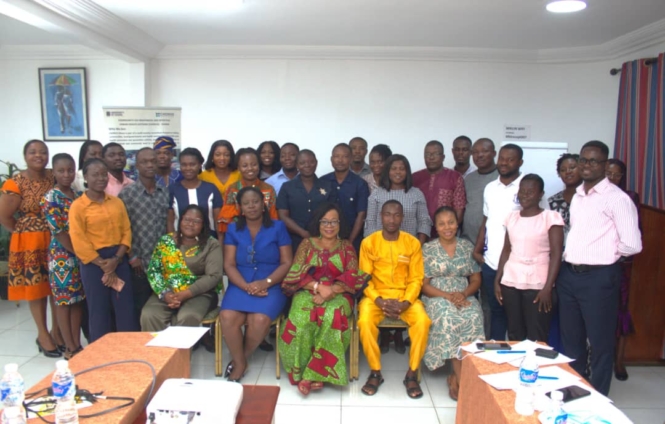
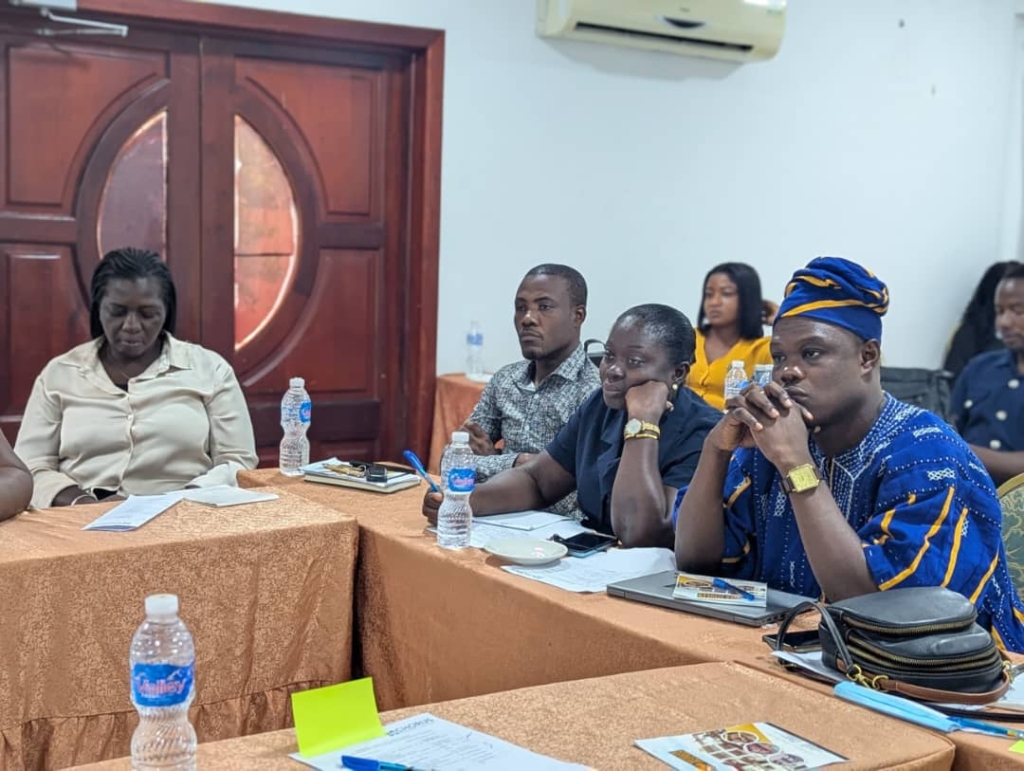
At a strategic media training workshop held in Accra under the theme “Understanding Urban Health and Strengthening Media-Researcher Collaboration,” speakers called for sustained, research-based coverage of urban health issues that affect growing populations in slums and peri-urban areas.
Delali Kumapley, who leads the Capacity Strengthening Support Office of the Community-led Responsive and Effective Urban Health Systems (CHORUS) project, emphasized the critical link between journalism, public awareness, and long-term health policy outcomes.
“We’ve made significant progress with our research, and it’s time to work closely with journalists to translate these findings into stories that inform, educate, and empower the public. Urban health is no longer an isolated issue—it’s now central to sustainable development,” Kumapley said.
The CHORUS project, anchored at the School of Public Health, University of Ghana, began in 2020 and spans several countries including Ghana, Nigeria, Nepal, and others in Asia, with strong academic partnerships in the United Kingdom.
While the UK institutions are not involved in field data collection, they play vital roles in research coordination, funding, and academic support. Kumapley noted that the collaboration underscores the global urgency of strengthening urban health systems in lower- and middle-income countries.
She observed that an earlier workshop managed to raise media interest, but efforts must now be geared toward ensuring sustainability and consistency in urban health reporting, particularly on issues emerging from informal settlements.
“Urbanization is accelerating—by 2030, many towns will be fully urbanized, and if we don’t tell these stories now, we’ll miss critical opportunities to influence better health planning,” she added.
The workshop expanded its scope beyond urban health to include science reporting and the communication of academic research in accessible ways. Kumapley said this approach is designed to equip journalists to mine rich stories not just from press conferences, but also from research outputs and policy papers.
“We’re laying the foundation for a new culture of science-informed journalism. The aim is that, long after CHORUS, stories on public health, slum conditions, access to care, and urban resilience will keep flowing from our newsrooms,” she emphasized.
Speaking on behalf of Women, Media and Change (WEMEC), Dr Charity Binka called on journalists to take ownership of health and science communication as a civic duty.
“We cannot continue to treat health and science reporting as niche areas. They must become core parts of national dialogue. The media has the power to shape how urban populations think, act, and demand better services,” she stated.
Dr Binka encouraged reporters to form ongoing partnerships with researchers and health experts to ensure accurate, balanced, and in-depth coverage of public health issues.
Professor Abena Yeboah-Banin, a senior academic from the University of Ghana’s Department of Communication Studies, took participants through practical modules including “Communicating Research Beyond Academia” and “Gathering, Analyzing, and Using Data in News Reporting.”
She emphasized that journalists must move beyond anecdotal storytelling and embrace the power of data and community evidence to drive meaningful change.
Participants—comprising both emerging and seasoned journalists—committed to visiting urban communities, particularly slums and neglected settlements, to uncover stories on sanitation, maternal and child health, housing, waste management, and access to care.
“This isn’t just a training—it’s a movement to amplify the voices of the underserved through journalism,” Kumapley concluded.
Latest Stories
-
Ecobank Group commits US$2.6bn to women-led businesses and agribusinesses across Africa
51 seconds -
Ghana to host high-level conference on scaling education initiatives in emergencies
24 minutes -
Democracy must not be for sale: Who pays for Ghana’s politics, and how do we confront money, influence and accountability?
39 minutes -
Aburi Amanfrom landowners appeal for government support for Atwapim development project
43 minutes -
Cargill Ghana and International Cocoa Initiative celebrate 111 young graduates building skills for the future
1 hour -
Video: Madina MP Francis-Xavier Sosu collapses while addressing students at GIMPA
1 hour -
Hunnyboy reveals how social media landed him Shatta Wale feature
1 hour -
I am a perfectionist – Actor William Lamptey
1 hour -
No room for another false start as Ghana begin AFCON qualifying campaign
2 hours -
“We are grateful for what you have achieved” – AGI President tells Finance Minister
2 hours -
“No Nation is Inferior”: Mahama champions human dignity and security council reform at the UN
2 hours -
Manhyia South residents, NPP executives fume over botched EOCO arrest of MP
2 hours -
Mahama unveils new deal with global philanthropy
2 hours -
Daily Insight for CEOs: Building customer-centric leadership
3 hours -
Democracy must deliver food, jobs and healthcare, not just elections – Mahama
3 hours