

Audio By Carbonatix
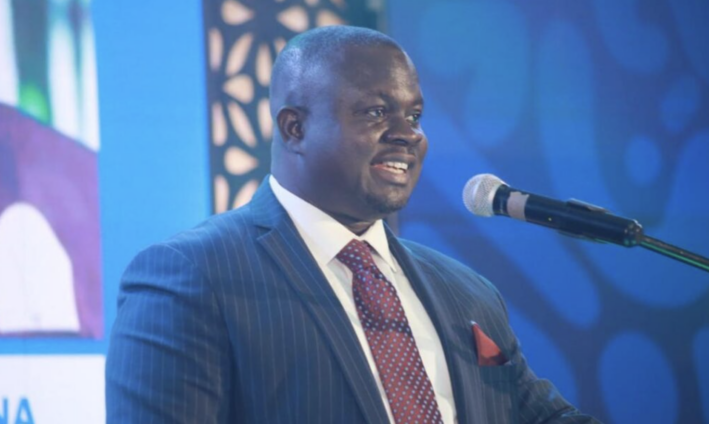
Albert Kwabena Dwumfour, President of the Ghana Journalists Association (GJA), has urged journalists to prioritise truth and accuracy over speed and popularity.
He said journalists must exercise discipline in verifying information before publication, particularly amid growing misinformation, disinformation, fabricated content and rapid technological change.
Mr Dwumfour made the call at the GJA’s 77th anniversary symposium in Accra on Wednesday, on the theme: “Building on our Legacy, Advancing Ethical Journalism and Shaping the Future of Digital Media.”
“Do not measure your success only by how many people see your story. Measure it by whether the story is true. Do not measure your influence only by the number of followers you have. Measure it by whether people can trust you,” he said.
Mr Dwumfour said press freedom remained central to the GJA’s mandate but must be accompanied by responsibility, stressing that media credibility depended on accuracy, fairness, independence, accountability and respect for the dignity and rights of individuals.
“Sometimes, courage in journalism is not being the first to publish, it is having the discipline to wait. Verify and publish only when you are certain of the fact,” he said.
Mr Dwumfour said the growing influence of artificial intelligence (AI) and other digital technologies was reshaping news gathering, production and distribution.
He said AI offered significant opportunities in research, transcription, translation, data analysis and monitoring, but also presented risks through misinformation, deepfakes and synthetic audio and images.
“The GJA’s position is clear. Technology must serve journalism. It must not destroy the values that make journalism worthy of public trust,” he said.
Mr Dwumfour urged journalists to strengthen their capacity in digital journalism, verification, fact-checking, data journalism and the responsible use of AI, while maintaining human judgement and ethical standards.
He said journalism still required “curiosity, judgement, courage, and conscience,” which technology could assist but could not replace.
Mr Dwumfour also called for improved welfare and sustainability in the media industry, saying journalists working under persistent insecurity could not be expected to deliver quality journalism consistently.
He urged media owners and managers to invest in professional development and create conditions capable of attracting and retaining talented young people in journalism.
Reflecting on the GJA’s contribution to journalism and Ghana’s democratic development, Mr Dwumfour outlined priorities for the profession’s future.
He announced that entries for the 30th GJA Media Awards would officially open the following week, with submissions to be received through the association’s new website as part of its broader digital transformation agenda.
Mr Dwumfour appealed to Corporate Ghana and other partners to support the GJA Awards, which he said would celebrate three decades of journalistic excellence.
“At 77, therefore, our message is simple. The GJA is not retiring. We are renewing our commitment to press freedom, ethical journalism, journalist safety, innovation, and the development of Ghana,” he said.
Mr Edmund Moukala, UNESCO Representative to Ghana, commended the GJA for sustaining its mandate for 77 years and urged journalists to protect public trust as the media industry underwent rapid digital transformation.
He said Ghanaian journalists had played a critical role in shaping public consciousness, supporting democratic development and holding institutions and individuals in power accountable.
“A free and independent press is not a luxury afforded by democracy. It is the very necessity upon which nation-building is predicated,” he said.
Mr Moukala, however, warned that pressure to publish quickly could undermine the responsibility to publish accurately.
He assured journalists of UNESCO’s continued support to equip them to use AI responsibly and ensure that technology served the public interest.
“The future of digital media in Ghana will not simply happen to us. It must be shaped by us,” he said.
Mr Chris Holliday, Deputy British High Commissioner to Ghana, who spoke on behalf of the diplomatic corps, described the media as “national infrastructure” because journalists connected citizens through facts and ideas in much the same way roads physically connected people.
He advocated equipping journalists with the skills required to confront emerging challenges, particularly artificial intelligence, misinformation and attempts to manipulate public understanding.
“The biggest risk may not be censorship, but manipulation,” he said.
Mr Holliday said trust would become increasingly important to media organisations, noting that those that commanded public confidence would be better positioned to lead the information space than those focused solely on being first to publish.
He reaffirmed the UK’s readiness to work with Ghana, government, civil society and diplomatic partners to strengthen media freedom and integrity.
Latest Stories
-
Ballon d’Or Power Rankings: Lamine Yamal leads race for Golden Ball ahead of Rodri and Kane
2 hours -
‘Nothing worked for us’ – Gideon Mensah takes responsibility for Gambia defeat
2 hours -
2026 Women’s Super Cup: FC Savannah beat Epiphany Warriors to win trophy for first time
4 hours -
Fifa accuses Uefa of ‘misinformation campaign’
4 hours -
Kane and Gordon give England victory over Czech Republic in Nations League
4 hours -
AFCON 2027Q: ‘The last time Ghana won was eight games ago’ – Carlos Queiroz
4 hours -
AFCON 2027Q: Gambia defeat doesn’t make me a loser – Carlos Queiroz
4 hours -
Yamal inspres Spain to homecoming victory over Croatia
4 hours -
2027 AFCONQ: Late goals seal 2-0 for Côte d’Ivoire against Somalia
4 hours -
I’d stick my Man City medals in bin – Keane
4 hours -
AFCON 2027Q: My resignation won’t solve Ghana football issues – Queiroz
4 hours -
Morocco call off Ghana friendly after Black Stars’ AFCON setback
4 hours -
It is time for Tuchel to offer Alexander-Arnold some trust
5 hours -
‘We have to say sorry’ – Queiroz apologises after Ghana’s humiliating defeat to Gambia
5 hours -
New Yorker identified as Yaw Boahene, 57, killed after bag was caught in subway train doors
5 hours