

Audio By Carbonatix
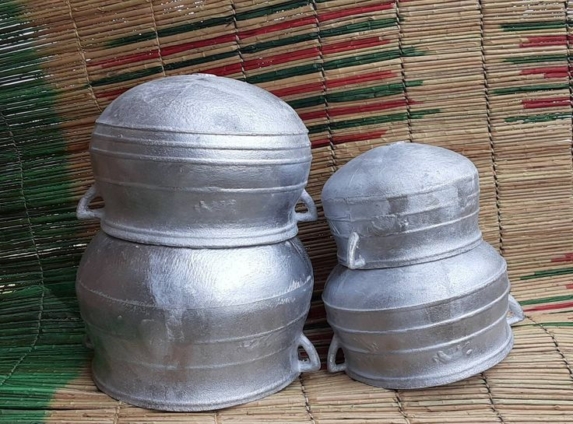
The Eastern Regional Manager of the Food and Drugs Authority (FDA), Mrs. Anita Owusu-Kuffour, has called for an immediate ban on the locally made cooking pots popularly known as “Dadesen.”
She cited dangerous levels of lead detected in its production, warning that the contamination posed serious health risks to consumers.
She made the call during a stakeholder engagement on heavy metal contamination in cereal-legume mixes held in Somanya, in the Yilo Krobo Municipality of the Eastern Region.
Mrs. Owusu-Kuffour explained that FDA surveillance had revealed that lead, a toxic heavy metal, is often added during the manufacturing process of “Dadesen” pots to soften the metal and ease moulding.
However, this practice exposed users to severe health risks, including cancer, kidney failure, and Parkinson’s disease.
“When they are making the pots, the metal becomes hard, so they add lead to soften it. The sad part is that most of the local manufacturers have no idea about the health implications,” she said. “We are therefore advising the public to stop using ‘Dadesen’ that contains lead.”
When asked how consumers could identify pots made with lead, she noted that the best solution is for artisans to stop using lead entirely and adopt safer alternatives, such as stainless steel for cookware production.
She also cautioned against careless use of nonstick cookware, warning that once the protective coating begins to wear off, it can release toxic chemicals and heavy metals into food.
“If the coating wears off, you are exposing yourself to serious health implications, including cancer, because some of these coatings also contain heavy metals,” she explained.
Ms. Owusu-Kuffour further warned that some materials used in manufacturing kitchen utensils are questionable and can become harmful when scratched or corroded.
In such cases, chemicals may leach into food and enter the bloodstream, leading to chronic illnesses.
“A good-quality stainless steel product can serve both purposes: safety and durability,” she said.
The Manager emphasised that ensuring food safety required a collective effort among producers, regulators, and consumers.
“As science and technology improve, it is important for all of us to adapt and move away from harmful practices to protect public health,” she said.
Latest Stories
-
Ashanti Region no longer exclusive stronghold of NPP as NDC gains ground – Asiedu Nketia
11 minutes -
Oil prices climb as investors reassess Middle East ceasefire prospects
22 minutes -
Woman charged with shooting at Rihanna’s home pleads not guilty to attempted murder
31 minutes -
South Africa’s police chief to appear in court over controversial health contract
40 minutes -
Dozens of bodies, mostly infants, discovered in Kenya mass grave
52 minutes -
Michael Johnson to give back alleged ‘secret’ payment of $500,000
1 hour -
Northern Ireland deserve Italy’s respect – Buffon
1 hour -
Haaland donates £100,000 Viking book to home town
1 hour -
AFCON 2025: Senegal appeal to be heard ‘as swiftly as possible’
2 hours -
Barcelona hit Real Madrid for six in last-eight tie
2 hours -
Nigeria to launch trade platform at ports as part of reform push
4 hours -
Gunmen kill nine Nigerian troops in Kebbi attack
4 hours -
UN calls on Libyan authorities to release political activist
4 hours -
Houston airport wait times reach over four hours amid US travel chaos
4 hours -
Trump confirms May meeting with Xi Jinping as Iran war forces postponement
4 hours