

Audio By Carbonatix
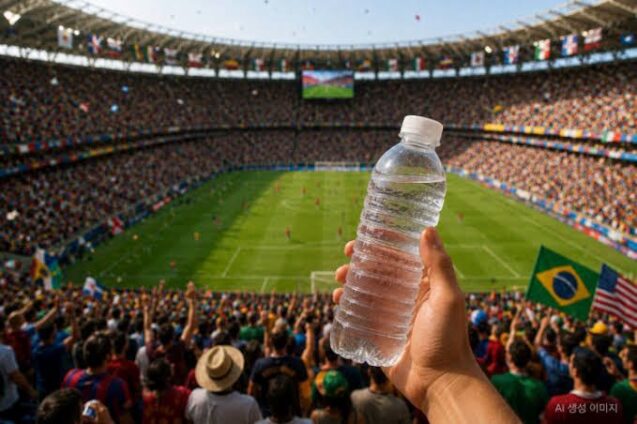
FIFA has reversed its decision to bar World Cup spectators from bringing refillable water bottles into stadiums. The soccer governing body announced a new policy following sharp criticism from fan organisations and international politicians.
The policy reversal marks a rapid shift in tournament regulations. FIFA’s stadium rules originally allowed fans to carry empty, transparent, reusable plastic bottles up to 1 litre, or 33.8 ounces, in capacity. An internal document update issued on Tuesday suddenly reversed that allowance, explicitly stating that reusable water bottles could not be brought into the venues.
The sudden prohibition threatened to force fans to rely entirely on stadium concession stands. Critics quickly labelled the original restrictions as a financial manoeuvre rather than a security measure. Concession prices at the venues are expected to remain high, matching standard pricing consistent with other major events held at each stadium.
Under the newly amended guidelines announced Friday, spectators can carry one factory-sealed disposable plastic bottle up to 20 ounces (590 millilitres) into matches across the United States and Canada. Hard-sided reusable containers remain strictly prohibited.
Safety Fears Countered by Financial Scepticism
The governing body initially defended its restrictions by citing safety risks. Officials argued that heavy reusable containers could be thrown onto the pitch or into the stands.
"FIFA is committed to protecting the health and safety of all players, referees, fans, volunteers, and staff," the organisation stated. "FIFA made the decision to prohibit bottles to prevent risk and injury to players and attendees."
Supporters rejected this rationale, pointing out that stadium beverage sales exclusively benefit corporate sponsors. Water, sodas, and juices sold at the World Cup venues are supplied exclusively by longtime FIFA sponsor Coca-Cola when the tournament begins on Thursday.
The late policy change sparked immediate anger among international supporter clubs.
"Naturally, the immediate thought from supporters is this is just the latest money grab," the English fan group Free Lions said in a statement. "For all of the effort they are going to make with ‘drinks breaks’ for the players, this is such a strange, late change. We hope the water fountains in stadiums will still be free; hopefully, you won’t be charged in the queue!”
Severe Summer Weather Looms Over Tournament
Meteorologists warn that the tournament schedule coincides with peak summer heat. Temperatures are projected to exceed 90 degrees Fahrenheit in multiple North American host cities from June 11 to July 19.
A report by the World Weather Attribution research group estimated that 26 of 104 games are likely to be played in conditions where the Wet Bulb Global Temperature exceeds 26 degrees Celsius (78.8 degrees Fahrenheit). High humidity levels could push the heat index past 100 degrees in cities like Miami and Houston.
Climate scientists emphasise that spectators face significant health hazards outside the air-conditioned areas of the venues. Long walks to stadiums and extended wait times increase the danger of heat stroke.
"In a major sports tournament, there'll be lots of walking around the city for fans," said Theodore Keeping, a climate scientist at Imperial College London. "There needs to be some way in which fans can get water that is not really expensive, because some people simply will make the choice not to buy water, and that puts fans at a high level of risk."
Political Leaders Demand Fan Protections
The water bottle restrictions drew condemnation from high-profile political figures. Leaders argued that the policy directly compromised public health for corporate profit.
United Kingdom Prime Minister Keir Starmer spoke out against the original stadium rules. Starmer said the decision was "wrong" and was "about making money."
Local officials in host cities also pressured the soccer organisation to protect attendees. New York Mayor Zohran Mamdani actively campaigned against the financial burdens placed on fans during the tournament. Mamdani has previously championed equitable prices in his home city, recently securing 1,000 match tickets at $50 for residents as secondary market prices climbed well into four figures.
The initial ban was "concerning because the heat that we are talking about is not just the heat that the players are in, it is also the heat that spectators are going to be subjected to for arguably a longer period of time," Mamdani told The Athletic.
Following the policy reversal, the mayor expressed relief that fans would have alternative hydration options.
“No one should have to fear being priced out of being hydrated, especially fans who are often waiting for hours before a game in extreme heat,” Mamdani said.
Missing Context for Mexican Venues
The updated stadium regulations explicitly apply to matches held in the United States and Canada. FIFA has not provided a corresponding clarification for the venues located in Mexico.
Mexican host cities like Monterrey regularly experience summer temperatures well into the 110s. The lack of a clear policy for these venues leaves thousands of travelling fans uncertain about local stadium rules.
FIFA maintains that it will deploy alternative heat mitigation infrastructure throughout the tournament footprint. The organisation stated it works closely with each local committee to provide misting stations, fans, hydration stations, and cooling tents around the stadium footprint.
A Precedent of Strict Stadium Controls
The restriction on outside containers aligns with historical FIFA tournament protocols. Spectators at the 2022 Qatar World Cup were similarly barred from bringing reusable water bottles into venues. An identical ban was enforced at last year’s FIFA Club World Cup in the United States, where travelling supporters frequently complained of searing stadium temperatures.
Organisers have established comprehensive on-field safety measures for the athletes. Competitors at this summer's World Cup are explicitly allocated three-minute cooling breaks during matches alongside access to specially chilled benches to mitigate extreme environmental conditions.
With the opening match approaching, the focus shifts to how effectively local venue infrastructure can support the hundreds of thousands of arriving spectators. The modified policy successfully balances stadium security concerns with public health necessities, yet the actual execution of these heat-mitigation and hydration strategies across vastly different climate zones will remain under intense scrutiny until the final whistle.
Severe Financial Strain for Travelling African Supporters
The water bottle controversy carries profound implications for supporters travelling from the African continent. A record ten African nations have qualified for this expanded tournament, including Ghana, Senegal, Ivory Coast, Morocco, and South Africa. Fans embarking on these transcontinental journeys already face unprecedented systemic and financial barriers.
The economic reality of attending a North American tournament has priced out many dedicated working-class fans. While a recent United States diplomatic shift waived mandatory $15,000 (approximately 177,225 Ghanaian Cedis) visa bonds for ticket holders from nations like Algeria, Tunisia, and the Ivory Coast, other hurdles remain steep. Rising flight costs, expensive internal transit between distant host cities, and soaring ticket prices have strained fan budgets.
Category 3 group stage tickets have spiked from $69 (approximately 815.24 Ghanaian Cedis) at previous tournaments to as much as $265 (approximately 3,130.98 Ghanaian Cedis), while official resale platforms feature vastly inflated prices.
Additionally, travelling West Africans face severe logistical entry barriers. Some Ghanaian supporters hoping to see the Black Stars compete in Boston and Philadelphia have experienced outright visa denials at embassies. Fans from Ghana, the Ivory Coast, and Senegal also require separate, complex visas to clear Canadian entry requirements for matches in Toronto and Vancouver. Given these astronomical travel costs and visa barriers, travelling African supporters possess very little financial flexibility. Forcing these fans to buy premium-priced concession beverages inside stadiums would have compounded an already heavy financial burden.
Heightened Climate Risks for Continental Visitors
The extreme weather forecasted across the 16 North American venues presents a distinct physiological shock for fans arriving directly from sub-Saharan Africa. While parts of the continent experience high temperatures, the specific mid-summer combination of intense heat waves and stifling humidity in host cities like Houston and Miami creates a uniquely volatile environment. The heat index in these cities is anticipated to regularly cross 102 degrees Fahrenheit.
Public health experts note that travelling fans are far more vulnerable to heat stress than residents. African supporters will have to navigate unfamiliar municipal transit networks, walk long distances to sprawling stadium perimeters, and stand in outdoor queues for hours before kickoff. These factors sharply elevate the risks of sudden dehydration and heat exhaustion.
Ghana's national team campaign begins on June 17 against Panama in Toronto, followed by high-stakes matches against England and Croatia. For the thousands of continental fans and members of the diaspora gathering to support the Black Stars, the ability to carry personal, cost-free water is a vital safety shield rather than a mere convenience.
Latest Stories
-
Interest payments to average a high 20% of government revenue over next 4 years
52 minutes -
Strategy of accumulating foreign reserves, gold carries high fiscal cost – S&P Global
1 hour -
Weak institutional arrangements, high debt servicing constrain Ghana’s rating – S&P
1 hour -
Bond market: Turnover declined by 28% to GH¢1.56bn
2 hours -
Volta Region National Public Speaking contest advances drug prevention conversation
2 hours -
New health training facility at Ampoma-Jema to address admission shortfalls, but Minister flags missing amenities
2 hours -
Black Challenge unveiled with sights set on Amputee World Cup glory
3 hours -
Pay striking teachers before expressway spending, Dr Kingsley Agyemang tells government
3 hours -
Customs intercepts assault rifle, two pistols and 610 rounds of ammunition at Tema Port
3 hours -
PKO boxers secure wins at Odwira Festival
4 hours -
South Tongu Records Rise in Teenage Pregnancy
4 hours -
Cabinet threw out US health compact faster than anything I’ve seen – Mahama
4 hours -
MoFA urges Finance Ministry to reverse World Bank food programme withdrawal over GH¢643m commitments
4 hours -
NAGRAT demands signed timelines before calling off strike
4 hours -
National Investment Quiz: West Africa SHS, St. Louis SHS advance to semi-finals
5 hours