

Audio By Carbonatix
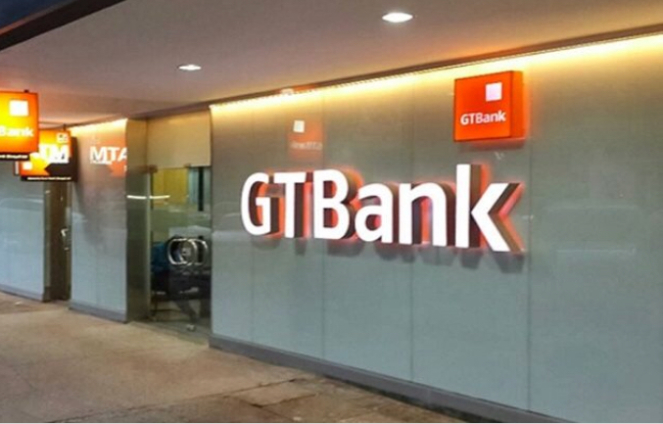
Ratings agency, Fitch Ratings has affirmed Guaranty Trust Bank (Ghana) Limited's (GTB Ghana) Long-Term Issuer Default Rating (IDR) at 'B-' with a Stable Outlook.
The bank's Viability Rating (VR) has also been affirmed at 'ccc'.
According to the UK-based firm, GTB Ghana's Long-Term IDR is driven by potential support from its Nigeria-based parent Guaranty Trust Bank Limited (GTB; B-/Stable), as expressed by its Shareholder Support Rating (SSR) of 'b-'.
The Stable Outlook reflects that on GTB's Long-Term IDR. GTB Ghana's Long-Term IDR is at the same level as Ghana's Country Ceiling of 'B-', which captures Fitch's view of transfer and convertibility (T&C) risk within Ghana.
“GTB Ghana's VR of 'ccc' reflects our view that failure remains a real possibility due to high exposure to the Ghanaian sovereign ('RD') through securities. This is despite losses incurred in the sovereign domestic debt restructuring, forthcoming external debt restructuring and impending loan-quality issues being tolerable due to large capital buffers. The VR is one notch below the implied VR of 'ccc+' due to the following constraint: Operating Environment/Sovereign Rating”.
Shareholder Support Rating of 'b-'
Fitch believes GTB has a high propensity to provide support, if required, despite the sovereign default, to preserve its Ghanaian operations due to the attractiveness and contribution of the Ghanaian market to its pan-African strategy, and the reputational implications of a subsidiary default.
However, GTB's ability to provide support is limited by its own creditworthiness. Fitch does not believe the authorities will introduce controls that impede banks in servicing their external debt.
Sovereign Default
Fitch saidGhana's domestic debt-exchange programme (DDEP), which involved exchanging cedi government bonds for new bonds with significantly lower coupons and longer tenors, concluded in February 2023, inflicting large net present value losses on participating bondholders. Ghana recently restructured other domestic debt instruments and is restructuring its external debt.
Problem Loans to Rise
It said macroeconomic conditions will burden borrowers' debt-repayment capacity and lead to increased problem loans.
However, loan-quality risks are diminished by GTB Ghana's small loan book (half-year 2023: 18% of total assets), with broader asset quality being more closely aligned with the sovereign's creditworthiness.
DDEP Pressures Profitability:
It pointed out that operating returns on risk-weighted assets decreased to 5.5% in 2022 (2021: 15.9%) as a result of large impairment charges stemming from the DDEP.
Fitch considers profitability to have been supported by a low discount rate to determine the fair value of the new bonds.
Latest Stories
-
Venezuela frees 39 political prisoners after post-Maduro talks
14 minutes -
EU unlocks humanitarian aid for crises worldwide
17 minutes -
Tenth woman’s body found as South Africa police probe killings
26 minutes -
Black woman found hanging from tree was dead before body was ‘staged’, police say
29 minutes -
Final day: 3rd Republic Bank-JoyNews Habitat Fair clinic underway at Junction Mall, Nungua
31 minutes -
Nor’easter brings flooding as New York and New Jersey declare emergency
42 minutes -
Africa’s richest man helps fund $660m fuel pipeline between Ethiopia and Djibouti
1 hour -
Security lapses at Utah campus where Charlie Kirk was killed, review says
1 hour -
White House bars CNN from travelling with Trump on Air Force One
1 hour -
Pope praises young people’s ‘energy and commitment’ at huge open-air Mass in Paris
2 hours -
Nyankamam residents benefit from free medical screening, healthcare outreach
2 hours -
Ghana, Boeing explore setting up regional aircraft maintenance hub
2 hours -
Bangkok roads submerged as flood disaster declared
2 hours -
Four killed in helicopter crash near Montreal
2 hours -
Ghana could have national airline back in skies within 18 months – Boeing to Mahama
2 hours