

Audio By Carbonatix
The Environmental Health Officers of the Ayawaso East Municipal Assembly (AEMA) have destroyed over 200 kilogrammes of contaminated maize flour meant for the preparation of local dish, ‘tuozaafi’ for safety.
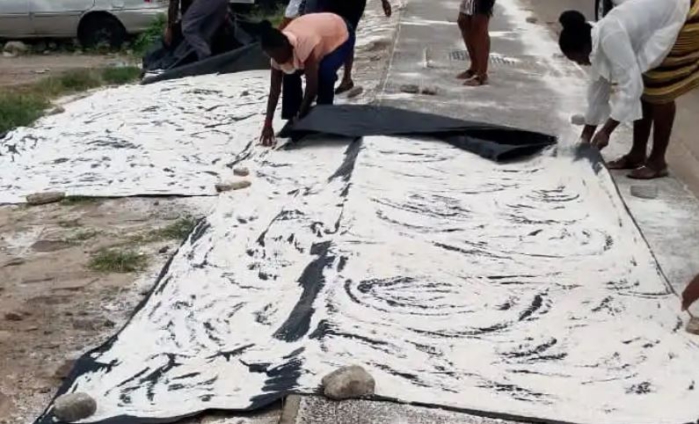
The flour was mixed with sand and properly disposed off after the officials were informed that it had been dried on unprotected plastic sheets on pavements along the Kanda to Kawukudi Highway.
The Ghana News Agency was informed that the flour had also been dried eight hours daily on the pavement with some angry pedestrians walking through and sometimes spitting on it.
They are also exposed to particles of smoke from vehicle exhaust fumes and worn out lorry tyre materials.

Mr Hamdawaiy Sheriff, the Acting Municipal Environmental Health Officer, Ayawaso East Municipal Assembly (AEMA), told the Ghana News Agency (GNA) that the Assembly had been able to pick up three persons as suspects.
He said: “Their actions are dangerous to public health and safety. And they will surely receive the necessary punishment as prescribed by the by-laws.”
Mr Sheriff said though an officer was nearly attacked by three ‘machomen’, the office was determined to stop the practice and urged community members to give out information on such activities and play their watchdog roles well.
Mr Douglas Tagoe, Regional Environmental Health Director, Greater Accra, who had earlier directed the Municipal Office to destroy the flour, said the contaminated flour when consumed could cause problems to the lungs, kidneys and liver.
“How can food handlers be selling on smelly and fly infested drains with executive officers, scholars and intelligent adults scrambling for positions in queues to buy ‘death’ for themselves,” he asked?
He said the Public Health Act 851 of 2012 and the District Assembly Bye-Laws frowned on such acts and that the offenders should be sanctioned.
Mr Tagoe said the citizens needed to be cautious of all health and environmental safety measures before buying food outside, particularly from food vendors around choked drains.
He said similar practices were ongoing at the various beaches, with some fishmongers drying fishes by the roadside and said it must stop.

Mr Tagoe noted that in farming areas, pepper and other vegetables were also dried on highways and sold to unsuspecting customers.
He urged the populace to avoid such foodstuffs and report the practices to the Metropolitan, Municipal and District Environmental Health Offices for action.
Before the destruction of the flour, the Food and Drugs Authority (FDA) raised concerns about the practice and urged the perpetrators to stop drying the substance on the pavement but they shrugged off the caution.
Latest Stories
-
Iran war lands ‘triple blow’ to flood-ravaged Sri Lankans
20 minutes -
Gunmen kill at least 11 people at Afghanistan picnic spot
34 minutes -
Woman, 25, in court for stealing baby at Bogoso
35 minutes -
Trump unveils giant gold-accented victory arch design for US capital
38 minutes -
We spoke to the man making viral Lego-style AI videos for Iran. Experts say it’s powerful propaganda
43 minutes -
Hungarians vote in big numbers on whether to end Orbán rule and elect rival
44 minutes -
At least 30 feared dead in crush at Haitian tourist site
44 minutes -
Boxing: Abdul Ahmed wins WBA Africa Cruiserwight title after dispatching Nigeria’s Eradeye
57 minutes -
Nearly 2,000 displaced, schools damaged as windstorm wreaks havoc in Gushegu
1 hour -
Ghana’s Derrick Kohn to work under Marie-Louise Eta as she becomes first woman to coach men’s Bundesliga team
1 hour -
Accra Open Championships conclude with strong performances ahead of African Championships
1 hour -
Ghana to begin camping with 12 athletes after Accra Open Championships – Bawa Fuseni
2 hours -
Anthony Joshua declines showdown with Tyson Fury but admits they ‘probably’ clash next
2 hours -
Tyson Fury dominates Makhmudov, calls out Joshua next
2 hours -
I have supported highway authority financially to fix roads in my constituency – A Plus
3 hours