


Audio By Carbonatix
German Chancellor Angela Merkel has announced she will give up leadership of her center-right Christian Democrat Union (CDU) party after 18 years in the post, German media has reported.
Merkel announced during a meeting with officials that she will not seek to run for re-election at the party's convention in December. But she made clear that she wanted to remain as chancellor, a position she has held since 2005, CNN affiliate RTL reported, citing party sources.
The announcement is a sign of Merkel's weakened power within her own party, and waning popularity in the country.
Both parties under Merkel's ruling coalition -- the CDU and the Social Democratic Party (SPD) -- suffered heavy losses in a regional election over the weekend.
While the CDU remained the largest party in the election, which was held in the central state of Hesse, results were down 10% from the previous election.
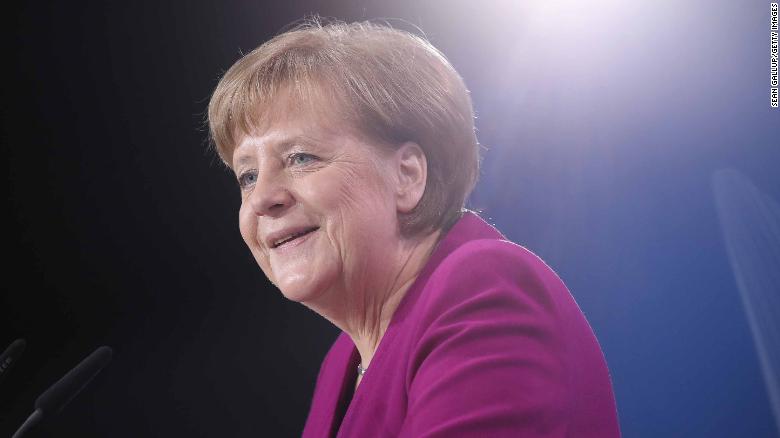
German Chancellor and Chairwoman of Germany's Christian Democratic Union (CDU) Angela Merkel speaks to delegates at the 30th CDU party congress on February 26, in Berlin, Germany. Merkel became the first female Chancellor of Germany in 2005, and is currently serving in her fourth term.
While the decision to step down is not likely to affect her leadership in the short term, CNN Senior International Correspondent Fred Pleitgen said the move could spell the "beginning of the end" for Merkel's Chancellorship.
Pleitgen said if her party continues to suffer and she loses the confidence of its members, at some stage she could get voted out of parliament.
Germany's next national election is due to be held in 2021.
Second blow to Merkel's fragile government
This weekend's election is a second blow to Merkel's fragile "grand coalition" government. On October 14, the Christian Social Union, or CSU -- the Bavarian sister party to the CDU -- lost its majority in the Bavarian state parliament.
The CSU has dominated politics in the state since the end of World War II, ruling for all but three years over the course of nearly seven decades.
Speaking on October 15, Merkel admitted that voters had lost trust in the government and that it was her job to "make sure that trust is won back."
"I will work on that with as much vigor as I can," she added.
Bavaria bore the brunt of the 2015 refugee crisis; at its peak, thousands of asylum seekers were crossing into the state every day. Since then, both Merkel and her CSU allies have been criticized for their management of the influx.
Latest Stories
-
AFCON 2025: Senegal beat Morocco to win second title
3 hours -
Sports journalist Alex Kobina Stonne elected UniMAC External Affairs Commissioner
4 hours -
NDC’s economic gains ‘cosmetic’; real impact yet to be felt – Bryan Acheampong
4 hours -
WEF warns geoeconomic confrontation now world’s biggest threat
4 hours -
Top 10 safest countries in Africa for travellers in 2026: Ghana places 7th
5 hours -
Inflation to remain within lower bound of medium-term target of 8 ± 2% – BoG
5 hours -
Bright Simons: Ghana’s budget should follow gold, not oil
6 hours -
Stress test on restructured government bonds: Banks appear resilient to shocks – BoG
6 hours -
T-bills auction: Investor interest continued to surge, but interest rates soar
6 hours -
2025/26 Ghana League: Holy Stars edge Bechem United to secure vital home victory
7 hours -
Gun amnesty programme extended by two weeks
7 hours -
Tano North farmers threaten demonstration against Newmont ‘unfair compensation’
8 hours -
GPL 2025/26: Richmond Opoku brace sees Young Apostles draw with Hohoe United
8 hours -
Over 75% of NPP Parliamentary candidates outpolled Bawumia in 2024 – Bryan Acheampong
8 hours -
Kyebi Zongo to become a model for excellence, environmental stewardship – Chief of Kyebi Zongo
9 hours