

Audio By Carbonatix
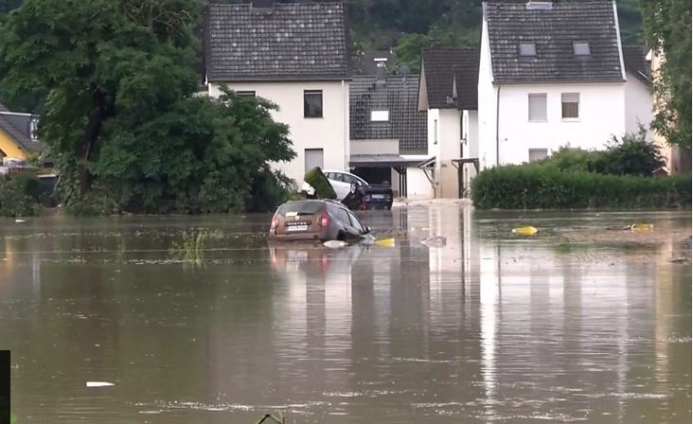
At least 80 people have died and hundreds more are unaccounted for in Germany after some of the worst flooding in decades.
Record rainfall in western Europe caused rivers to burst their banks, devastating the region.
Belgium has also reported at least 11 dead after the extreme weather, which political leaders have blamed on climate change.
German Chancellor Angela Merkel has pledged full support for the victims.
Armin Laschet, the premier of North Rhine-Westphalia, blamed the extreme weather on global warming during a visit to a hard-hit area.
"We will be faced with such events over and over, and that means we need to speed up climate protection measures... because climate change isn't confined to one state," he said.
Experts say that climate change is expected to increase the frequency of extreme weather events, but linking any single event to global warming is complicated.
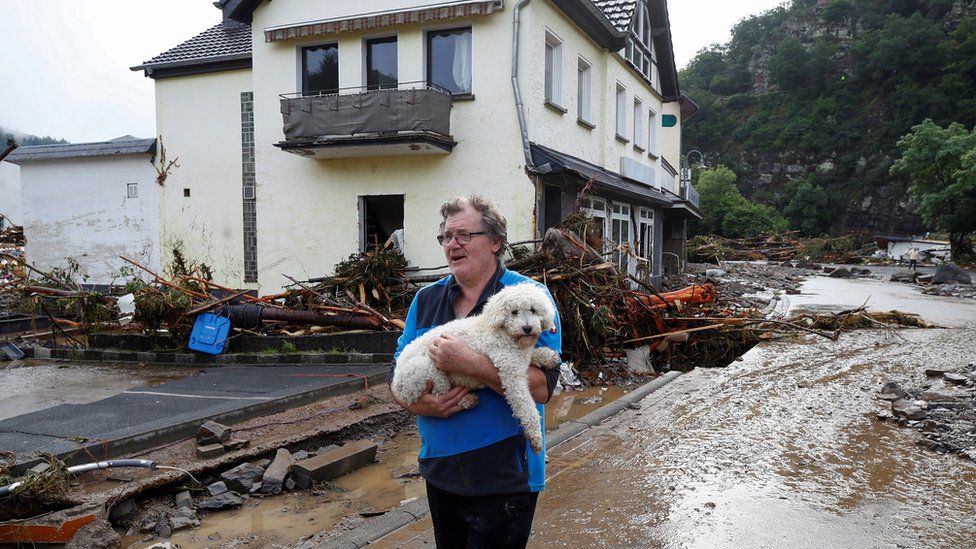
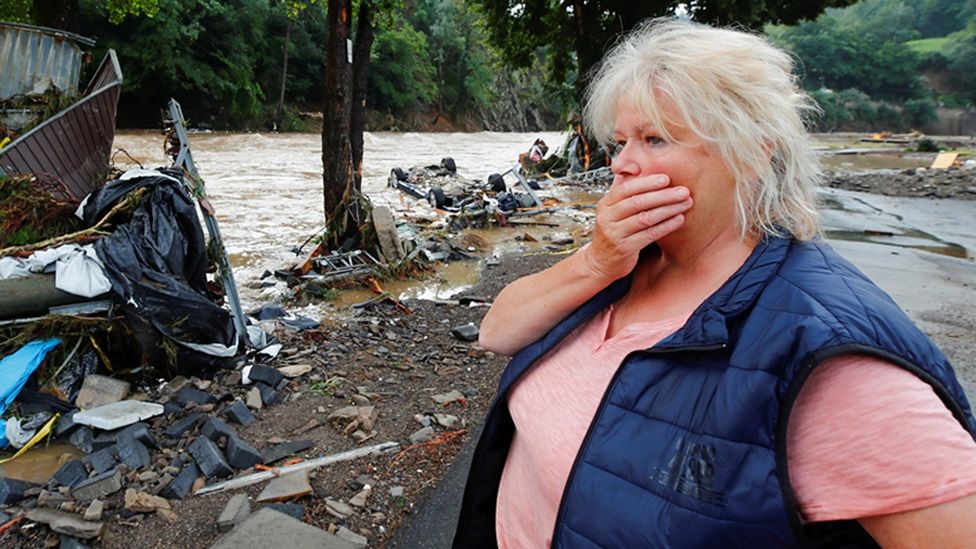
The German states of Rhineland-Palatinate and North Rhine-Westphalia were worst hit, but Belgium and the Netherlands are also badly affected, with further flooding in Luxembourg and Switzerland.
In the district of Ahrweiler, hundreds of people are unaccounted for, the authorities say. A spokeswoman for the local government said mobile networks had been put out of action, making it impossible to contact many people.
The village of Schuld (population 700) was almost entirely destroyed.
More heavy rain is forecast across the region on Friday.
🌧 La crue de la Vesdre atteint une ampleur dramatique à Verviers dans l'est de la Belgique ce matin ! Certaines rues sont noyées sous près de 2 mètres d'eau ! (© Katia Bogaert) pic.twitter.com/yDGNgflP1y
— Météo Express (@MeteoExpress) July 15, 2021
Meanwhile, in the town of Pepinster, 10 houses collapsed after the River Vesdre burst its banks.
Almost 2,000 people were forced to evacuate in the town of Chaudfontaine, Belgium's Le Soir newspaper reported.
Rail services in the southern half of Belgium have been suspended because of the extreme weather.
In the Netherlands, the province of Limburg has been left heavily flooded following downpours overnight.
Forecasts suggest more heavy rain is due in much of western Europe on Thursday and Friday.
Experts say that climate change is expected to increase the frequency of extreme weather events, but linking any single event to global warming is complicated.
Armin Laschet, the premier of North Rhine-Westphalia, blamed the extreme weather on global warming during a visit to a hard-hit area.
"We will be faced with such events over and over, and that means we need to speed up climate protection measures... because climate change isn't confined to one state," he said.
Latest Stories
-
Keep the money in Ghana – Gov’t enforces local cargo insurance
60 minutes -
US Army veteran charged with leaking classified information to journalist
1 hour -
Dr. Dre joins Forbes billionaires list as second-richest hip-hop artist with $1 billion fortune
1 hour -
Trump administration cannot nix legal status of 5,000 Ethiopians, US judge rules
1 hour -
Libya announces new oil and gas discoveries with three major energy companies
2 hours -
Oil rises as investors remain wary US-Iran ceasefire will open supply flow
2 hours -
Police arrest suspect over church threat video
4 hours -
Eight appear in court as police intensify crackdown on illicit drugs in Tamale
4 hours -
Motorist remanded in custody for hitting four-year-old girl
4 hours -
Mobile money vendor robbed at Ziope
4 hours -
Benin’s Finance Minister Wadagni seeks his own mandate in election
4 hours -
GNFS retrieves body of unidentified man from Asylum Down drain
5 hours -
CAF’s Motsepe to visit both Senegal and Morocco amid AFCON fallout
5 hours -
Edmond Boateng takes up secretary role at Honorary Consular Corps of Ghana
5 hours -
Armed men kill 20 and abduct others in northwestern Nigeria villages
5 hours