

Audio By Carbonatix
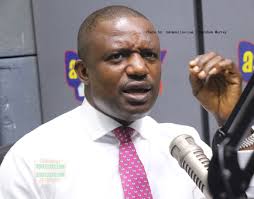
The Minister for Energy and Green Transition, Mr John Jinapor, has insisted that the newly introduced GH₵1 energy levy is not intended to pay off legacy debt but is a necessary measure to sustain Ghana’s electricity supply amid rising costs of procuring liquid fuels.
Speaking on Joy FM on Wednesday, June 4, Mr Jinapor stressed that without the levy, the energy sector would face severe funding shortfalls, threatening power stability for consumers nationwide.
Mr Jinapor emphasised that governance is not merely about making decisions but about optimising situations and doing what is believed to be the best course of action.
He added that nobody enjoys imposing taxes or levies on the people of Ghana.
“We have been working very hard since assuming office, but to be clear, this levy is not intended to pay off legacy debt,” he explained.
“We have studied the energy sector thoroughly and analysed the system. The fundamental truth is that the liquid fuels we currently purchase are not part of the tariff structure,” he added.
He further explained that even if the Electricity Company of Ghana (ECG) were to collect 100% of electricity payments today, none of that money would go towards procuring liquid fuel.
“Meanwhile, this year alone, we require over one billion US dollars to procure liquid fuels,” he revealed.
Mr Jinapor noted that increasing gas consumption or production would be the ideal solution, but the gas infrastructure takes an average of 18 months to two years to put in place — assuming work started today.
"This should have happened years ago."
He acknowledged the support of the Finance Minister, who has been helping, albeit with considerable difficulty, to procure liquid fuel.
“In terms of available options, we could increase electricity tariffs, rely fully on the Finance Minister to find non-existent funds, or share the burden through a reduction in fuel prices,” he said.
Mr Jinapor reminded listeners that when their administration took office, fuel was approximately GH¢16 per litre.
“So even with this one cedi levy, and although we agree that consumers will pay about 50 cedis extra, you will still be saving between 100 to 150 cedis compared to when we assumed office,” he continued.
He acknowledged that ideally, they would have wished to pass all the benefits onto Ghanaians, but this would have required a 40 to 50 per cent increase in electricity tariffs.
“Governance is a balancing act, and we are appealing to Ghanaians to understand that we have already provided a reduction from 16 to about 13 cedis — roughly a three cedi decrease.”
Mr Jinapor concluded by stating that maintaining the levy at one cedi will help sustain electricity productivity, while efforts continue to increase gas consumption, reduce losses, and improve efficiency.
Latest Stories
-
We can tackle multiple priorities – Sam George defends Anti-LGBTQ Bill push
4 minutes -
Statement: Ghana Chamber of Mines’ Response to Claims in Joe Jackson’s “Ananse Stories about the Economy of Ghana”
5 minutes -
GES opens 2026 teacher recruitment for licensed B.Ed graduates
7 minutes -
Ghana must value skilled trades, build resilient learners — Ibn Chambas
15 minutes -
Ghana must rethink education around relevance, resilience and responsibility — Ibn Chambas
18 minutes -
Prince Harry faces defamation lawsuit from charity he co-founded
20 minutes -
South Korea deploys thermal cameras to track escaped zoo wolf
22 minutes -
Calls for royal meeting with Epstein survivors grow ahead of US visit
25 minutes -
Ibn Chambas advocates blend of technology and human values in education
27 minutes -
UMA improves healthcare access in Asutifi North with GH₵700k ‘Kim Taylor Legacy’ Walkway
32 minutes -
Scholarships Authority and Fanaka University offer sponsorship for procurement and supply chain studies
35 minutes -
Bisa Kdei drops new single ‘Go N Look’ featuring Medikal
41 minutes -
Benin facing rising terrorism in north as French military presence faces growing criticism
42 minutes -
UEW Public Lecture Series 2026: Education debate ‘about the soul of Ghana’s future’ — Dr Ibn Chambas
43 minutes -
EU fingerprint and photo travel rules come into force from today
1 hour