

Audio By Carbonatix
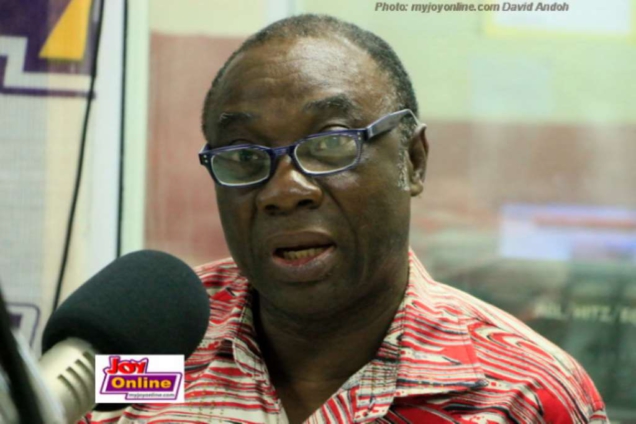
Former Power Minister, Dr. Kwabena Donkor, has defended the controversial GH¢1 levy on petroleum products passed by Parliament on June 3.
He insists it is not a new tax but an adjustment to an existing one to save Ghana’s ailing power sector from collapse.
“This is not a new levy,” Dr. Donkor told Evans Mensah on Joy News’ PM Express on June 4.
“Let’s get it right. This is an existing levy. Government is just adding to the quantum. So government has not introduced a new levy.”
The GH¢1 increment comes under the Energy Sector Levy (Amendment) Bill, 2025, which seeks to raise additional revenue to address the country’s deepening energy sector debt and ensure a reliable electricity supply.
Dr. Donkor made it clear that this intervention is essential.
“The power sector has faced liquidity challenges for a number of years,” he said. “Primarily because we are under-recovering the cost. And for any business, if you under-recover cost, you pile up debt.”
He explained that the problems in the power sector have not gone away despite several interventions. “As we speak, we are still under-recovering,” he noted.
“So the situation has persisted. The debt has piled up over the years, and it has not changed.”
According to Dr. Donkor, addressing this challenge requires more than just raising revenue.
“There is a need for a two-pronged approach,” he said.
“Increasing revenue dedicated to the legacy debt is just one leg. The other leg will have to be to drive down cost in the power sector, to raise efficiency, and make sure that at the minimum, we break even.”
He cautioned that without a broader plan, the debt will continue to rise despite new revenue measures.
“If we don’t do that, we’ll keep adding to the debt. We already referenced $3.1 billion as of March, and that figure will keep growing.”
Dr. Donkor insisted that the new adjustment should be viewed in context.
“People need to understand: this GH¢1 isn’t coming out of nowhere. It’s going to a sector that desperately needs liquidity.”
He acknowledged the public’s pain in paying more for fuel but stressed that stable electricity cannot come free.
“You want the lights on? Then you have to fix the system. And that means funding it properly.”
While critics argue that government has not been transparent with previous energy-related levies like ESLA, Dr. Donkor maintained that the levy remains a necessary tool, so long as it is accompanied by structural reforms.
“Raising money is only half the job,” he warned. “Efficiency and cost control are the other half. Without both, we’re back to square one.”
He concluded that the debate should not be about whether or not to pay, but whether the power sector is finally being run with discipline.
“We’ve had enough short-term patches. Let’s make sure this one is part of a comprehensive fix.”
Latest Stories
-
Prioritise cocoa sector with better prices, timely payments-Annoh-Dompreh urges NDC
12 minutes -
Lands and Mines Watch Ghana endorses Heath Goldfields’ mining capacity
27 minutes -
Gbintiri residents protest alleged diversion of 24-hour market project
52 minutes -
Justin Bieber headlines Coachella with nostalgia-fuelled set
54 minutes -
Ukraine and Russia accuse each other of hundreds of ceasefire violations
58 minutes -
Asha Bhosle: The sound of Bollywood dies aged 92
1 hour -
Fire destroys section of 4-bedroom apartment at Tantra Hill
1 hour -
Safe city: Unnoticeable protection
2 hours -
North East Regional Police Commander raises alarm over burning of checkpoints
2 hours -
Free Primary Healthcare Programme set for take-off — Health Ministry confirms readiness
2 hours -
3 co-wives, 5 children perish in canoe disaster – Maritime Authority insists life jackets use mandatory for all water transport
3 hours -
Iran war lands ‘triple blow’ to flood-ravaged Sri Lankans
3 hours -
Gunmen kill at least 11 people at Afghanistan picnic spot
4 hours -
Woman, 25, in court for stealing baby at Bogoso
4 hours -
Trump unveils giant gold-accented victory arch design for US capital
4 hours