

Audio By Carbonatix
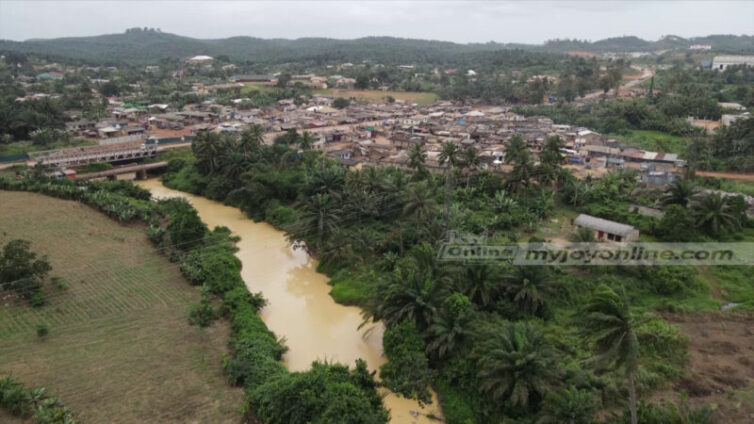
In the past decade, illegal mining, locally known as galamsey, has emerged as one of Ghana's most pressing environmental issues. The reckless extraction of minerals, particularly gold, has devastated the country’s natural resources, transforming once-pristine forests, rivers, and farmlands into wastelands.
The impact of galamsey extends beyond local ecosystems, undermining several United Nations Sustainable Development Goals (SDGs), including SDG 15 (Life on Land), SDG 3 (Good Health and Well-being), SDG 14 (Life Below Water), and SDG 12 (Responsible Consumption and Production).
Weak enforcement, corruption, and the allure of quick profits have made it challenging to combat illegal mining through legislation alone.
Despite Ghana's existing regulatory framework—anchored by the Minerals and Mining Act (2006) and the Environmental Protection Agency Act (1994)—galamsey continues to thrive. Recent reports from the Ghana Water Company Limited (GWCL) highlight the severity of the situation, revealing significant water shortages due to the contamination of key sources.
According to GWCL, 60% of the country’s major water bodies have been polluted, with turbidity levels soaring to an average of 14,000 NTU—far exceeding the treatment capacity of 2,000 NTU.
The Ghana Academy of Arts and Sciences has put forward the following recommendations to address these concerns:
1. Immediate revocation of L.I. 2462 by the Executive and Parliament to protect the country's forest reserves, as inaction could lead to the loss of all reserves by 2030.
2. The Executive and Parliament must engage extensively with scientific experts and stakeholders when enacting environmental legislation, using their constitutional powers to safeguard the nation from environmental threats.
The Academy urges immediate action to revoke L.I. 2462 to prevent further environmental degradation and to ban mining in water bodies. They stand ready to collaborate with all stakeholders to protect Ghana's environment and combat illegal mining.
It said illegal mining has left a trail of destruction across the country. Beyond contaminating water bodies, it has devastated farmlands, particularly in cocoa-producing regions, and led to the loss of at least 34 forest reserves.
"As the country prepares for a potential lockdown, all eyes are on the government to respond to this escalating crisis and take the necessary steps to halt the environmental degradation threatening the nation’s water security and agricultural productivity" it said in a statement.
Latest Stories
-
IMANI Africa President urges greater awareness and support for Parkinson’s Disease patients
4 minutes -
T-bills: Government records undersubscription of 29%; interest rates continue to surge
6 minutes -
Perceptions of Judicial partisanship ‘unfortunate’ – Justice Adjei-Frimpong urges greater public engagement to build trust
9 minutes -
Ghana to honour Christina Hammock Koch for historic Artemis II mission
1 hour -
Supreme Court appointments require more than 15 years’ experience – Justice Adjei-Frimpong
1 hour -
Fire destroys 3-bedroom house at Bogyawe
2 hours -
Why the Supreme Court is a “policy court” – Justice Richard Adjei-Frimpong breaks it down
2 hours -
Playback: The Law discussed Supreme Court @150
3 hours -
MTN Momo staff walk to promote wellness and fitness
3 hours -
Assafuah: Sedina Attionu’s return from Nevada will test government’s commitment to accountability
3 hours -
How GRA’s Modified Taxation Scheme is boosting revenue compliance & SMEs competitiveness
4 hours -
Stonebwoy Can Do It: A call to unite behind 2026 BHIM Fest
4 hours -
World Shea Expo returns to Tamale for 2026 edition
4 hours -
Prioritise cocoa sector with better prices, timely payments-Annoh-Dompreh urges NDC
5 hours -
Lands and Mines Watch Ghana endorses Heath Goldfields’ mining capacity
5 hours