

Audio By Carbonatix
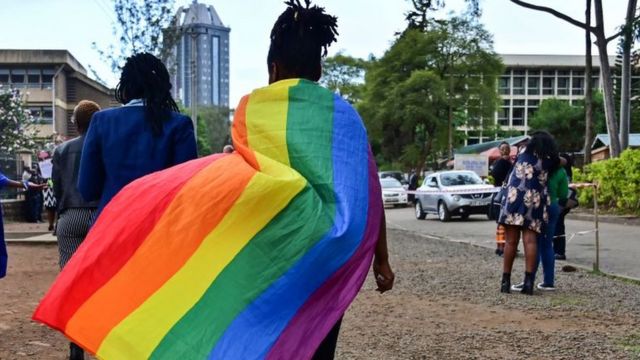
A Senior Programmes Officer, Human Rights and Social Inclusion at the Centre for Democratic Development (CDD-Ghana), Michael Augustus Akagbor, has questioned Ghana’s negotiating power on the international stage as the contemplates the passage of a new anti-gay bill.
Speaking on JoyNews’ PM Express on Tuesday, he explained the need for Ghana to assess its position and influence on the global level before making certain decisions.
His comments comes after the US Ambassador to Ghana, Virginia Palmer, said Ghana would face severe economic challenges should the bill banning lesbian, gay, bisexual, transgender, queer (LGBTQ+) activities be passed.
However, proponents of the Promotion of Proper Human Sexual Rights and Ghanaian Family Values Bill highlighted the hypocrisy on the part of the United States of America, noting that the USA still trades with Saudi Arabia despite their stringent laws against the practice of LGBTQ+.
In response, Mr Akagbor stated that there is a stark contrast between Ghana and global giants like Saudi Arabia.
Citing an example, he said, “Saudi Arabia could decide today to say, ‘we are going to cut back on how much oil we produce’ and the whole world will feel the pinch.
“Can we do same in Ghana?” he quizzed.
The Programmes Officer further cautioned against misleading comparisons, drawing attention to the economic impact that Uganda suffered after going ahead to pass one of the strictest anti-gay laws in recent times.
"Last year, we had $800 million from AGOA [African Growth and Opportunity Act], we have projected $800 million for next year and 2025. So we tend to lose $1.6 billion of the AGOA transaction and that will be a huge money to lose," he said.
He highlighted the differences between Ghana’s practice of democracy and Saudi Arabia’s theocratic system.
This distinction, according to him, is crucial especially when evaluating how each nation manages itself and engages in international discourse.
The MP for Ningo-Prampram, Sam George who is a major advocate of the anti-LGBTQ bill maintained that Ghana would lose nothing should the USA decide to cut business after the passage of the bill into law.
According to him, the US benefited more from trade relations with Ghana therefore any such legislation to end trade was to their disadvantage.
Latest Stories
-
Tyson Fury dominates Makhmudov, calls out Joshua next
12 minutes -
I have supported highway authority financially to fix roads in my constituency – A Plus
1 hour -
US, Iran fail to reach peace agreement after marathon talks in Pakistan
2 hours -
ECG kicks off Phase Two of transformer upgrades at Lashibi; brief outages expected
2 hours -
Port crises loom as 11,000 drivers threaten four-day strike
3 hours -
A source of excellence across generations – Vice President Opoku-Agyemang lauds Mfantsipim
4 hours -
(Photos) Mfantsipim School launches historic 150th anniversary
4 hours -
Knights and Ladies of Marshall group backs Catholic Bishops’ stance on anti-LGBTQ+
5 hours -
Bright Simons writes: All the Filla in the Ibrahim Mahama/E&P – Gold Fields Saga
6 hours -
Monetise Idiocy In Ghana
6 hours -
The Ghanaian prophet and the mysterious death of his scottish wife Charmain Speirs
7 hours -
Nearly 400 sentenced in Nigeria for links to militant Islamists
7 hours -
Ghana’s recovery supported by gold strength despite global oil price pressures – Standard Bank Research
7 hours -
Methodist Church hails Mfantsipim@150; calls for “fresh consecration” to excellence
7 hours -
‘Excellence is our inheritance’ – Nana Sam Brew-Butler hails Mfantsipim’s 150-year reign in leadership
7 hours