

Audio By Carbonatix
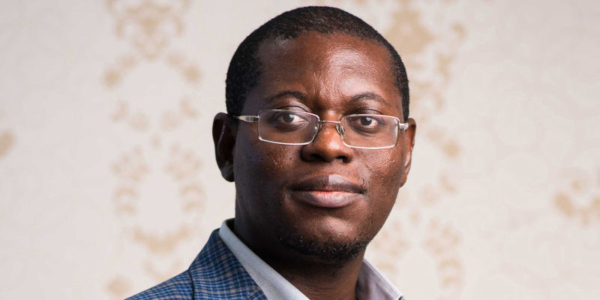
Policy Analyst, Bright Simons, has revealed that Ghana had exited its previous International Monetary Fund (IMF) programme prematurely.
According to him, the government had failed to meet certain structural benchmarks which were required to complete the programme in 2019 and instead had opted for waivers, assuring the IMF that it would meet those benchmarks outside of the programme, independently.
Unfortunately, all but two of the structural benchmarks were not met, Bright Simons said.
Ghana had signed up for a three-year IMF Extended Credit Facility in 2015 to fill a $930m gaping hole in the economy.
On exiting the programme in 2019, the Finance Minister, Ken Ofori-Atta had stated that the government's early exit from the programme was proof of the NPP's superior management of the country's finances.
Speaking on JoyNews’ PM Express, Bright Simons said, “On the IMF front we know the big problem was that we exited the IMF prematurely. When we look at when we were exiting in 2019, the Finance Minister insists that we left because the IMF gave us an all clear. Not really.
“We left because we asked for waivers and the IMF cannot force us to be in an IMF programme, we’re a sovereign country. Waives or those waivers we asked for is on the fact that we had not completed the programme because structural benchmarks had not been met which are all fiscal issues that we hadn’t dealt with but we went to IMF and said that things were going to improve because we were going to produce 1billion barrels of oil in a day etc so we want out, and the IMF allowed us out.
“It wasn’t because we left the IMF programme on a clean bill, actually when you look through the programme targets particularly the structural ones most of them were not met and the few that were met, the two that were met, were met with substantial delays.”
Should the IMF accept Ghana’s bid to subscribe to a programme, this would be the 17th time since Independence Ghana would have subscribed to an IMF programme.
Some policy analysts have warned that this would probably not be the last time Ghana seeks a bailout from the IMF, citing the country’s history of fiscal indiscipline and profligate spending.
One of such analysts is Professor Bopkin of the University of Ghana who says the failure of successive governments to adopt prudent measures to stabilize the economy is the reason for the current harsh economic space the country finds itself in.
“This is not the last time we will be going to the IMF. We have failed as a country to successfully do the needful- to say these are the necessary fiscal reforms we need to pride ourselves as a nation that won independence in 1957,” he said on the Super Morning Show, on July 6, 2022.
Latest Stories
-
Ghana lose Morocco friendly as Atlas Lions turn to Mali
2 hours -
2026/2027 GPL: Kelvin Nkrumah strike sends Medeama top of league table
2 hours -
Emmanuel City crowned champions of maiden Global Game Scouting Tournament
2 hours -
Thomas Partey loses father Jacob Teye Partey
2 hours -
Martin Kpebu explains when EOCO can arrest Manhyia South MP after securing court warrant
3 hours -
EOCO’s reasons for seeking Manhyia South MP arrest warrant not justified – Kpebu
3 hours -
MTN Ghana warns SMEs against sharing PINs amid digital fraud risks
3 hours -
Yendi nursing students warn restricted access to skills lab could affect their training
3 hours -
Minority awaits formal notice of arrest warrant for Manhyia South MP – Annoh-Dompreh
3 hours -
LTIF announces 2026 Pan-African edition in Accra from October 6-7
3 hours -
Mfantsipim needs broader funding partnerships to bridge infrastructure gap – Prof Baiden
3 hours -
MP status must not shield anyone from law enforcement – Kwakye Ofosu
3 hours -
EOCO had tactical team ready to arrest Baffour Awuah – Felix Kwakye Ofosu
3 hours -
Afoko can unite NPP’s factions, says Charles Owusu Juanah
3 hours -
Guardiola backing Man City after guilty verdicts
3 hours