

Audio By Carbonatix
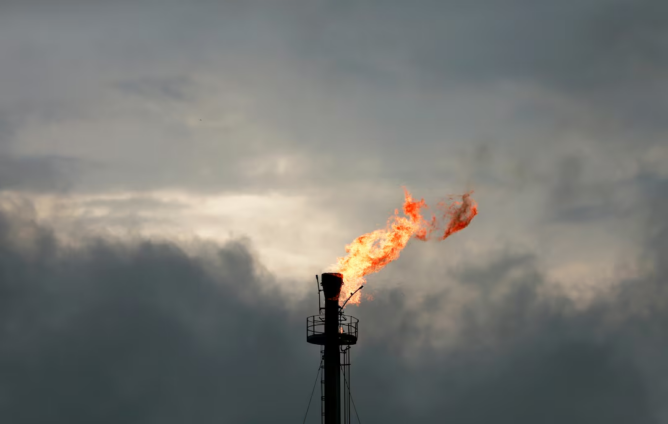
A total of 28,501.24 million standard cubic feet of natural gas worth approximately $170 million was lost in Ghana’s upstream petroleum sector through flaring.
This is contained in the 2024 annual report of the Public Interest and Accountability Committee (PIAC) on the management and use of petroleum revenues.
The figure constitutes 10.40% of the 279,345 million cubic feet of raw gas utilised in the year under review, from the three oil fields – Jubilee, Sankofa-Gye Nyame (SGN) and Tweneboa-Enyenra-Ntomme (TEN).
Gas flaring is the practice of burning excess natural gas that cannot be economically collected and transported for use.
Over the years, there has been an increasing percentage of gas excesses burned out into the atmosphere.
In 2022, the volume of gas flared increased by 19.3 per cent compared to the 21.2 billion cubic feet recorded in 2021.
The activity poses environmental dangers, particularly its contribution to greenhouse gas emissions and air pollution, which adversely affect human health and the environment.
Although Ghana has a zero-flaring policy under its oil and gas production regulations, a significant percentage of gas is still flared owing to inadequate gas processing capacity.
The PIAC is concerned about the continuous wasteful use of the gas, especially during periods where the country experienced intermittent power cuts.
“Technically, no company is allowed by the Environmental Protection Agency (EPA) to flare gas. However, because the Atuabo Gas processing plant cannot handle all the associated gas produced, excess gas is often flared. This is harmful to the environment and a waste of valuable resources,” said Richard Kojo Ellimah, a member of PIAC.
Government has announced plans to commence the construction of a second gas processing plant (GPPII).
The new facility is expected to significantly facilitate the reduction of gas flaring and rather convert excess gas into usable energy.
Mr. Ellimah wants expedited processes for the completion of the project within the next three years.
“It was heartwarming to hear the minister confirm cabinet’s approval. This project should be treated as a national priority. If construction begins quickly, Ghana could begin benefiting from its excess gas within the next two to three years. While it is a complex and capital-intensive project, it is necessary for environmental sustainability and economic growth,” Mr. Ellimah noted.
Latest Stories
-
GUTA calls for suspension of Publican AI system over trade disruptions, demands temporary halt in import activities
2 minutes -
TTAG raises alarm over proposed recruitment of 7,000 teachers, demands national posting roadmap
35 minutes -
Civilians feared killed after reports of air strike on Nigerian market
45 minutes -
Bishop Simon Kofi Appiah installed as new Jasikan Diocese Bishop
46 minutes -
Trump’s Strait of Hormuz blockade threat raises risks and leaves predicaments unchanged
49 minutes -
US Court backs extradiction of former MASLOC CEO Sedina Tamakloe-Attionu’s to Ghana
1 hour -
Seven arrested as NAIMOS dismantles illegal mining camp, seizes firearms at Boin River
1 hour -
Fire erupts at Madina Ritz Junction, destroys multiple wooden structures and containers
1 hour -
Daniel-Kofi Kyereh returns from long-term injury, registers assist for Freiburg U23
2 hours -
Knifeman calling himself ‘Lucifer’ slashes three at NYC’s Grand Central
2 hours -
Brands are built from within to without
2 hours -
Matriculants urged to pursue excellence as gov’t reaffirms support for Maritime education
2 hours -
See the areas that will be affected by ECG’s planned maintenance on Monday, April 13, 2026
2 hours -
GPL 2025/26: Salim Adams double fires Medeama back to summit after Kotoko rout
2 hours -
Two robbery suspects convicted following violent gold dealer attack in Obuasi
2 hours