

Audio By Carbonatix
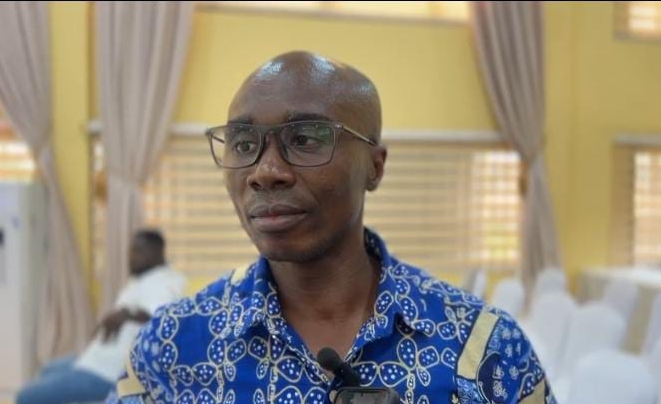
Economist Prof Patrick Asuming has warned that Ghana’s recent macroeconomic gains under the International Monetary Fund (IMF) programme will not translate into a sustainable economic take-off unless the country urgently addresses structural weaknesses and prioritises value addition across key sectors of the economy.
Speaking in response to a question on the concrete fundamentals that must improve for Ghana’s economic transformation, the economist said the most critical outstanding issue is addressing the structural problems that prevent the country from adding sufficient value to its production.
According to him, a strong commitment to value addition, local enterprise support and job-creating growth will be the true test of whether Ghana is entering a sustainable economic take-off phase beyond the IMF programme.
“The IMF programme can stabilise the economy, but it does not automatically improve productivity or determine where and how value is added,” he noted in an interview on Joy FM's Middaynews on Friday, January 2.
He warned that without deliberate efforts to restructure the economy, fiscal adjustments achieved under the IMF programme may not be sustainable. Ghana, he explained, remains highly exposed to international price volatility, particularly in commodity markets.
“If global prices enter a bear market, the value of commodities such as gold that we stockpile could decline significantly, undermining recent gains,” he said.
The economist stressed that encouraging value addition is therefore essential to reducing vulnerability and ensuring long-term economic resilience. He added that growth must also be broad-based, so that expansion in key sectors pulls other parts of the economy along.
Although Ghana’s economy has recorded relatively strong growth in recent times, he pointed out that it has not translated into sufficient job creation. He also highlighted a growing disconnect between economic growth figures and the lived realities of many Ghanaians.
“The most productive sectors of the economy are largely run by foreign interests. When these sectors perform well, it does not necessarily lead to significant job creation for Ghanaians, leaving many people feeling disconnected from the reported progress,” he observed.
To bridge this gap, the economist called for deliberate delivery policies that promote inclusive growth. He emphasised the strategic use of public procurement as a powerful tool to support local enterprises and stimulate domestic value chains.
While acknowledging that government alone cannot create enough jobs for the growing population, he noted that many young Ghanaians are showing innovation in small-scale processing, packaging and manufacturing. He urged the state to prioritise such local businesses in its procurement decisions.
“We must buy Ghana first and only look elsewhere when there is genuinely no local alternative,” he said.
Latest Stories
-
Anti-LGBTQ Bill: Forget the rumour mongers, I’m a man of action, and will pass the bill – Speaker
36 minutes -
Women and children among those killed in Sudanese army shelling of wedding celebration
40 minutes -
President Mahama is not sincere with Ghanaians on LGBTQ bill matter – Hassan Tampuli
57 minutes -
Gov’t to establish Prison Industrial Hub to equip inmates with income-generating skills – Prison Service boss
1 hour -
Alhassan Tampuli donates cement, roofing sheets to support storm victims in Gushegu
1 hour -
Alhassan Tampuli appeals for urgent support for storm victims in Gushegu
1 hour -
The hypocrisy must stop; pass Anti-LGBTQ+ Bill now – Alhassan Tampuli to Mahama
1 hour -
Imprisonment should be rehabilitative, not punitive – Ghana Prisons boss at UNGA
2 hours -
Ga Adangbe traditional priests petition Mahama over McDan aviation licence revocation
2 hours -
Anti-LGBTQ Bill: NDC’s arrogance is worrying – Hassan Tampuli
2 hours -
Let’s give OSP time to mature, not to scrap it – Hassan Tampuli
2 hours -
Nigeria convicts 386 Islamist militants in mass trials
2 hours -
Djibouti president wins election with 97.8% of vote, state media says
2 hours -
We don’t have mandate to deduct tax from rent allowance of security services personnel – Interior Ministry clarifies
3 hours -
Ablakwa receives Presidential Special Envoy on Reparations to advance global agenda
3 hours