

Audio By Carbonatix
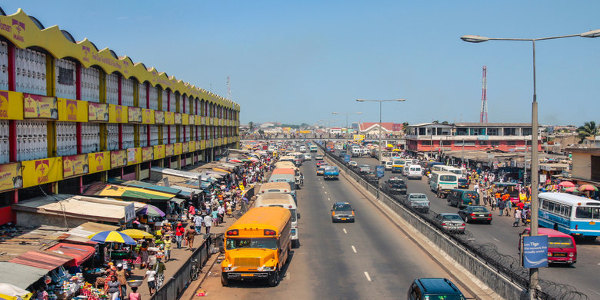
Ghana has been ranked sixth best place in Africa for investors in the 2020 RMB Investment Attractiveness rankings.
The country edged closer to a coveted top 5 position this year, rising three places in the rankings.
According to the report, the country’s growth outlook is strong and concentrated around the oil and gas sector.
“Non-oil growth is forecast to pick up again, supported by pro-business reforms and a steady improvement in power supply. Political stability will remain underpinned by Ghana’s strong democratic credentials.
“Ghana’s mining industry was worth US$5.9bn in 2019, the third-highest in Africa, and grew at 6.3% y/y, outshining many of its continental peers in the resources sector,” the report stated.
Ghana also has Africa’s highest ranking in the Fitch Solutions mining risk/return reward index, which assesses potential returns on investment, both in terms of industry size and forecast growth and broader country characteristics like the regulatory environment.
Retail sector
While the Ghanaian retail sector is predominantly still informal, there are some major malls, particularly in Accra.
However, the Accra retail market is close to saturation, and new developments will be opening in a challenging economic environment.
In the short to medium term, retail development is likely to focus on secondary cities such as Takoradi and Kumasi.
Manufacturing sector
Ghana’s manufacturing sector is ranked the eighth strongest on the continent is characterised by its small market size but high competitiveness.
In all of this, Ghana remains one of the few West African countries bucking the downward growth trend by continuing to offer positive examples of economic recovery by placing emphasis on diversifying its economy. Despite the recent deterioration in its operating environment rankings, Ghana remains one of the easier business environments in Africa.
Growth over the medium term is expected to average 6.2%, which is supportive of the greater macroeconomic fundamentals.
However, Ghana’s public debt burden (and public arrears in the local sector) requires considerable fiscal consolidation to correct.
The country’s commodity dependency is increasing, with oil, gold and cocoa being the main exports, which leaves Ghana heavily exposed to international price trends. The risks of slowdown in global growth that is aggravated by persistent trade tensions are credible and worth noting.
RMB report
The Rand Merchant Bank’s ninth edition of Where to Invest in Africa focused on sectors that are believed to be key to unlocking the continent’s growth potential.
This year, co-authors Celeste Fauconnier, Neville Mandimika and Nema Ramkhelawan-Bhana delve deeper into the traditional and alternative sectors driving African economies to reach ever-higher levels of economic growth.
“We believe that the six sectors we’ve featured this year are key to inclusive growth across the continent,” says Fauconnier.
Contributor, Daniel Kavishe, adds that under the resources banner, “mining, energy and agriculture all offer vast opportunities for the savvy investor.”
Turning to retail, Fauconnier says that it’s all about playing the long game. “While the middle class is not growing as fast as expected, the potential is still evident in the numbers.”
On the topic of finance, Ramkhelawan-Bhana stresses that “financial services play a critical role in securing Africa’s future.
Without sustainable funding and commercial credit, project development in key areas such as infrastructure, healthcare, and energy projects remain concepts rather than reality”; she adds that “the ICT sector and internet access in particular, long-viewed as a luxury in Africa, are fast becoming crucial to inclusive economies.”
According to Fauconnier and contributor Chris Mabanga, manufacturing is set to take centre stage as the continent, with its advantage of an abundance of natural resources, is focusing on turning its raw materials into manufactured goods to boost exports and reduce reliance on imports.
And, finally, Mandimika highlights that construction activity is surging as countries attempt to bridge the funding chasm between what’s needed and what’s actually being spent.
Latest Stories
-
Mobile Money Fintech LTD, UMB train hairdressers and beauticians
2 minutes -
Asylum votes show people want help, says Kemi Badenoch
1 hour -
Badenoch welcomes expanded grooming gangs inquiry
1 hour -
GACL MD sues Samuel Buabeng over alleged Facebook defamation
1 hour -
Christa Pike in critical condition after surviving two lethal injections, lawyer says
1 hour -
Kemi Badenoch backs face covering ban at protest
2 hours -
Man City not ‘above the rules’, says No 10 after backlash to Burnham remarks
2 hours -
Real Madrid submit ‘substantial’ dossier in Barca payments case
2 hours -
Messi completes purchase of second Spanish club
2 hours -
Government must engage horticulturists on tomato crisis – GhIH
2 hours -
King Promise’s ‘Can’t Tame Us’ becomes official Chelsea anthem
2 hours -
Afenyo-Markin demands Baffour Awuah’s release from EOCO’s custody, end to alleged political intimidation
2 hours -
Rapper Rick Ross arrested on domestic violence charges
2 hours -
Minority demands security review of Ghana-Colombia visa waiver and port deals
3 hours -
Pursue drug kingpins, not persecute political opponents – Afenyo-Markin tells EOCO
3 hours