

Audio By Carbonatix
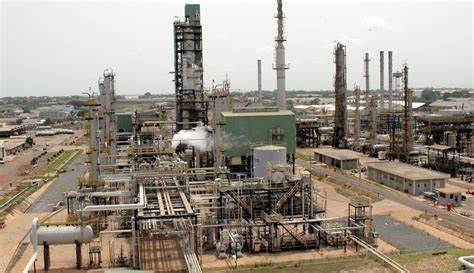
Ghana’s weak downstream oil sector ranks it 5th out of 19 Sub Saharan African countries, according to Fitch Solutions Downstream Oil & Gas Risk/Reward Index.
The nation is also ranked 57th globally out of 92 nations as its Petroleum Hub Development project has been described as overambitious.
“Although it [Ghana] scores slightly higher than the regional average, Ghana’s limited refining capacity and low utilisation rates, combined with its under-developed regulatory framework, mark it as an unattractive area for private investment.”
“However, if the necessary funding for the Petroleum Hub Development can be obtained, the project offers significant upside to Ghana’s RRI [Risk Reward Index] position and the future of its downstream sector”, it pointed out.
In October last year, parliament passed the Petroleum Hub Development Corporation Bill, which seeks to establish the Petroleum Hub Development Corporation and subsequently fuel the growth of the country’s downstream sector.
The integrated petroleum hub that will be built in Bonyere in Western Region will be constructed in three phases and is expected to be completed by 2030.
It is proposed to incorporate four refineries, crude oil storage tanks and two petrochemical plants.
But Fitch Solutions considers the project as a high risk given the existing dynamics across the nation’s downstream sector, citing Tema Oil Refinery as an example. A weakness is its limited projected growth in demand of its refined fuels.
Nonetheless, the Energy Ministry expects the three-phase project to attract total investments of about $60 billion with $12 billion needed to fund the first phase.
Each refinery is estimated to cost $5.4 billion, and the first phase is expected to construct 350,000 barrels of oil per day of refining capacity.
By November 2020, the Ministry had reportedly shortlisted three bids for the project, where one investor pledged $15 billion to fund the storage element of the project. The Energy Ministry expects that 90% of funding will come from the private sector and the remaining 10% from the government.
Latest Stories
-
Prudential Life settles GH¢100,000 medical bills under its PRUCares Valentine Experience Initiative
5 hours -
Wa West Picnic: Peter Lanchene Toobu champions peace, health and unity in landmark celebration
6 hours -
Dr Mensah Market flooded after downpour in Kumasi
6 hours -
Armed men reportedly storm Adjen Kotoku Onion Market amid tensions
7 hours -
Tecco Mensah writes: Why football fans must look beyond statistics
7 hours -
Police recover stolen Honda CR-V in Kumasi within 48 hours
8 hours -
Apetorku Gbodzi 2026 Festival opens in Dagbamete with development focus
8 hours -
President Mahama arrives in Lyon to co-chair One Health Summit
8 hours -
Beverly View Plus Hotel draws crowds amid coastal Easter rush in Volta
8 hours -
Maiden Zongo Festival held in Wa amid calls to tackle drug abuse among the youth
9 hours -
FDA warns of fake HIV test kits on Ghanaian market
9 hours -
Africa urged to build resilient health systems as donor support tightens
9 hours -
Easter gesture: Ablakwa settles medical bills for 85 North Tongu constituents
11 hours -
Africa must harness its population strength—Titus-Glover
11 hours -
Visa-free access doesn’t mean unlimited stay – Lom Ahlijah
11 hours