

Audio By Carbonatix
Ghana is set to resume the payment of debt it owes to Eurobond holders in about two weeks, having completed its $13 billion external debt exchange programme.
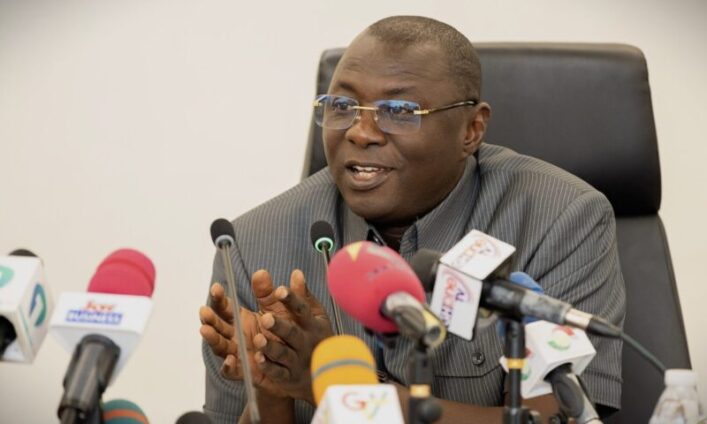
Meanwhile, the repayment of debt owed to the Official Bilateral Creditors has been postponed to 2028, Dr Mohammed Amin Adam, Finance Minister, announced at a press in Accra on Thursday, October 3.
“By the 98 per cent we’ve achieved, we’ve all consented to the exchange, but the actual exchange will take place over the next two weeks, and once we exchange, it means that we can start servicing our debts,” he said.
“We’ll not service at the levels we’d have done because of the reduction in the interest rate and principal… with the Official Bilateral Creditors, the servicing of the debt has been postponed until after 2028,” he added.
The Finance Minister stated that the government was building enough buffer for the repayment of the country’s debt, by growing the Sinking Fund and increasing revenue to Gross Domestic Product (GDP) to 18 per cent.
“With increased revenue, our capacity to pay back our debts is going to be enhanced, and we’re taking the proposed amendments to Cabinet for Parliament for amendments to the Fiscal Responsibility Act, which limits our debt,” he said.
Dr Amin Adam noted that the completion of both the Domestic Debt Exchange Programme (DDEP), and external debt, including the Eurobond exchange, would provide relief to the country, making its debt sustainable.
That, he said, would enhance the performance of the cedi against its major trading currencies, particularly the Dollar, lead to a credit rating upgrade, and boost investor confidence in the country.
“With this development, Ghana is likely to get positive upgrades, and when you get upgrades, the international community and investor confidence in your economy increases,” he said.
“So, investors will come in more than they’ve done over the last two years to invest in your economy, and when they’re coming, they’re bringing in forex, which then strengthens your currency,” he echoed.
Ghana suspended all of its debt service payments for some of its external debt, including Eurobonds, commercial term loans, and bilateral debts in December 2022, as part of a restructuring process.
It was an emergency measure to prevent a further deterioration in the economic, financial, and social situation in the country, as the government engaged the International Monetary Fund (IMF) for a US$3 billion loan-supported programme.
The three-year Extended Credit Facility was aimed at restoring macroeconomic stability and ensuring debt sustainability, caused by large external shocks and pre-existing fiscal and debt vulnerabilities.
Latest Stories
-
Alhassan Tampuli donates cement, roofing sheets to support storm victims in Gushegu
32 seconds -
Alhassan Tampuli appeals for urgent support for storm victims in Gushegu
3 minutes -
The hypocrisy must stop; pass Anti-LGBTQ+ Bill now – Alhassan Tampuli to Mahama
7 minutes -
Imprisonment should be rehabilitative, not punitive – Ghana Prisons boss at UNGA
29 minutes -
Ga Adangbe traditional priests petition Mahama over McDan aviation licence revocation
40 minutes -
Anti-LGBTQ Bill: NDC’s arrogance is worrying – Hassan Tampuli
51 minutes -
Let’s give OSP time to mature, not to scrap it – Hassan Tampuli
54 minutes -
Nigeria convicts 386 Islamist militants in mass trials
60 minutes -
Djibouti president wins election with 97.8% of vote, state media says
1 hour -
We don’t have mandate to deduct tax from rent allowance of security services personnel – Interior Ministry clarifies
1 hour -
Ablakwa receives Presidential Special Envoy on Reparations to advance global agenda
2 hours -
Christina Koch becomes first woman to travel around the moon on Artemis II
2 hours -
Epstein survivors’ calls to meet King Charles and Queen harder to ignore as US visit approaches
2 hours -
UN Secretary-General names Ghana’s Anita Kiki Gbeho as South Sudan envoy
2 hours -
Mali withdraws recognition of Sahrawi Republic, backs Morocco’s autonomy plan
2 hours