

Audio By Carbonatix
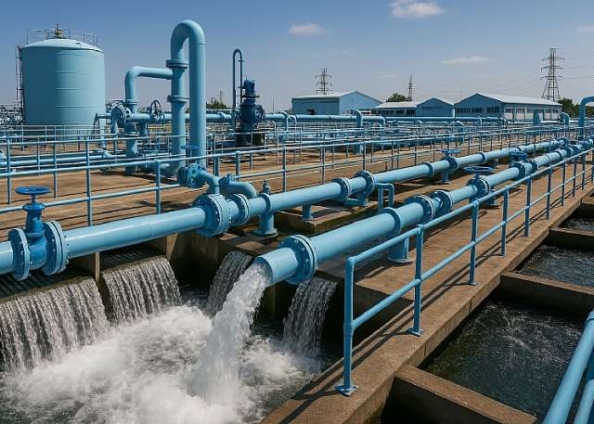
Managing Director of Ghana Water Limited (GWL), Adam Mutawakilu, has disclosed that replacing the country’s ageing water transmission pipelines would cost more than GH₵3.5 billion (US$356 million) — far beyond the company’s current financial capacity.
Speaking on the Joy Super Morning Show, Mr Mutawakilu said most of Ghana’s major transmission lines are old, weak and operating below capacity, posing a significant challenge to effective water distribution.
“Most of this transmission capacity utilisation is low. Most of the transmission lines are weak and need to be replaced, and that is a huge cost,” he said.
“We are talking about 356 million dollars to replace the old pipes and put in new pipes — that’s more than 3.5 billion Ghana cedis.”
He explained that the company’s annual revenue falls well short of what would be required to undertake such a large-scale overhaul.
“For example, we make almost 1.8 billion cedis — that’s about 100 to 150 million dollars for the whole year. This is the whole amount, not taking salaries or maintenance into account,” he said. “So, if you take it, you realise that we are not in good shape.”
His comments come amid recurring water shortages in Accra and parts of the Greater Accra Region, which have sparked public concern and political debate over infrastructure planning and investment.
Mr Mutawakilu noted that the combined impact of ageing treatment plants, deteriorating pipelines and limited revenue has left the utility struggling to meet the rising demand for water driven by population growth.
“The problem is not just the number of plants; it’s the transmission lines connecting them,” he said. “Without replacing these old pipelines, a lot of water is lost, and supply remains inconsistent, especially in urban areas.”
The GWL Managing Director urged policymakers to prioritise capital investment in both water production and distribution infrastructure, warning that further delays could worsen service disruptions and public dissatisfaction.
“Water is essential for life and development,” he said. “We must match infrastructure investment with our population growth, or these challenges will continue to escalate.”
Managing Director of Ghana Water Limited (GWL), Adam Mutawakilu, has disclosed that replacing the country’s ageing water transmission pipelines would cost more than GH₵3.5 billion (US$356 million) — far beyond the company’s current financial capacity.
Speaking on the Joy Super Morning Show, Mr Mutawakilu said most of Ghana’s major transmission lines are old, weak and operating below capacity, posing a significant challenge to effective water distribution.
“Most of this transmission capacity utilisation is low. Most of the transmission lines are weak and need to be replaced, and that is a huge cost,” he said.
“We are talking about 356 million dollars to replace the old pipes and put in new pipes — that’s more than 3.5 billion Ghana cedis.”
He explained that the company’s annual revenue falls well short of what would be required to undertake such a large-scale overhaul.
“For example, we make almost 1.8 billion cedis — that’s about 100 to 150 million dollars for the whole year. This is the whole amount, not taking salaries or maintenance into account,” he said. “So, if you take it, you realise that we are not in good shape.”
His comments come amid recurring water shortages in Accra and parts of the Greater Accra Region, which have sparked public concern and political debate over infrastructure planning and investment.
Mr Mutawakilu noted that the combined impact of ageing treatment plants, deteriorating pipelines and limited revenue has left the utility struggling to meet the rising demand for water driven by population growth.
“The problem is not just the number of plants; it’s the transmission lines connecting them,” he said. “Without replacing these old pipelines, a lot of water is lost, and supply remains inconsistent, especially in urban areas.”
The GWL Managing Director urged policymakers to prioritise capital investment in both water production and distribution infrastructure, warning that further delays could worsen service disruptions and public dissatisfaction.
“Water is essential for life and development,” he said. “We must match infrastructure investment with our population growth, or these challenges will continue to escalate.”
Latest Stories
-
One week observance for highlife legend Ebo Taylor takes place this Saturday in Saltpond
1 hour -
Lamborghini Saga: EOCO boss has tarnished my brand and cost me business deals – Shatta Wale
5 hours -
Mugabe’s son drops bail request – what has happened to the family after losing power
5 hours -
Tyla deserved to win Grammy ahead of Nigerian artists – Joeboy
5 hours -
Ishmael Norman hails Interior Minister for choosing merit over politics in security recruitment
5 hours -
Iranian minister says country will not play in World Cup
5 hours -
No evidence Swiss bus fire was terrorism, officials say
5 hours -
Three brothers arrested after explosion at US embassy in Oslo
5 hours -
‘Disgusting but not surprising’: Domelevo demands dismissal, prosecution of officials in GH¢8.1bn audit rot
5 hours -
Nitiwul sounds alarm over Sokoto strike: Claims Ablakwa’s disclosure exposes Ghana to terror risk
6 hours -
Police arrest suspect for defilement, possession of child sexual abuse materials
6 hours -
Security services recruitment: Ntim Fordjour accuses Interior Ministry of milking over GH¢100m from applicants
6 hours -
Why risk protection is the unsung partner of growth for Ghana’s SMEs, households
6 hours -
New US ambassador to South Africa summoned over ‘undiplomatic remarks’
7 hours -
Three firms roll out AI-powered security platform for financial institutions
7 hours