

Audio By Carbonatix
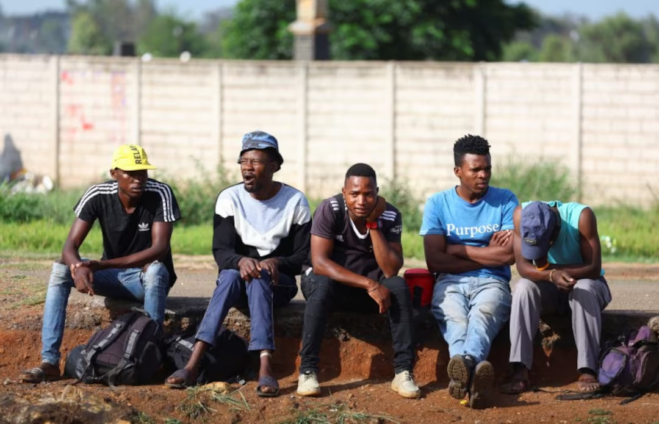
Ghana’s rapidly expanding youth population presents a major opportunity for economic growth, but only if the country can create the jobs to absorb new entrants into the labour market, the World Bank has warned.
In its 9th Economic Update for Ghana, Addressing Labour Market Challenges and Opportunities in Ghana’s Economic Landscape, the Bank projects that the country’s working-age population will increase significantly over the next decade.
This demographic surge, it says, could be a powerful driver of growth if matched with productive employment opportunities.
“A key focus should be on youth and their transition from school to work, ensuring they have the skills needed for a modern economy to provide strong employment opportunities, essential for realising the demographic dividend,” said Kwabena Gyan Kwakye, Economist and lead author of the report.
The Bank emphasises that job-to-job transitions are also critical, enabling workers to move into more productive and sustainable employment.
Agriculture remains a priority sector for such improvements, with agro-processing value chains and out-grower schemes offering pathways to boost productivity and resilience.
Ghana’s economy, according to the report, demonstrated resilience in 2024, growing by 5.7 per cent, and continued to expand by 5.3 per cent in the first quarter of 2025.
Yet the World Bank cautions that these gains are under pressure from persistent inflation, high interest rates, and fiscal challenges that undermined earlier stabilisation efforts.
To harness the demographic dividend, the Bank recommends urgent reforms to improve the business environment, close infrastructure gaps, and accelerate investments in human capital.
It calls for targeted skills development programmes, especially for young people, and a comprehensive job creation strategy linked to structural transformation.
Robert Taliercio, World Bank Country Director for Ghana, Liberia, and Sierra Leone, stressed that “entrenching fiscal discipline, strengthening public financial management, and carefully managing inflation and exchange rate volatility will be key” to sustaining growth and supporting job creation.
The report urges Ghana to prioritise three policy avenues: building physical and human capital through infrastructure and skills investment; improving the enabling environment by removing structural constraints on firms; and mobilising private capital for sectors with high growth and job creation potential.
Without these steps, the Bank warns, Ghana risks missing the window to turn its youth bulge into a powerful force for economic transformation.
Latest Stories
-
Vice President visits Sports Ministry to strengthen coordination, oversee 2026 plans
5 hours -
Harry says sacrifices by Nato troops in Afghanistan deserve ‘respect’
5 hours -
CHRAJ urges Ofori-Atta to return, assures intervention in case of unfair trial
5 hours -
Felicia Anthonio: A global voice shaping the future of digital rights and internet freedom
5 hours -
Daddy Lumba left no will – High Court
5 hours -
3 foreigners remanded, one granted bail in Kasoa kidnapping, fraud case
5 hours -
There was no problem with NPP’s peace pact; Ken Agyapong wanted assurance – Osei Owusu
6 hours -
Aseidu Nketia has made the NDC more attractive – Osei Owusu
6 hours -
Driver’s licences to expire on holders’ birthdays – DVLA
6 hours -
Dr Bryan Acheampong signed in my place; three PhD holders signed without reading peace pact – Ken Agyapong
6 hours -
Begging for wedding money shows you are not ready for marriage – Duncan-Williams
8 hours -
Road crashes drop when safety campaigns are intensified – Abraham Amaliba
8 hours -
Typographical error delayed signing of NPP peace pact – Acting Chairman
8 hours -
Newsfile to discuss transport fares & fuel prices, NPP presidential primaries, and Ofori-Atta & Sedina saga
8 hours -
Tourism Ministry mourns gospel icon Yaw Sarpong, soloist Maame Tiwaa
8 hours