

Audio By Carbonatix
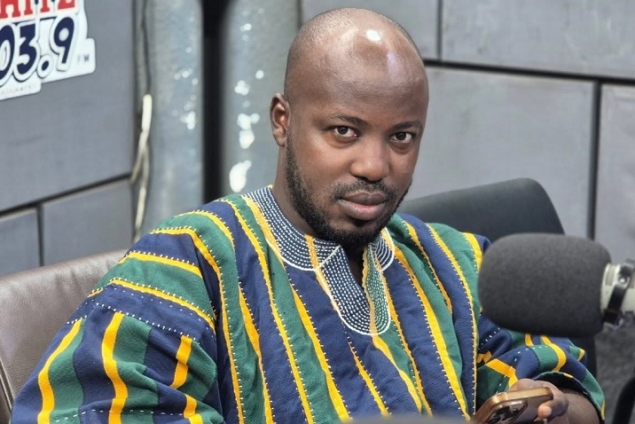
Kojo Akoto Boateng, co-host of Joy FM’s Super Morning Show, has bemoaned the lack of unity and strategic planning within Ghana’s creative sector, attributing much of its stagnation to individualism and short-term political interests.
Speaking on Hitz FM’s Daybreak Hitz with Doreen Avio, Kojo observed that the sector’s most noticeable activity often aligns with election seasons, where personal political alignment takes precedence over long-term development.
“What I’ve noticed about the showbiz space is that we get active during elections and people largely follow their stomachs and we are so divided,” he said, comparing the fragmented approach of creative industry players to that of stakeholders in the agricultural sector, who he believes are more concerned with collective welfare than political affiliation.
His comments came as the United Kingdom announced a £30 million investment package for its music and wider creative industries, forming part of a broader 10-year strategy aimed at unlocking economic growth, nurturing talent and supporting innovation across sectors like fashion, film, gaming, and design. The plan is expected to generate an additional one million jobs and boost the UK economy by £50 billion by 2030.
By contrast, Ghana’s creative industry continues to battle with structural issues such as inadequate funding, weak policy implementation, and limited infrastructure. Despite its wealth of talent, the country has no clear long-term development blueprint for its cultural and creative economy. Attempts to support the sector have often been piecemeal, politicised or short-lived.
Stakeholders have frequently lamented the lack of a national creative fund, minimal training opportunities, poor enforcement of intellectual property laws, and the absence of platforms that allow local talent to scale globally. Major government-led initiatives are rare, and private sector partnerships remain underdeveloped due to high risk and limited incentives.
Kojo Akoto Boateng’s remarks reflect growing frustration among industry insiders who feel the sector is being neglected despite its potential to contribute significantly to national development. He called for creatives to rise above partisanship and work towards a united front that prioritises institutional development, policy engagement and long-term advocacy.
As countries like the UK invest heavily in their creative economies, many believe Ghana risks falling further behind if deliberate action is not taken to professionalise and support its own cultural sectors.
Latest Stories
-
Epstein survivors’ calls to meet King Charles and Queen harder to ignore as US visit approaches
3 minutes -
UN Secretary-General names Ghana’s Anita Kiki Gbeho as South Sudan envoy
5 minutes -
Mali withdraws recognition of Sahrawi Republic, backs Morocco’s autonomy plan
9 minutes -
Gov’t distributes over 8,500 laptops to One Million Coders project
10 minutes -
Julius Debrah, ‘man to beat’ as NDC’s James Agbey dismisses Musah Dankwah’s polls
16 minutes -
GPRTU in Savannah Region to protest alleged eviction in Damongo
46 minutes -
Re: Reinsurance does not replace process — A response to the SIGA–SIC defence
1 hour -
Gender Ministry supports Harriet Amuzu in ongoing abuse case
1 hour -
AG joins plaintiff to scrap OSP ?: We should be mindful of the mischief in this – Bobby Banson
1 hour -
Samson Lardy Anyenini questions willingness of Attorneys-General to prosecute political colleagues
1 hour -
It is only fair the OSP is heard in Supreme Court case – Bobby Banson
1 hour -
Asiedu Nketia resumes Ashanti tour, second leg kicks off on Sunday
2 hours -
NLA denies salary cut claims, threatens legal action over reports
2 hours -
BoG Governor honoured for stabilising cedi, improve inflation
2 hours -
Kyebi Easter Homecoming 2026: A resounding success!
2 hours