

Audio By Carbonatix
In light of the Covid-19 crisis, the Ghana Health Service (GHS) is making attempts to improve Reproductive, Maternal, Newborn, Child and Adolescent Health (RMNCAH) in ways that are effective and beneficial to all.
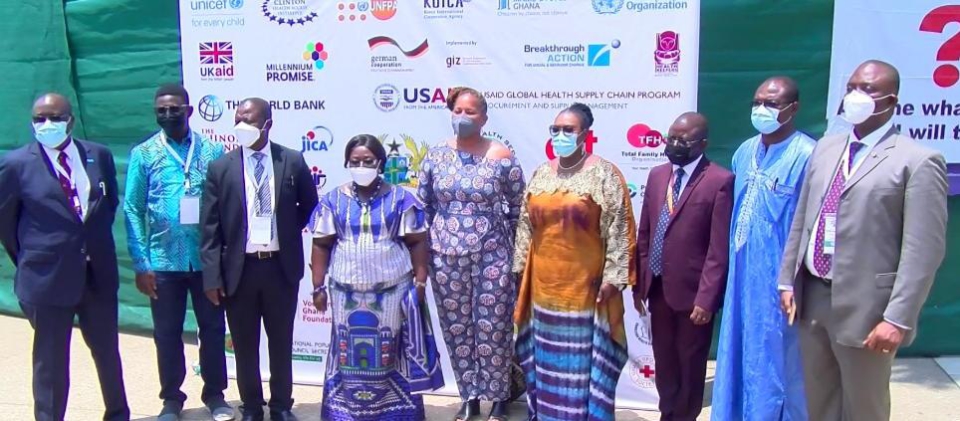
At the Maternal Child Health and Nutrition Conference (MCHN), GHS revealed that their approach to tackling the possibility of an increased mortality rate includes a series of workshops across the country.
Projections by Lives Saved Tool (L.i.S.T) indicated that the country was at risk of increased child and maternal mortality rates.
Although Lives Saved Tool projected that reduced coverage RMNCAH by 15% within six months would cause over 250,000 additional child deaths and over 12,000 additional maternal deaths, Ghana’s number fell below this.
Speaking to JoyNews at the Maternal Child Health and Nutrition Conference (MCHN), Director General of the GHS, Dr Patrick Kuma-Aboagye, says the institution is determined to use its newly defined objectives to improve Ghana’s response to the maternal and child mortality rate in the midst of Covid-19.
He said, “The objective of the workshop is to improve the resilience of the health sector… in responding during a crisis.”
Dr Kuma-Aboagye also says that although during the first half of 2020, the health sector “lost ground” due to the unexpected global pandemic, “by the end of the second half, we had actually improved our care services and were able to offer care to all even in the midst of a pandemic.”
Chief of Staff, Akosua Frema Opare says it is the priority of the government to provide “equitable distribution” of competent health structures accessible to all women and children in the midst of the pandemic, and thanks to the Deputy Minister of GHS, health workers and other private parties for their contributions to the welfare of all.
The Chief of Staff also calls upon all “policymakers, researchers, service providers and other stakeholders to use the opportunity provided by this conference to discuss the RMNCAH and Nutrition strategic plan and how to effectively implement it within the next four years.
Companies like Marie Stopes were also present at the event. Amid their expansion all over the country in places including the Tamale, the Oti Region, etc.
A representative of Marie Stopes International, Ghana, says the company is involved in tasking “midwives who are training the Ghana Health Service staff to be better equipped” training programs for GHS personnel in child and maternal health to help affect the decrease in maternal and child mortality rates.
“We are meting out services to people who are in…severely rural communities.”
Marie Stopes was one amongst many company displays at the event that are partnered with GHS to contribute to the GHS’s increased investment in RMNCAH.
Latest Stories
-
President Mahama is not sincere with Ghanaians on LGBTQ bill matter – Hassan Tampuli
3 minutes -
Gov’t to establish Prison Industrial Hub to equip inmates with income-generating skills – Prison Service boss
22 minutes -
Alhassan Tampuli donates cement, roofing sheets to support storm victims in Gushegu
23 minutes -
Alhassan Tampuli appeals for urgent support for storm victims in Gushegu
25 minutes -
The hypocrisy must stop; pass Anti-LGBTQ+ Bill now – Alhassan Tampuli to Mahama
29 minutes -
Imprisonment should be rehabilitative, not punitive – Ghana Prisons boss at UNGA
51 minutes -
Ga Adangbe traditional priests petition Mahama over McDan aviation licence revocation
1 hour -
Anti-LGBTQ Bill: NDC’s arrogance is worrying – Hassan Tampuli
1 hour -
Let’s give OSP time to mature, not to scrap it – Hassan Tampuli
1 hour -
Nigeria convicts 386 Islamist militants in mass trials
1 hour -
Djibouti president wins election with 97.8% of vote, state media says
1 hour -
We don’t have mandate to deduct tax from rent allowance of security services personnel – Interior Ministry clarifies
2 hours -
Ablakwa receives Presidential Special Envoy on Reparations to advance global agenda
2 hours -
Christina Koch becomes first woman to travel around the moon on Artemis II
2 hours -
Epstein survivors’ calls to meet King Charles and Queen harder to ignore as US visit approaches
2 hours