

Audio By Carbonatix
The Ghana Institute of Procurement and Supply (GIPS) is advocating a complete overhaul of the nation’s procurement strategy, positioning it as a catalyst for inclusive economic growth and national development.
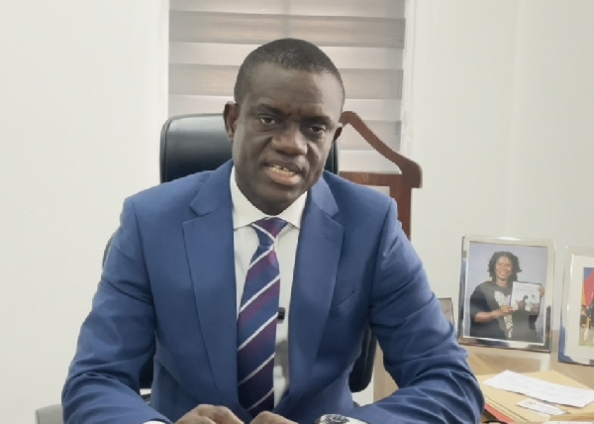
In an interview on JoyNews, ahead of the National Procurement and Supply Conference, from 16th-17th September, 2025 at the University of Professional Studies Accra, the Institute’s President, Dr. Simon Annan, emphasized the need for a paradigm shift in how procurement is perceived and practiced in Ghana.
This year’s conference, themed “Reimagining Procurement for Sustainable Development,” seeks to redefine procurement beyond its traditional role as a transactional activity. Dr. Annan stressed that procurement must evolve into a strategic lever for economic transformation.
“Procurement in Ghana has long been reduced to the simple acquisition of goods and services. Yet, nearly 60% of the national budget is channeled through procurement processes. That level of expenditure should be harnessed to achieve far more—stimulating local industry, supporting SMEs, and creating jobs,” he said.
According to Dr. Annan, government expenditure, when strategically directed, has the potential to energize local value chains, drive industrial growth, and deliver long-term economic impact. He pointed out that procurement must be integrated with national priorities, such as job creation and industrialization, to unlock its full developmental potential.
“As the largest purchaser in the economy, government has the unique ability to use its buying power to support local enterprises. If we align procurement with broader policies like the 24-hour economy, it becomes a powerful economic tool rather than just a cost center,” he added.
Dr. Annan also called for the professionalization and elevation of procurement practice in both public and private sectors. He noted that procurement professionals have often been sidelined in strategic decision-making processes, undermining the impact of their work.
“It’s time procurement professionals are recognized as key contributors to national development. This conference will be a turning point in changing perceptions and raising the profile of the profession,” he stated.
The GIPS President urged collaboration across sectors—between policymakers, business leaders, and civil society—to rethink how public procurement can be leveraged for broader socio-economic goals.
“Reimagining procurement is not just a professional necessity—it’s a national imperative. If we are serious about sustainable development, procurement must be part of that conversation.”
The GIPS annual conference is expected to bring together stakeholders from across Ghana and beyond to explore new strategies for embedding sustainability, inclusivity, and economic impact into procurement frameworks.
Latest Stories
-
CID arrests Counsellor Lutterodt over viral comments on Daddy Lumba
14 minutes -
Works and Housing Minister signs MoU with Turkish firms for major Accra water project
25 minutes -
Ghana not going to the World Cup just to make up numbers – Jordan Ayew
50 minutes -
Three arrested over the killing of Abamba Queenmother in Bono East
52 minutes -
Daily Insight for CEOs: Defending and expanding market share
54 minutes -
Auditor-General report flags GH¢162m in overstated claims by state agencies
55 minutes -
GH¢1.4 bn duplicated claims uncovered across MDAs – Deputy Finance Minister
1 hour -
‘We don’t need more additions’ – Jordan Ayew backs current Black Stars squad
1 hour -
ActionAid Ghana, the EU and GIZ hand over new dam to Buka community
1 hour -
US-Israeli war on Iran escalates as Trump warns of incalculable hit if Strait of Hormuz is blocked
1 hour -
Multivitamins could reduce biological age in older adults by months, study finds
1 hour -
African insurance leaders meet to chart path for industry growth and resilience
1 hour -
SSNIT assets hit GH¢25bn amidst TUC calls for grassroots pension literacy
1 hour -
Asante Akim North MP sponsors bill to regulate campaign financing
1 hour -
Full text: Deputy Finance Minister delivers A-G’s report on 2024 arrears and payables
2 hours