

Audio By Carbonatix
The Ghana National Petroleum Corporation (GNPC) is yet to establish a reserve fund to finance its long-term operations as required by the Petroleum Act.
The company presently receives 55% of the Carried and Participating Interests (CAPI) to fund its operational expenditures. The allocation of petroleum revenue to the company is expected to halt in 2026 following its implementation in 2011.
The 2024 semi-annual report of the Public Interests and Accountability Committee revealed the corporation had not set aside funds to support its operations after a 15-year timeline expiration.
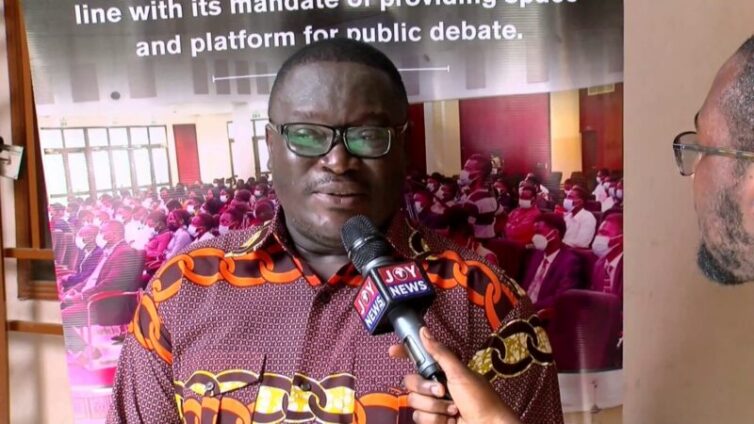
“When the government then decides not to fund them, how are they going to fund their operations? We are recommending that they should actualize their own reserve funding so that once they’re able to put aside some monies they will be able to build up enough revenues to support their operations,” Technical Advisor on the PIAC, Richard Elimah, said.
The PIAC was in the Ashanti region to engage stakeholders on the findings on the semi-annual report and ways to hold the government in ensuring the oil revenues are utilized for its intended purpose.
IOCs owe over $2 million surface rentals
Ten international oil companies (IOCs) are yet to cough up money to settle their surface rental fee owed the government.
According to the 2024 semi-annual report by the Public Interests and Accountability Committee (PIAC), a total of over 2.6 million dollars are yet to be retrieved from the companies during the first half of the year.
Four of these foreign companies failed to pay up their debts and have already exited the country after collapsing.
The committee is recommending the government ensures the companies pay the acreage fee during the course of production and also take immediate steps to recover the outstanding amounts.
“PIAC is recommending that the government takes the surface rental before these companies leave the country. So, they should be made to pay during the course of the production. This would ensure the state doesn’t incur any losses,” Mr. Elimah admonished.
Meanwhile, the committee is distraught over the government’s decision not to sign any new petroleum agreement since 2018.
The committee finds the decision is worrying as it could impact more revenue generation for the country.
Latest Stories
-
Council of State member demands EOCO boss apologise or face lawsuit, petitions Mahama for his dismissal
2 hours -
Otto Addo sacked!
2 hours -
AfDB says Africa’s growth risks were tilted to downside even before Iran conflict
4 hours -
Egypt’s Sisi says only Trump can stop war, warns oil could top $200
4 hours -
Tems is most streamed African artist globally with over 40 million monthly Spotify listeners
4 hours -
Afreximbank raises $2bn with its biggest-ever syndicated loan
4 hours -
Sinner raises Alcaraz stakes with historic ‘Sunshine Double’
4 hours -
Why set up an anti-corruption agency while shielding GoldBod at the same time? – IERPP queries gov’t
4 hours -
Cardiff City damages claim over Emiliano Sala death dismissed
4 hours -
Tuchel not angry over England withdrawals
5 hours -
Big Push for Infrastructure, Small Push for People
5 hours -
24 suspects arrested in Bono during security agencies operation
5 hours -
KsTU marks 70th anniversary, rallies partners for AI-driven future as gov’t pledges support
5 hours -
Nigerian president’s rivals get major boost as political heavyweight joins fold
5 hours -
48-hour curfew imposed after attack on bar in Nigerian city
5 hours