

Audio By Carbonatix
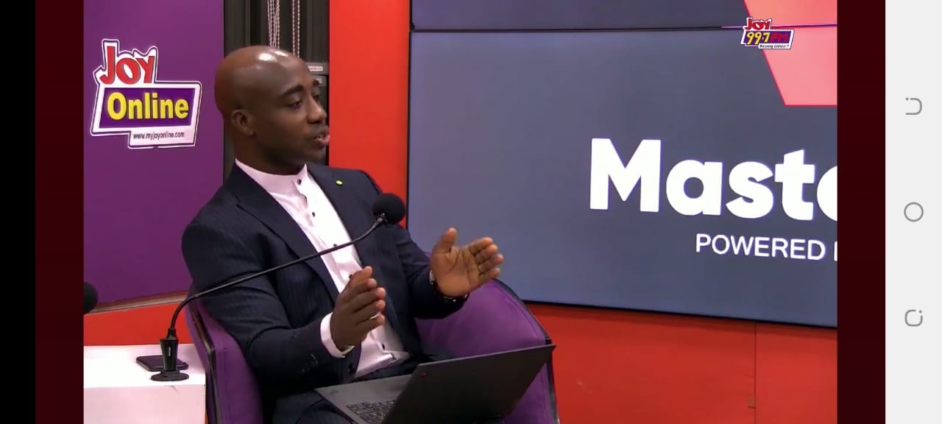
Partner at Deloitte, Yaw Appiah Lartey, says government communication ahead of the IMF board approval should be candid, consistent and full of candour.
This he says would clear up the uncertainty that has characterised Ghana’s fiscal space in the past months.
He explained that the current fiscal uncertainty and lack of consistency from government has led to the disenchantment of investors in the Ghanaian fiscal space which could lead to their disinvestment from the country.
Speaking on JoyNews’ PM Express Business Edition, he called on government to address the investor community on realistic timelines for the implementation of its revenue measures.
“[Government communication] must be candid, consistent and full of candour. Candid, because we have to face the realistic situation. Some of the revenue measures in the budget have not been operationalize as we speak. They have not been operationalized so we have to be candid. What are the realistic timelines to get these revenue measures operationalized?
“Let’s face the reality, tell the investor community. And the investor community, some of them have decided, some are still doing the wait and see like Mike alluded to, but there are others who have taken their decision. There are others who will sell off their investment cheap and they won’t come back again. Others will just close shop and leave.
“So let’s be candid, let’s tell the investor community what the reality is, what the realistic timelines are, and let’s be consistent,” he said.
He added that government’s inconsistency has been costly, and should it continue it would be inimical to the country’s economic recovery trajectory.
“We know that this debt restructuring programme from when it was announced till date, there have been instances where inconsistency in government communication has cost us a lot. So we also have to set out consistent message. Now we’re hearing that there is a timeline for submission, what does it mean? If it means that we’re submitting by April or by May, it means realistically it’s anything from the middle of this year, that is when we’ll start seeing something happen.
“And we also need to appreciate that the longer this discussion drags on and on, the more it’s going to cost us as a country because our currency responds to some of these developments in the market. And so if our cedi has been fairly stable, we want to keep it at that because it helps avoid the price instability that we’ve had in the couple of months prior to.
“So we can see inflation taking a declining trend, and if the stability continues we’ll see the declining trend continue. But if you continue to have inconsistency and instability in the way we’re seeing the market forces, then you can’t predict, and when you can’t predict, investors will shy away. They’ll continue to adopt the wait and see attitude and it will continue to affect us,” he said.
Latest Stories
-
African Union summit clouded by Saudi-UAE rivalry in Horn of Africa
1 hour -
No more excuses – NCA rolls out stricter mobile service standards
1 hour -
Call drops must fall below 1% – NCA raises bar for telcos
2 hours -
China to implement zero tariffs on imports from 53 African countries
4 hours -
Tunisian police detain opposition figure Olfa Hamdi at airport
4 hours -
US deports 9 to Cameroon despite court protections, NYT says
4 hours -
Mali renews Barrick Mining’s Loulo license for 10 more years
4 hours -
Gender pay gap won’t close for another 30 years, warns UK trade unions group
5 hours -
No free pass for internet platforms on child safety, Starmer says
5 hours -
Andrew’s time as trade envoy should be investigated, says Vince Cable
5 hours -
‘Trump will be gone in three years’: Top Democrats try to reassure Europe
5 hours -
Cuban cigar festival called off as US blockade worsens energy crisis
5 hours -
Head of Dubai-based ports giant quits after Epstein links revealed
5 hours -
Nigeria’s state-owned NNPC records $4.2 billion after-tax profit in 2025
6 hours -
French tourist found dead in Chad after falling off cliff
6 hours