

Audio By Carbonatix
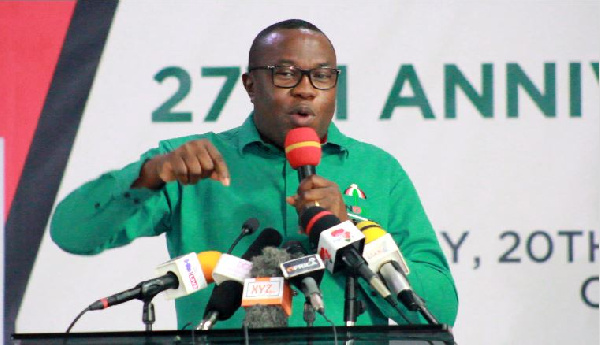
The National Chairman of the opposition National Democratic Congress (NDC), Samuel Ofosu-Ampofo has accused government of being insensitive to the plights of Ghanaians.
According to him, the current Akufo-Addo regime has turned a deaf ear to the hardship being experienced by citizens from all walks of life.
Speaking at a meeting with Chairmen of the Party in the Upper West Region over the weekend, Mr Ofosu-Ampofo blamed the high cost of living and rising inflation on the governing New Patriotic Party (NPP).
In his submissions, he also questioned the whereabout of government's economic management team, which the Vice President said was constituted to transform the economy.
"The government seems to have lost control of the management of the economy. The country is virtually on autopilot now. Prices of goods and services have gotten out of hands.
"And we believe that as a government, in situations like this, you need to provide leadership and provide interventions that will let the people know that indeed the government has empathy for the people. But this is a government that is nonchalant. It's showing that they don't even care about what is happening", he said.
The NDC National Chairman continued, "You get up in the morning to go and buy fuel [and] by the afternoon, the prices of fuel have increased. The cedi to dollar and other major currencies have been let loose and there seems to be no end in sight".
He however assured that a new NDC government will work at ameliorating the sufferings of the masses.
"So the challenges that we are facing now call for deeper reflection and to look for an alternative that has the experience and the capability to manage the economy, you cannot look any further than the NDC", he said.
Mr Ofosu-Ampofo's comments come at a time when hundreds of Ghanaians are continuously lamenting the high cost of living in the country.
This complaints have been triggered by the hike in petroleum prices, as well as the rising inflation.
Ghana’s inflation jumped to 27.6% from the 23.6% recorded in April, 2022, according to recent figures from the Ghana Statistical Service (GSS).
The GSS blamed this on the increase in transport fares and food prices.
According to the Government Statistician, Professor Kobina Annim, the rate of inflations for transport (39.0%), household equipment and maintenance (33.8%), housing, water, gas and electricity (32.3%) and food and non-alcoholic beverages (30.1.6%) were higher than the national average (27.6%).
In May, 2022, 12 of the 13 divisions recorded inflation rates higher than the rolling average from June, 2021 to May, 2022.
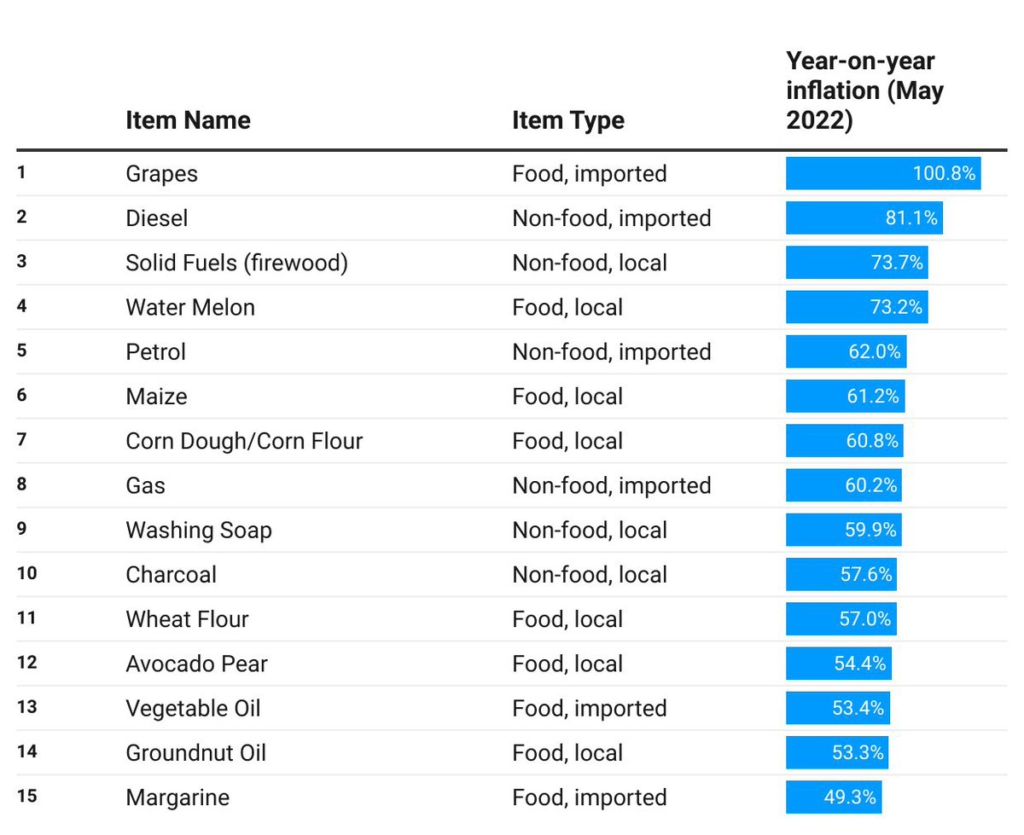
Also, the major drivers based on the year-on-year figures show that grapes, which is imported, saw a 100.8% inflation followed by diesel, 81.1%, also imported.
Firewood also saw 73.7% year-on-year inflation.
Meanwhile, Member of Parliament for the Nhyiaeso Constituency, Dr Stephen Amoah has indicated that government is working around the clock to address the increasing cost of living in the country.
According to the NPP lawmaker, he does not think 'government is sleeping'.
The legislator made these remarks while contributing to discussions on the rising inflation and increased cost of living on Newsfile on Saturday.
In that regard, he told host, Samson Lardy Anyenini that in as much as government is doing its best, there is the need for all other stakeholders to rally behind government's efforts to make the economy better.
In his view, the country's economic woes did not start today, hence, the need for a more collective approach to address the situation.
"The problem we're having today, any honest person will tell you, it's not today's issue. It's been with us [for] years. So I'm preaching to every stakeholder who has what it takes to come on board and let us all make sure [to help]. Sometimes we get it wrong and right, [but]we're all helping.
At present, it's on the government, and I don't think the government is sleeping. The fact is, [we] have 40 year old problems", he said.
Dr Amoah continued: "If we sat there and our population size has grown from Nkrumah's time from about 5 million to about 31 million; if you have a situation where just close to 7% [of people] directly in the formal sector pay taxes, and we're having negative effective tax wage, and these problems have been compounded for years, the government alone [cannot solve them]".
He also charged government to revise its expenditure.
"There are basic issues we need to check such as our discretionary spending and as government; we should be able to now go down. Even though the government said we've cut down by 20%, well accepted. But we can do more", he added.
Latest Stories
-
Arrest of Manhyia South MP should involve Parliament, not police station – Kpebu
13 minutes -
Two Nigerians sentenced to 189 months in US prison over $2.4m cyber fraud
36 minutes -
Cristiano Ronaldo leaves Portugal’s training camp after rift with Head Coach
37 minutes -
Ghana Energy Awards opens nominations for landmark 10th anniversary edition
38 minutes -
Aayalolo contra-flow: Are we treating the symptom instead of the disease?
41 minutes -
GTEC orders Colleges of Education to begin 2026/2027 admissions despite fees approval delay
44 minutes -
Legal reforms must solve real problems, improve justice – Bagbin
47 minutes -
Ofori-Sarpong named Alumni President of the Year, honoured for PRESEC dormitory project
1 hour -
Germany commits $132m to Ghana for skills development and training university – Pelpuo
1 hour -
‘Influence should go beyond visibility’ – Taadi Banyinba GH launches The TB Impact
2 hours -
Videos: Government announces emergency LEAP package for Hohoe flood victims
2 hours -
Salomey Baffoe’s children are crying for their mother – Family appeals for her release
2 hours -
Shortage of trained investigators and prosecutors hampers Ghana’s fight against money laundering – Report
2 hours -
GoldBod generates US$1.87bn in September FX operations, exceeding monthly target
2 hours -
Roads Minister says it is time to change one-year defect liability period for contractors, consultants
2 hours