

Audio By Carbonatix
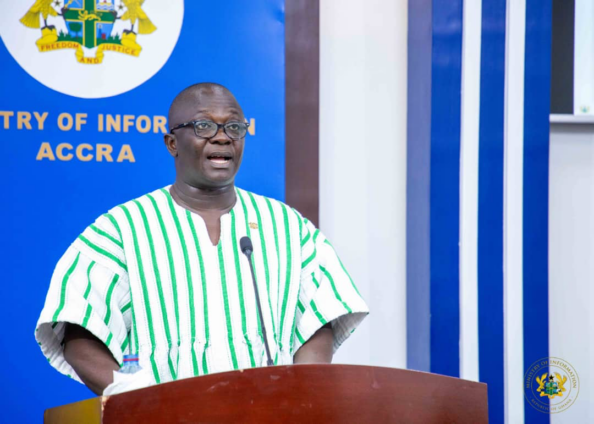
Food and Agriculture Minister Bryan Acheampong has announced a series of government interventions aimed at mitigating the impact of the ongoing dry spell on Ghanaian farmers.
Speaking at a press briefing at the Information Ministry in Accra on Monday, he detailed government's plan to provide financial support to the most vulnerable farmers, alongside food grants to ensure they meet their basic nutritional needs.
"Government has decided to provide financial support amounting to GH¢1,000 per hectare to the most vulnerable among these farmers as partial cover for their investment losses," Mr Acheampong stated.
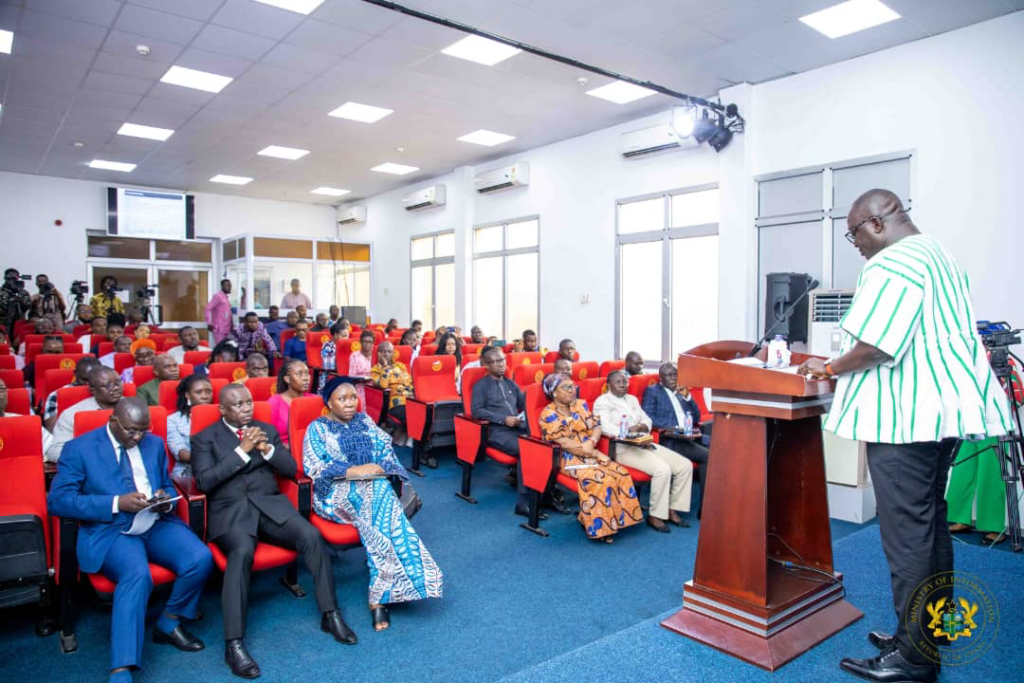
Government's comprehensive response includes a temporary ban on grain exports, purchasing stock directly from farmers, and providing grains and poultry feed, cash transfers, food grants, input support, and technical assistance for soil moisture conservation.
The Minister revealed that over 980,000 farmers, cultivating an estimated 1.8 million hectares, have been affected by the dry spell, with potential losses estimated at GH¢22.2 billion.
The affected regions contribute approximately 62% of the country's annual grain supply.
To help farmers recover, the government will also launch a replanting support program, which includes the provision of fast-maturing seeds and fertilizer for those whose crops failed due to the drought.
"The ultimate solution to this crisis lies in the provision of irrigation and water management systems to support year-round farming," Acheampong stated.
The government is set to allocate funds to complete 13 irrigation projects under the Agriculture Economic Enclaves Programme, as well as other ongoing irrigation initiatives.
Finance Minister Dr Mohammed Amin Adam announced that the government has allocated GH¢8 billion to fund the crisis response program, including cash transfers and the supply of food and other relief items to farmers.
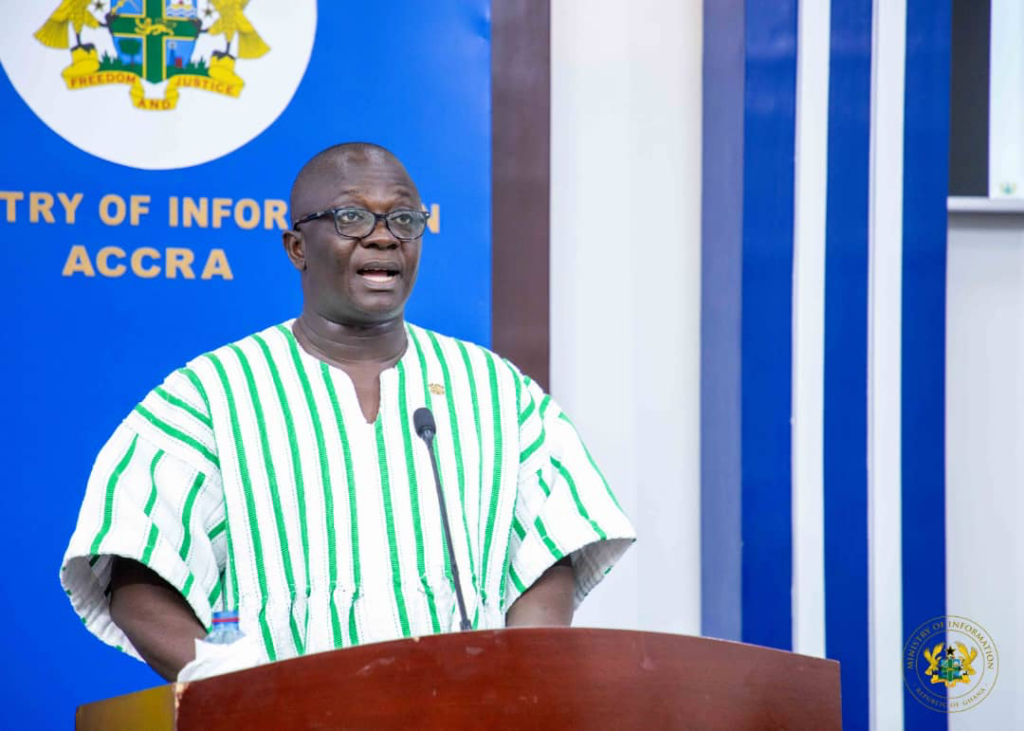
He stated the importance of transparency and accountability in managing these resources, with a technical task force in place to oversee the distribution of aid.
"We are committed to ensuring transparency and accountability in the management of these resources that we are mobilising to respond to this crisis," Dr Amin Adam assured.
The response package will be funded through a combination of sources, including 2.5 billion Cedis from the contingency fund and GH¢2.4 from development partners such as the World Bank.
Defence Minister Dominic Nitiwul added that the government has intensified security across borders to prevent grain exports or smuggling during this critical period.
Latest Stories
-
Knights and Ladies of Marshall group backs Catholic Bishops’ stance on anti-LGBTQ+
10 minutes -
Bright Simons writes: All the Filla in the Ibrahim Mahama/E&P – Gold Fields Saga
35 minutes -
Monetise Idiocy In Ghana
42 minutes -
The Ghanaian prophet and the mysterious death of his scottish wife Charmain Speirs
1 hour -
Nearly 400 sentenced in Nigeria for links to militant Islamists
2 hours -
Ghana’s recovery supported by gold strength despite global oil price pressures – Standard Bank Research
2 hours -
‘Excellence is our inheritance’ – Nana Sam Brew-Butler hails Mfantsipim’s 150-year reign in leadership
2 hours -
Kwaku Azar writes: A-G vs OSP
2 hours -
Mfantsipim–Adisadel rivalry built excellence, not division – Sam Jonah
3 hours -
Vice President launches Mfantsipim’s 150 years of shaping Ghana’s greatest mind
3 hours -
I assure Otumfuo, Mahama will join him to commission KNUST Teaching Hospital by end of this year – Haruna Iddrisu
4 hours -
Barcelona dominate derby to extend La Liga lead
4 hours -
Gov’t to roll out free special education for persons with disabilities from July 1 – Education Minister
4 hours -
Importers and Exporters Association declares full support for Publican AI port system
5 hours -
“We used it to test our officiating officials’ readiness” – Bawah Fuseini after CAA Athletics event
5 hours