

Audio By Carbonatix
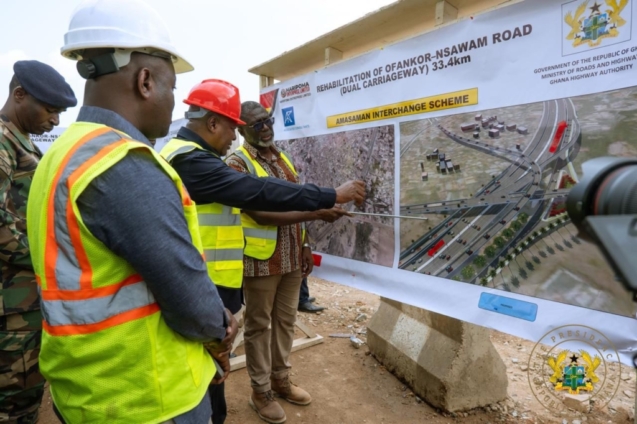
Ghana is set to raise GH¢10 billion, about $935 million, through its first domestic infrastructure bond as the government steps up efforts to finance roads and interchanges nationwide while rebuilding confidence in the local debt market.
The bond sale will be issued in two tranches of GH¢5 billion each in the first and second halves of the year, with longer-dated tenures designed to attract local investors seeking stable returns. An issuance calendar detailing the infrastructure bond and other domestic offerings is expected to be released later this month. While the Ministry of Finance declined to comment officially, the plan was confirmed by people familiar with the matter.
Sources say the projects funded by the bond are expected to be largely self-financed through electronic road tolls, a structure intended to prevent additional pressure on Ghana’s public debt. The approach reflects the government’s attempt to fund infrastructure expansion while maintaining fiscal discipline after years of financial strain.
The issuance aligns with President John Mahama’s Big Push initiative, a flagship infrastructure programme aimed at mobilising $10 billion for major development projects to support economic recovery. Funding for the initiative has already been scaled up, with the finance minister allocating GH¢30 billion in the 2026 budget, more than double the GH¢13.8 billion provided the previous year.
Ghana, Africa’s largest gold producer, is seeking to capitalise on improving investor sentiment as it emerges from a severe debt crisis that culminated in a 2022 default and shut the country out of international capital markets. Confidence has gradually returned, with yields on Ghana’s cedi-denominated bonds due in 2039 falling by more than 10 percentage points over the past year to around 16 per cent.
The country is also nearing the end of its $3 billion bailout programme with the International Monetary Fund, which is expected to conclude in May following progress on its economic recovery plan. Inflation has eased sharply, falling to 5.4 per cent in December from nearly 54 per cent in 2023, while the cedi strengthened by 41 per cent against the dollar last year, easing pressure on businesses and households.
The IMF has welcomed Ghana’s efforts to deepen its domestic capital market, describing them as a positive step if carefully managed. The Fund, however, cautioned that infrastructure bonds must be aligned with debt sustainability objectives and designed to avoid crowding out private sector credit. It noted that well-structured bonds targeting high-return projects could support growth, job creation and private-sector activity.
For small and medium-sized businesses, improved road infrastructure could lower logistics costs, shorten delivery times and expand access to new markets, particularly for manufacturers, traders and agribusiness operators that depend heavily on efficient transport networks. The bond issuance, therefore, signals not just a financing move but a broader attempt to link fiscal recovery with long-term economic productivity.
With inflation continuing its downward trend and domestic market confidence improving, Ghana’s planned infrastructure bond marks a significant test of its strategy to fund development locally while restoring stability after years of economic turbulence.
Latest Stories
-
Church of Pentecost supports over 2,000 BECE candidates in Obuasi with career guidance seminar
1 hour -
Brandon Asante and Coventry all but promoted to Premier League despite Sheffield Wednesday draw
1 hour -
GPL 2025/26: Late Kwartemaa strike downs Hearts in Tema
1 hour -
Ghana Faces Sierra Leone Moment as Prosecutorial Powers come under strain
2 hours -
Don’t consume fish or seafood from Tema Shipyard until further notice – FDA warns
2 hours -
Why volunteering might be Africa’s most underrated career accelerator
2 hours -
ActionAid Ghana raises concern over gender gaps in Feed Ghana Programme
2 hours -
Windstorm wreaks havoc in Gushegu, displacing nearly 2,000 residents and damaging schools
2 hours -
Friends of Bridget Bonnie Marks her 35th birthday with donation to Kasseh Model Health Centre
3 hours -
From Ekumfi Kokodo to the Pulpit Stage: Essi Donkor’s gospel journey takes shape
3 hours -
Landfilling waste management creates no value, it’s an economic waste
3 hours -
Photos: Speaker Bagbin Commissions MPs constituency office under parliamentary decentralisation programme
3 hours -
Black Stars technical advisor Winfried Schäfer sacked as GFA shakes up backroom staff
3 hours -
Wenchi water project almost complete, critical to gov’t agenda – GWL MD
4 hours -
Anti-LGBTQ+ bill not part of government’s legislative agenda – Inusah Fuseini
4 hours