

Audio By Carbonatix
The Green Economy Ghana project is providing young people with vocational and entrepreneurship skills in the green and circular economy space, more specifically in plastic waste management, sustainable forestry management, and organic waste management.
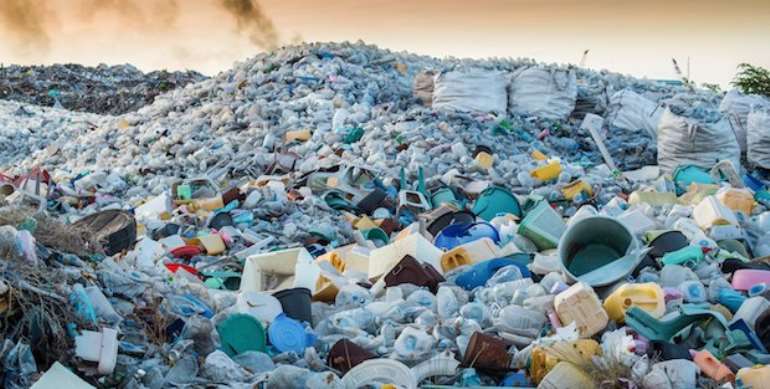
Ghana’s plastic waste situation is dire as 1.1 million tonnes of plastic waste per year is released into the environment causing pollution, blockages of gutters and drainage systems leading to flooding, etc.
Approximately 70% of plastic input materials in Ghana are used only for packaging. Out of the total plastic waste generated in the country, only 5% is collected for recycling.
At the Green Economy Ghana project, we want to transform plastic waste into a resource that can stimulate a sustainable economy in the region. (According to the UNDP report on the ”Behavioral Change is Critical in addressing plastic menace” published on April 24, 2019, and the Global Plastic Action Partnership).
To contribute to transforming the plastic waste challenge into an opportunity, the Green Economy Ghana project is providing technical vocational and entrepreneurship education to young people in plastic waste management.
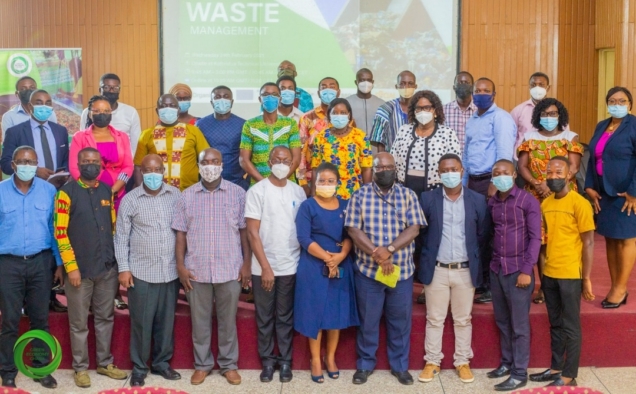
The training which is taking place at the YMCA campus at Adabraka in Accra started by equipping 10 trainers with the latest knowledge in this field of expertise.
The first round of training is ongoing, where 53 young students are gaining relevant skills to be employed or start their own businesses in the plastic management sector.
The TVET Programs Director, Samuel Asamoah -YMCA Ghana, says “this project is helping young people develop two critical skills necessary for job creation in the current dispensation blending technical and vocational skills as well as entrepreneurship education” and he urged “TVET institutions to promote entrepreneurship education for job creation and impact”.
The training curricula, which was designed by experts from Ghana and Scandinavia, received feedback from different actors from the private and public sector making them relevant to the Ghanaian context.
The training is comprised of different modules combining theoretical and practical sessions on subjects including; Understanding plastics, Importance and uses of plastics, Plastic production: the steps in plastic production, Causes of plastic waste, Principle of waste management: 4rs- reduce, reuse, recycle and recover, Plastic waste management technologies adopted in Ghana: reuse/recycle, Plastic waste recycling, Entrepreneurship and business planning, etc.
Trainees are also learning how to use equipment such as shredders. As part of the project, these trainees will be attached to existing MSMEs in plastic waste management for an internship period where they will gain hands-on experience.
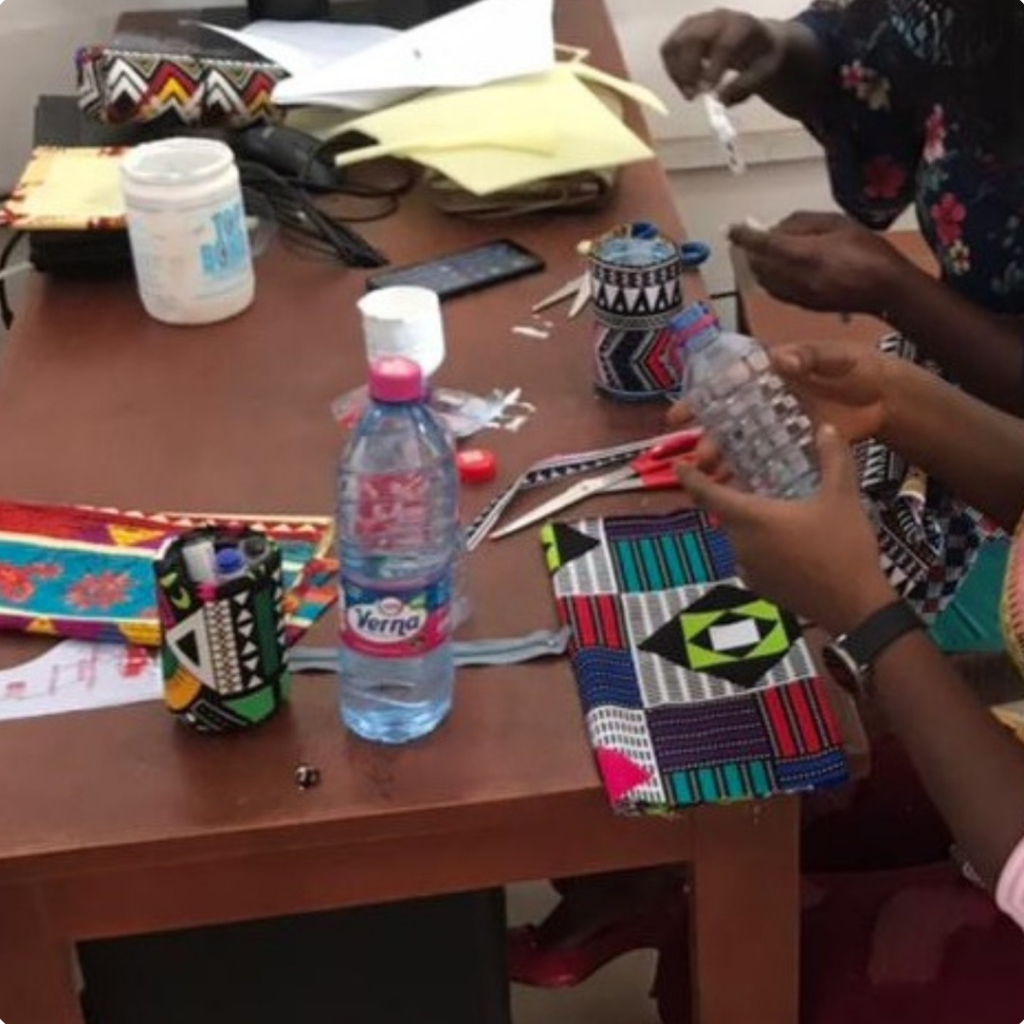
Dr Boniface Yeboah Antwi, trainer in the Plastic Waste Management TVET applauded the Green Economy Ghana project for taking the bold step toward youth empowerment in the plastic value chain.
He further recommended the “setting up of a micro-financing system by stakeholders to support trainees set-up small scale enterprises for a sustainable plastic circular economy in Ghana”.
The second round for the Plastic Waste Management TVET has received a total of 600 applications and will start in June with the participation of about 100 young people.
This is just another indication of the huge demand for this type of educational training in Ghana.
Isabella Twum Mensah, trainee in Plastic Waste Management says “Green Economy Ghana (GEG) has benefited me in various ways through theory and practical aspects. The basics of the evolution of plastics to the types of plastics and the recycling of plastics was rendered to me by the trainer.
"My knowledge of plastic and its recycling process has broadened my insights on how to reuse plastic to reduce the threat it has on the earth and how it can help make life much easier. I have always loved the idea of creating extraordinary things with plastics and the GEG Project gave me the platform to have more adventure”.
The European Union Archipelago Programme is a four-year programme, funded by the European Union Emergency Trust Fund (EUTF), whose main objective is to strengthen the employability of young people by supporting them in job creation in the Sahel and Lake Chad countries (Burkina Faso, Cameroon, Chad, Côte d'Ivoire, Gambia, Ghana, Guinea, Mali, Mauritanian, Niger, Nigeria, Senegal).
The project is being implemented by a five-member consortium including Inclusive Business Sweden as the lead, YMCA Ghana, Social Enterprise Ghana, Ghana Sweden Chamber of Commerce and Sweden West Africa Business Association as associate members.
Latest Stories
-
The 7-foot giant of Ngleshie Amanfro: Seven-foot Ghanaian Ephraim Saawa dreams of joining the national basketball team
31 minutes -
Government promises support for Kumasi Central Market fire victims
37 minutes -
Vibes The Movie: Big Ghun’s Ghanaian film earns five nominations at 2026 REFFA
1 hour -
MamaCare CEO warns unresolved conflicts among health workers could undermine maternal and neonatal care
2 hours -
Health professionals urged to translate medical knowledge into practice to save mothers
2 hours -
Conflicts among care providers linked to maternal, neonatal deaths – Expert
3 hours -
GIS marks 10th TIME conference, champions improved teaching practices
3 hours -
BRICS Or Balance? What Ghana’s bid really means
4 hours -
GPRTU wants full TRAFFITECH-GH implementation to start in 2027
4 hours -
Mahama announces plans to import electric wheelchairs for PWDs
4 hours -
KGL U17 Colts 2026: Western beat Prempeh Elite Academy to set up final final with Greater Accra Region
4 hours -
Late Solanke strike salvages 10-man Spurs draw at Man United
5 hours -
Gender Ministry to monitor welfare of Nana Akua Addo’s children amid domestic violence case
5 hours -
Benedict Okyere Yeboah: Ghana’s football problem goes beyond sacking a coach
5 hours -
GPL 2026/27: Darkwah Wiafe’s winner sees All Blacks beat Kotoko
5 hours