

Audio By Carbonatix
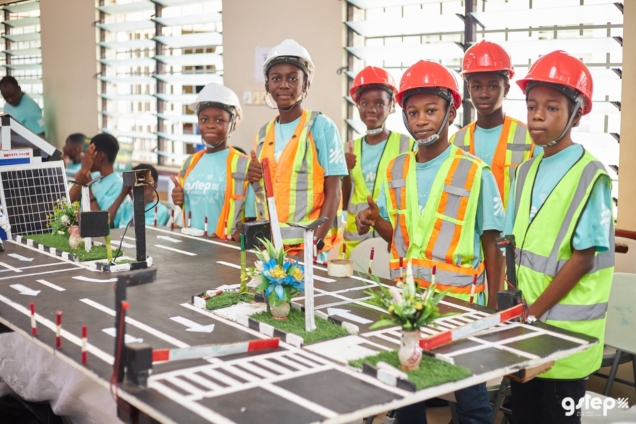
The Ghana Science and Tech Explorer Prize (GSTEP) has inducted 120 semi-finalist teams for the 2026 Challenge, drawn from the Ashanti, Greater Accra, Eastern and Volta Regions.
The selection marks a milestone for the competition, with teams from the Volta Region participating for the first time. Ashanti Region leads the pack with 42 teams, while Greater Accra, Eastern and Volta Regions are each represented by 26 teams competing for a place in the final stage.
At the semi-finalist level, teams are required to transform their ideas into workable solutions by developing a Minimum Viable Product (MVP). This functional prototype must demonstrate how each solution can positively impact communities.
Teams will also develop a team and business model canvas outlining the problem being addressed, intended beneficiaries, and the resources and strategies needed to implement their ideas.
To support the process, each team has been paired with dedicated mentors and coaches offering guidance in technical and entrepreneurial skills. Participants will receive the One4All Kids kit, a semi-finalist handbook, a teacher guide, and access to virtual 2D and 3D training sessions. The support package is designed to equip teams with practical skills and hands-on experience that extend beyond the competition.
Teams that were not selected are not entirely out of the process. The GSTEP Perseverance Awards Programme allows unsuccessful applicants to reapply using their original ideas, with the chance to be recognised under the 2026 GSTEP Perseverance Awards Programme for creativity, dedication and resilience.
The induction ceremonies for the semi-finalists were held virtually in two sessions on 4 December 2025 and 8 December 2025, formally ushering teams into the next phase of the competition.
Speaking at the induction, the Ashanti Regional STEM Coordinator for the Ghana Education Service, Mr Isaac Ankomah, stressed the need to strengthen STEM education at the basic school level. He said STEM goes beyond classroom instruction and helps to cultivate inquiry, experimentation, resilience and creativity.
“STEM confidence does not begin in a state-of-the-art lab; it begins when a child can say, ‘My idea matters. My question makes sense. My solution can help someone.’ That is the power of GSTEP, creating spaces where learners feel heard, supported, and inspired,” he said.
As the semi-finalist stage gets underway, all 120 teams will receive mentorship, coaching and resources to build a minimum viable product of their ideas in a bid to secure one of the 60 finalist slots. Although only half will advance, organisers say every participant stands to gain valuable experience as future STEM innovators and changemakers.
The 2026 GSTEP Challenge is being implemented by a consortium led by DreamOval Foundation, in partnership with Partnership Bureau, Shulem Lake and Practical Education Network. The programme is run in collaboration with the Ghana Education Service and the Ministry of Education, with funding support from Fondation Botnar.
Latest Stories
-
Prudential Life settles GH¢100,000 medical bills under its PRUCares Valentine Experience Initiative
5 hours -
Wa West Picnic: Peter Lanchene Toobu champions peace, health and unity in landmark celebration
5 hours -
Dr Mensah Market flooded after downpour in Kumasi
5 hours -
Armed men reportedly storm Adjen Kotoku Onion Market amid tensions
6 hours -
Tecco Mensah writes: Why football fans must look beyond statistics
7 hours -
Police recover stolen Honda CR-V in Kumasi within 48 hours
7 hours -
Apetorku Gbodzi 2026 Festival opens in Dagbamete with development focus
8 hours -
President Mahama arrives in Lyon to co-chair One Health Summit
8 hours -
Beverly View Plus Hotel draws crowds amid coastal Easter rush in Volta
8 hours -
Maiden Zongo Festival held in Wa amid calls to tackle drug abuse among the youth
8 hours -
FDA warns of fake HIV test kits on Ghanaian market
9 hours -
Africa urged to build resilient health systems as donor support tightens
9 hours -
Easter gesture: Ablakwa settles medical bills for 85 North Tongu constituents
10 hours -
Africa must harness its population strength—Titus-Glover
10 hours -
Visa-free access doesn’t mean unlimited stay – Lom Ahlijah
10 hours